
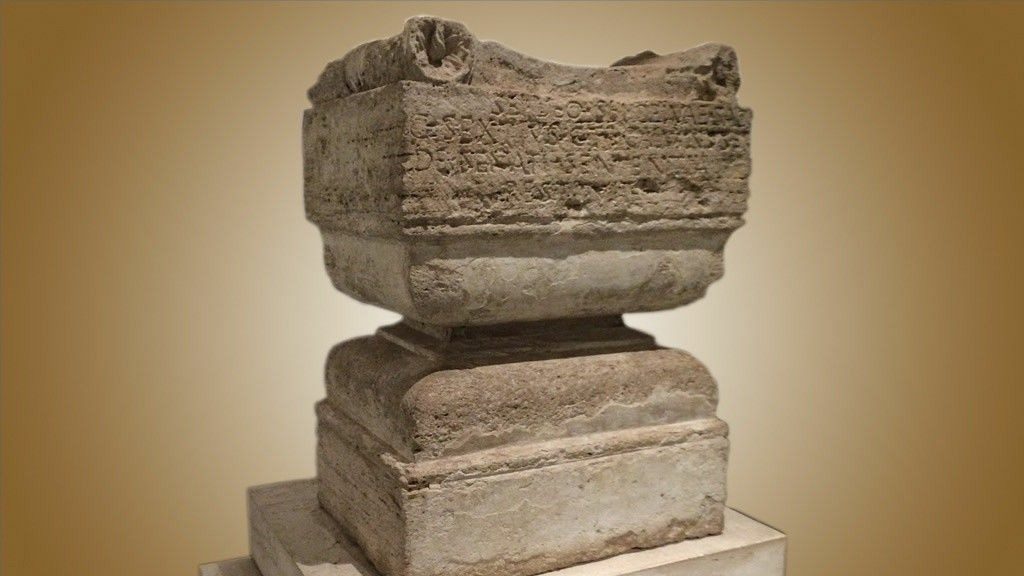
Are there universals that all cultures recognize? Is there a God-Creator who put an imprint on humanity? What came first in understanding, Monotheism or Polytheism? Is there a Shangri-La or paradise? Whose definition of Shangri-La do you believe? Is there a third face of Shangri-La? The different academic disciplines about life attempt to make sense out of our world and its origins. In the following chapters, I try to present a comparative study between what I call the essential academic explorations of neo-liberalism and classical liberalism. We all are bias to a degree, and I am no exception. My school of thought is primarily classical liberal with a Biblical foundation.
Anthropology
Anthropology is not the problem it is those anthropologists who don’t tell the whole story or ignore it. Some are intellectually honest even if their colleagues shun them when purporting a different view than theirs, such as, Andrew Lang, which you will read about later.
Then Paul stood in the midst of the Areopagus and said, “Men of Athens, I perceive that in all things you are very religious; 23 for as I was passing through and considering the objects of your worship, I even found an altar with this inscription: To An Unknown God. Acts 17:22
Professionals’ face the task in every era to communicate properly about the truth of their generation and Paul’s mission was no different as he addressed the men of Athens. Paul was an active educator as he was well read. Paul was using their own history to relate to them about the one true God in the midst of a culture that had gone polytheistic. Paul was reaching back in history recalling the writings of Laertius Diogenes, a Greek cynic philosopher author of the third century A.D., in a classical work called The Lives of Eminent Philosophers.
The story that is related to this “Unknown God” in the Biblical account by Paul addressing the Greeks on Mars Hill happened 100 years before in Athens. Here is an account of this story. An Athenian aristocrat by the name of Nicias was an Athenian politician and general during the period of the Peloponnesian War. Nicias was a member of the Athenian politico. Here is an account of what is commonly called, by modern anthropologists “Sky-God” giving evidence to a pagan culture of a supreme God.
And when he was recognized (Epimenides) he was considered by the Greeks as a person especially beloved by the Gods, on which account when the Athenians were afflicted by a plague, and the priestess at Delphi enjoined them to purify their city; they sent a ship and Nicias the son of Niceratus to Crete, to invite Epimenides to Athens; and he, coming there in the forty-sixth Olympiad, purified the city and eradicated the plague for that time; he took some black sheep and some white ones and led them up to the Areopagus, and from thence he let them go wherever they chose, having ordered the attendants to follow them, and wherever any one of them lay down they were to sacrifice him to the God who was the patron of the spot, and so the evil has stayed; and owing to this one may even now find in the different boroughs of the Athenians altars without names, which are a sort of memorial of the propitiation of the Gods that then took place.
There were many such altars built that day by the masons, and an inscription was placed on the side of them that read agnosto theo—to an unknown god. The monuments were soon lost from the years of weathering and the forgetfulness of the Athenians, except one. Years later, an Athenian recalled the altars of the unknown god from Epimenides prophecy and set in search of them to save them as a tribute to this unknown god. However, he only found one worth keeping, and he had it restored.
This is the altar that Paul is describing to the Mars Hill philosophers as the One True God. Paul was using Theos as a personal pronoun and not as a general term that Athenians utilized it impersonally about a god. However, these Athenian Aristocrats’ must have known that their own great philosophers’ such as Aristotle, Plato and Xenophanes used Theos as a personal Supreme God. God in His infinite wisdom has put in every culture the sign of an ultimate God, as we will see from the upcoming stories. In Don Richardson’s epic work, “Eternity In Their Hearts,” as an anthropologist he states: “…there is recorded “over 1,000 tribes that started out believing in a supreme god, and as time marched forward they became polytheistic from moral decadence.” Below are just a few that are recorded.
INCAS
Epimenides was called a “prophet” by Saint Paul. One wonders what title he would have ascribed to Pachacuti, whose spiritual acumen surpassed that of Epimenides.
The political unrest and several wars confronting the powerful Nation of Spain was setting the stage for a voyage to South America. With the approval of the Queen of Spain, Francisco Pizarro set sail to the land of the Incas and landed in 1529. This was the beginning of the end of the Inca Empire who came to dominance under King Pachacuti fifty years before.
Pachacuti, the ninth king, ruled South America’s incredible Inca civilization from A.D. 1438 to 1471. Pachacuti built a city called Machu Picchu that even the conquering Conquistadores never discovered its site hidden from view high up on the Andes mountain range during their invasion. However, some years later the Conquistadores found the location it was forgotten until the Twentieth Century.
It was not until 1906 when it was rediscovered; a missionary named Mr. Paine found the magnificent city covered from years of under and outer growth of vegetation. Word got out of the discovery, and an anthropologist from Yale University by the name of Hiram Bingham contacted Thomas Paine, of which, Mr. Paine guided him to the site sometime later. Mr. Bingham took all of the credit of its discovery without giving any recognition to Mr. Paine whatsoever. Such has been the case of many missionary discoveries not receiving the credits due them from higher education academia.
Why is King Pachacuti of the Incas so important? Pachacuti started an inquiry of the sun god Inti’s authority. Why? Perhaps, King Pachacuti’s intelligence demanded an affirmation of what his conscience was provoking it to work out its logical implications. After conversing with his counsel and asking some reasonable questions which from the answers he received came to the conclusion that Inti was a thing and not the creator. Upon investigation of their oral, written and art traditions, such as, stories painted on beakers might have told a story tracing back to his father’s loyalty to Viracocha (God-Creator); whose shrine was called Quishuarcancha, which rival Solomon’s temple, located in the upper Vilcañota Valley. Don Richardson writes, “Pachacuti also recalled that his own father, Hatun Tupac, once claimed to receive counsel in a dream from Viracocha. Viracocha reminded Hatun Tupac in that dream that He was truly the Creator of all things. Hatun Tupac promptly renamed himself (dare we say presumptuously?) Viracocha! The concept of Viracocha, therefore, was probably of great antiquity.” Worship of Inti (sun) and other gods, in this view, were only recent departures from a purer original belief system.
Swiss anthropologist Alfred Metraux implies as much when he observes that Viracocha-like figures are prominent in Indian cultures “from Alaska to Tierra del Fuego (southernmost tip of South America),” whereas sun worship appears in relatively few cultures. Dr. B. C. Brundage of the University of Oklahoma summarizes Pachacuti’s description of Viracocha as follows from the translations by J. M. Arguedas the notable expert of Quechua who was the Inca’s neighboring tribe to the north and spoke the same dialect translated this Inca tablet into English: “To Viracocha, power over all that exists, be it male or female. Or whosesoever in the world Thy mighty Throne be found?” He is ancient, remote, supreme, and uncreated. Nor does he need the gross satisfaction of a consort. He manifests himself as a trinity when he wishes, … otherwise only heavenly warriors and archangels surround his loneliness. He created all peoples by his “word.” Describes the God of the Bible and in many ways, we will see this is not uncommon amongst other tribal peoples.





