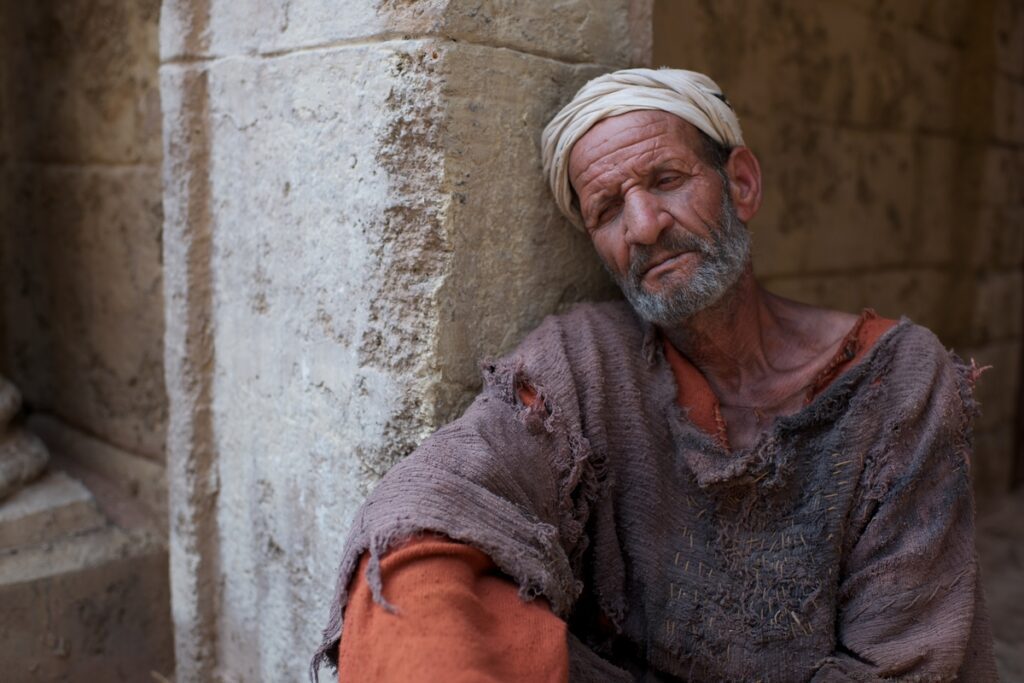
The Parable of Poor Lazarus & the Rich Man.
From Luke 16 where Jesus addresses the Pharisees.
A shout out to Tim Keller for his insight into this parable.
This story is a focus on how the rich man’s worldview, how he sees life, how he understands his priorities, got him in hell not how Lazarus gets to heaven. It is also not an explanation of how heaven and hell work or interact nor is it a description of Abraham’s role in heaven. It’s a story to highlight a main idea. How you see the world is what you get in eternity.
Note the rich man is not named but Lazarus is. Everything the rich man has built means nothing in eternity and his name is forgotten. Lazarus’s name endures forever.
Even in hell, because he has a hellish view, he still treats Lazarus as inferior to him. He doesn’t ask Abraham to put water on his tongue, or that an angel should. Instead he asks that Lazarus would. I suspect that Lazarus would have been willing. Since he’s in heaven, Lazarus would have embodied with sincerity the mercy of heaven. But this rich man (we’ll call this guy Richie) sees Lazarus, though Lazarus is above and Richie is below, as his servant. Richie did not see, and therefore even in torment, still does not see Lazarus as important. Dude was at his gates. I mean, Richie didn’t even have to look hard for someone to bless. He ignored the law which instructed the wealthy to help the impoverished; for all of Israel to give the extra they have if there is someone who has need. This is the gospel of the Kingdom of God.
Have you heard it? John the Baptist was first to preach it in the same way Jesus teaches it. “Anyone who has two tunics is to share with him who has none and whoever has food is to do likewise.” Straightforward. A brilliant distillation of provision for your neighbor, your brother, from the law. Richie didn’t bother, apparently, not even with the scraps.
Richie’s worldview was creating hell on earth. Specifically, Richie created and/or maintained hell for Lazarus. Richie cannot handle heaven. He cannot perceive its glory nor can he understand heaven’s values.
Do we have Heaven’s values? Do we appreciate what Heaven appreciates? Do we understand what Heaven hates and why?
Richie has never understood nor can he understand. He doesn’t want to. He just wants relief. Even so, he doesn’t want his brothers to face what he’s facing. So there’s a little compassion there. But he wants the person he thinks is inferior to warn them. And it’s not that he would be sending Lazarus back in order to help Richie’s brothers understand that they should be generous, bless others and build a better world. It’s to warn them about this place of torment. It’s about avoiding something bad, not creating something good.
Abraham gives him a short explanation that Richie likely doesn’t get. And there’s no point in Abe going further to explain Richie’s motivation, because it starts with what was already written. If you can’t recognize the good in it, if you can’t see the wonderful truth of it (or you haven’t bothered to read the law), then who can explain it to you? The light from the flames of hell are too dim to reveal what’s really there. It only casts a shadow of the form. Perceived through darkened lenses it reveals only a fearful specter of something left undone and a visceral expectation of doom. Hell only serves as a stark contrast to heaven. Like contrasting peace and war, one can only understand simply that war is terrible and peace is better. But it cannot describe how war was had in the first place or how peace can be made.
If you can’t hear the message of compassion, then you’re deaf to heaven’s clarion call, even if someone grants you a sign. In fact, if you’re given a sign then you’ll likely end up attempting good with the motivation to empower yourself merely to avoid evil. We would avoid hell but that’s not the same as entering heaven. A motive to avoid something doesn’t provide deep change. And a sign won’t last. You’ll need miracle after miracle and even then you might never understand what it’s really about.
People who understand the Kingdom of Heaven don’t need a sign to believe in it. Not that we don’t need deliverance from ourselves or a miracle in time of need. But we can believe that God would work those miracles when we understand what the Kingdom of Heaven is in light of the person who established it.
The only way to enter the Kingdom of Heaven is to shift our pursuit away from avoiding hell and towards heaven itself. Is what we’re doing, saying, thinking creating hell or heaven? How could we know?
Richie likely gave alms (charity), tithed, paid the temple tax, supported the local synagogue and gave first fruits, but he couldn’t see to help the person in front of him. Perhaps because he did all the right things on paper he didn’t feel the need. What use is doing the “right” things and missing the most important things in front of us? What good is sound doctrine or deep ritual if it doesn’t equip us to confront hell with heaven? What use is heaven if it refuses to be put on earth? As useless as a pure river meandering through parched rock diluting itself in the sea, quenching no thirst, cleansing no wound and nourishing nothing on its route.
If that river should overflow its stoney banks, I wonder what might bloom in the desert.