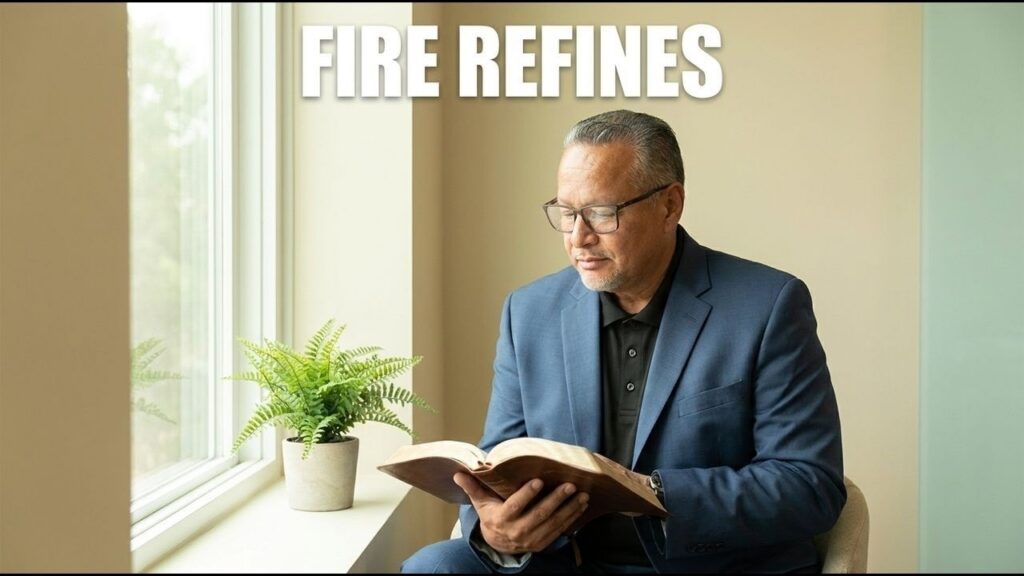
https://www.youtube.com/watch?v=0M7R__Lh3JQ
Waiting is not something most of us enjoy. We want answers now. We want the relationship fixed now, the job situation settled now, the breakthrough now. We live in a world where we can order something in the morning and expect it at our door by the afternoon. We have become used to microwave answers.
But God does not operate on the pace of our anxiety. And I am learning this right along with everybody else.
There are seasons when the Lord keeps bringing one word back to your heart: wait. Not because He has forgotten you. Not because He is distant. Not because nothing is happening. Sometimes the waiting is exactly where God is doing His deepest work.
Key Takeaways
- Waiting on God is active endurance, not passive delay or spiritual inactivity.
- God can use difficult seasons to refine character, expose false foundations, and strengthen faith.
- God’s promises often include a process that prepares us before fulfillment arrives.
- Waiting in faith resists anxiety and aligns our pace with God’s timing.
Table of Contents
- Waiting on the Lord Renews Strength
- When the Brook Dries Up
- The Fire May Be Refining You
- Do Not Run When It Is Time to Stand
- A Lesson From a Career Transition
- Stay Close to People Who Will Challenge You
- The Problem With Microwave Culture
- God’s Promises Often Have a Process
- Waiting Is a Weapon Against Anxiety
- What Biblical Waiting Really Means
- Seek God in the Middle of the Wait
Waiting on the Lord Renews Strength
The foundation for this is Isaiah 40:31:
“Those who wait on the Lord shall renew their strength; they shall mount up with wings like eagles, they shall run and not be weary, they shall walk and not faint.”
That is not a weak promise. It says those who wait on the Lord will gain new strength. They will rise. They will run without becoming weary. They will walk without fainting.
Scripture keeps coming back to this posture:
- Psalm 27:14 tells us to wait on the Lord, take courage, and let Him strengthen our hearts.
- Psalm 37:7 calls us to rest in the Lord and wait patiently for Him.
- Lamentations 3:25-26 says the Lord is good to those who wait for Him and seek Him.
Waiting is not God putting your life on pause. It is an invitation to seek Him, trust Him, and let Him strengthen what could not be strengthened any other way.
When the Brook Dries Up
There are times early in faith when answers can seem to come quickly. God is building faith. He is showing us that He hears prayer, moves in circumstances, and cares about the details of our lives.
Then there can be another kind of season. The brook dries up.
In 1 Kings 17, Elijah’s brook dried up because there had been no rain in the land. God had provided through that brook, but then the provision changed. The drying brook did not mean God had abandoned Elijah. It meant God was leading him into the next part of the journey.
Sometimes God changes the way He provides because He wants to keep us dependent on Him, not dependent on a method. We can become too familiar with how we expect God to move. We can get used to seeing Him do things one way and lose our awe of Him.
It is possible to be around the things of God without truly pressing into God Himself. We can talk about Him without talking to Him. We can love the miracles while forgetting to love the One from whom the miracles come. We can spend more time building our own kingdom than seeking His.
That is a dangerous place to drift into, because familiarity can produce distance in the heart. Even Judas spent years around Jesus and remained disconnected from Him.
When God disrupts the familiar, He may be drawing us back into awe, intimacy, and dependence.
The Fire May Be Refining You
When life heats up, the first instinct is often to get out. Get out of the job. Get out of the relationship. Get out of the hard conversation. Get out of the uncomfortable season. We are ready to jump from the fire as soon as the temperature rises.
But the Bible never promises a life without pressure. In fact, 2 Corinthians 4:8-9 gives a more honest picture: hard pressed but not crushed, perplexed but not in despair, persecuted but not forsaken, struck down but not destroyed.
That is real life. And God can use real pressure.
Anything built to last must be tested. The fire can expose false foundations, burn away things that do not belong, test faith, strengthen character, and reveal a more resilient version of who we are in Christ.
This does not mean every painful thing is directly caused by God. It does mean that while we are in a hard place, God can use it. Instead of only asking, “How do I get out?” we can ask:
- “Lord, what are You doing in me here?”
- “What are You exposing?”
- “What are You teaching me about trust?”
- “What needs to be refined in my heart?”
God does not always remove the obstacle immediately. Sometimes He steps into it with us. Think about Shadrach, Meshach, and Abednego. God did not keep them from the furnace, but He was with them in the middle of it.
Do Not Run When It Is Time to Stand
There are times to make a change, and there are times to stand. Wisdom is needed to know the difference.
James 4:7 says to submit to God, resist the devil, and the devil will flee. It does not tell us to panic, flee, and hope the enemy stops following us. It tells us to stand.
Waiting is not merely about time passing. It is about a posture of heart. You can count down days, months, or years and still be full of frustration. Or you can remain rooted in God, trusting Him even when you do not know the timetable.
When the enemy brings anxiety, doubt, frustration, and the thought that everything is taking too long, that is not the moment to be ruled by panic. It is a moment to submit to God and stand firm.
Our emergencies are not God’s emergencies. What feels like a deadline to us may be a season God is using to grow patience, wisdom, maturity, self-control, and even that word nobody gets excited about: longsuffering.
A Lesson From a Career Transition
I learned some of this the hard way.
After seventeen years with a company, I knew my time there was coming to an end. The plant eventually lost a major contract and closed down. During that transition, I met someone connected to another company moving from California to Austin. An opportunity came quickly, and on paper it looked perfect.
I had a six-month severance package. The new job paid more. It seemed like an obvious God thing.
But after I started, I discovered the work was not what I thought it would be. I had been brought in for process and engineering abilities, but the company did not really want me to improve anything. They wanted the title without the changes. I was working long hours, missing family time, and becoming miserable.
I quit that job. Looking back, I can see there were character issues and priorities that God was showing me. But I also see that I was so determined to move quickly into the next opportunity that I did not really wait to see what the Lord had for me.
When the fire gets hotter, it is not always time to cut and run. Before making a move, slow down long enough to ask God what He wants to do in you, through you, and around you.
Stay Close to People Who Will Challenge You
Waiting seasons are not meant to be carried alone. Godly community matters.
Iron sharpens iron. That does not happen through easy agreement all the time. Iron sharpening iron involves friction. It means having people around you who care enough to challenge you, speak truth, and help you grow.
Early on at Life Springs, I went golfing with a group of men from church. I was used to the idea that after a round of golf, you find the “nineteenth hole” and keep the day going. But when the round ended, one of the elders told me plainly that he had enjoyed the time, but he was going home to spend time with his family. Then he told me that if I was smart, I would do the same.
I did not like that in the moment. I was angry. Nobody had ever challenged me like that before. But as I sat in my car, God used those words to get my attention.
We all need people who can speak into our lives. Yes-men may make us comfortable, but godly people help refine us. Stay connected to those who will lovingly challenge you toward Christ.
For more messages centered on faith, spiritual growth, and life in Christ, explore the Life Springs preaching archives.
The Problem With Microwave Culture
One evening, I called home from work and was told there was an emergency in the house. My daughter got on the phone and said the microwave had died. She wanted to know if I could pick up a new microwave immediately because food could not be warmed up.
I had to tell her, “You are not going to die. Everything is going to be okay.”
It was funny, but it also hit me. She had never known life without a microwave. She had not grown up waiting for food to cook on the stove, saving money before buying something, or waiting a week for the next episode of a show.
That is the culture we are living in. Everything is high-speed. We expect instant access, instant information, instant results, and instant answers. The result is that we can become impatient not only with circumstances, but with God.
We can become so focused on getting through the service, getting through the worship set, getting through the week, and getting through the problem that we miss the presence of the Lord.
If there is no presence, we are just hanging out. We do not need to rush through God’s presence. We need to learn again to wait on Him, seek Him, and move when He moves.
God’s Promises Often Have a Process
It is easy to become frustrated when a promise has not yet happened. But the Bible is full of people who received a word from God and then walked through a long process before seeing its fulfillment.
Israel had to wait through generations before deliverance from Egypt came. David was anointed to become king, yet years passed before he took the throne.
David’s wait was not empty. There was a succession of preparation:
- He entered Saul’s court as a musician.
- He became an armor bearer.
- He formed a close friendship with Jonathan, the heir to the throne.
- He became a soldier and then a commander over Saul’s troops.
- He endured seasons of running, hiding, and hardship.
God was preparing David before positioning David.
There may be things God has spoken over your life that have not yet come to pass. Do not let delay turn into disappointment. Hold on to what God has promised, but do not force the timetable. The promise may be real, and the process may also be necessary.
My mom has told me many times, “This is not a forever thing.” That is worth remembering. The season you are in may be hard, but it is not forever. God is still working.
Waiting Is a Weapon Against Anxiety
Waiting can become a spiritual weapon because the enemy thrives in pandemonium, anxiety, frustration, confusion, and doubt. He wants us to believe the situation is taking too long. He wants us scrambling for formulas, signs, shortcuts, and quick fixes.
But patience is part of the fruit of the Spirit. It is not something believers are incapable of having. If the Spirit of God lives in you, then patience is available to you, even when you do not feel like operating in it.
Waiting in faith disrupts the enemy’s plans because it refuses to be driven by fear. It says, “I will not be manipulated by panic. I will trust God. I will stand. I will endure. I will not move just because pressure tells me to move.”
That kind of waiting does not make you passive. It makes you steady.
What Biblical Waiting Really Means
The biblical idea of waiting is far deeper than sitting around doing nothing.
The Greek word often connected with endurance is hupomonē. It carries the sense of active endurance, perseverance, steadfastness, and remaining under pressure without abandoning faith. This is not sitting back with a bag of chips saying, “Well, I guess I will just wait.” This is intentional trust.
It means maintaining faith in God through challenges, holding fast to Christ, and enduring bravely and calmly even when circumstances or people do not treat you well.
In Hebrew, the word often associated with waiting on the Lord in Isaiah 40:31 is qavah. It carries the picture of binding together, intertwining, and hoping with expectation.
That picture changes everything.
Waiting on the Lord means tying your life to His. It means learning His pace. It means knowing when He pauses and pausing with Him, then moving when He moves. It is like a three-legged race. You cannot run effectively while fighting your partner’s stride. You have to get in sync.
It is also like a braided cord. A single strand can be cut easily, but a cord woven together is far stronger. Ecclesiastes tells us that a threefold cord is not quickly broken. When we intertwine our lives with God, we are no longer trying to carry the weight alone.
Seek God in the Middle of the Wait
Waiting is not a bad thing. Waiting becomes strength when we know how to wield it.
If an answer comes quickly, praise God. But if it does not come as quickly as you hoped, do not assume God has failed you. Take time to seek Him in the middle of it. Ask Him what He is doing in you. Ask Him what He is revealing. Ask Him to give you the mind of Christ and His perspective on the situation.
There may be a relationship, a career transition, a financial pressure, a ministry question, or a personal struggle that has you ready to make a quick exit. Before you run, wait on the Lord.
Not passive waiting. Not frustrated waiting. Not waiting while demanding that God follow your timetable.
Active, hopeful, intertwined waiting.
God is good to those who wait for Him and seek Him. He can use this season to strengthen you, build perseverance in you, and align you with His timing. Keep your heart postured toward Him. Keep your eyes on Him. Do not let anxiety decide your next move.
Those who wait on the Lord will renew their strength. They will soar like eagles. They will run and not grow weary. They will walk and not faint.
Amen.