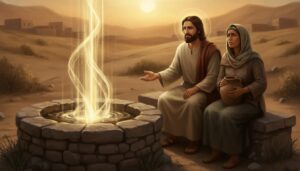

A Celebration of Liberty: Understanding the Book of Exodus and Its Relevance Today

In a world filled with chaos and uncertainty, the message of liberty and hope found in the Book of Exodus speaks volumes. The story of the Israelites’ liberation from Egypt is not merely a historical account; it serves as a powerful metaphor for the journey towards freedom and self-governance. In this blog, we will explore key themes from Exodus, the significance of the Sabbath, and how these ancient truths can guide us today.

Photo by Ioann-Mark Kuznietsov on Unsplash
The Birth of a Nation
The Book of Exodus marks the birth of a nation, a theme that resonates deeply with the foundations of modern societies. It illustrates God’s purpose in establishing nations, emphasizing that the principles laid out in the Old Testament are not just historical artifacts but vital lessons for contemporary life. The narrative of Exodus reveals that God acts with intention and purpose, aiming to cultivate a culture of liberty among His people.
At the heart of Exodus is the deliverance from Egypt, a powerful symbol of breaking free from oppression. However, the journey does not end with liberation; it extends to the cultivation of a mindset that embraces freedom. The Israelites, after being freed from slavery, had to learn how to live as free people. This transformation is crucial as it highlights that freedom is not merely the absence of chains but the presence of maturity and responsibility.

Photo by Sasha Freemind on Unsplash
The Role of the Tabernacle
One fascinating aspect of Exodus is the construction of the Tabernacle. This wasn’t just a physical structure but a vital step in the Israelites’ journey towards maturity and unity. Before they began to build the Tabernacle, the Israelites were often found complaining and lacking purpose. However, once they engaged in the sacred task of constructing the Tabernacle, a sense of community and significance blossomed among them.
This principle applies today; when individuals contribute to a common goal, it fosters growth and unity. As we gather in worship and community, we are not just fulfilling a ritual; we are actively participating in a divine purpose that can transform cultures. Each member’s contribution is essential for the growth of the body of Christ, echoing the unity found in the early Israelites.

Photo by Ben Duchac on Unsplash
Understanding the Sabbath
One commandment that stands out in the Ten Commandments is the call to remember the Sabbath and keep it holy. This commandment is unique in its placement and significance. It serves as a bridge between our responsibilities to God and our relationships with one another. The Sabbath is a day of rest, but it is also a celebration of liberty and a reminder of our identity as children of God.
The Sabbath invites us to pause from our daily labors and reflect on the deeper meaning of life. Rabbi Sacks beautifully articulates that the Sabbath is an anticipation of the messianic age, where we recover the harmony lost in the Garden of Eden. It is a day where we do not strive but rather celebrate God’s creation, acknowledging the inherent value of life beyond mere productivity.

Photo by Jason Leung on Unsplash
The Sabbath as an Antidote
In a world driven by consumerism and the relentless pursuit of gain, the Sabbath serves as an antidote to the “golden calf” mentality. It shifts our focus from the price of things to their true value. The true value of a home, for instance, lies in its function as a sanctuary for families, not merely as a commodity to be bought or sold.
By observing the Sabbath, we learn to appreciate what truly matters in life. It is a reminder that happiness is not found in accumulation but in gratitude for what we have. This perspective can heal our culture, which often equates worth with wealth, leading to a deeper understanding of our shared humanity.

Photo by Evgeniy Alyoshin on Unsplash
Transforming Nations Through Self-Governance
The principles found in Exodus extend beyond individual lives to entire nations. The concept of self-governance is paramount; no culture can thrive without individuals who govern themselves according to God’s laws. The law serves as a guide, but it is the grace of the Gospel that empowers us to live it out.
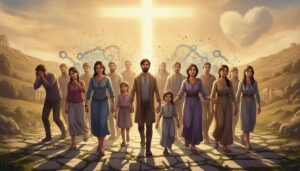
As we embrace the teachings of Jesus and allow them to permeate our lives, we begin to see transformation not only in ourselves but in our communities and nations. The journey from bondage to freedom is a collective one, and it begins with each individual choosing to follow Christ and inviting others to do the same.

Photo by Vonecia Carswell on Unsplash
A Call to Action: Come and See
In the spirit of evangelism, we must echo the invitation of Jesus: “Come and see.” This call is not just an invitation to attend church; it’s a powerful proclamation of the life-changing reality of Christ. We are called to demonstrate the beauty of holiness and the transformative power of the Gospel in our lives.
As we engage with our communities, we must have the courage to invite others into our journey of faith. Our lives should reflect the hope and joy found in Christ, drawing others to explore the depth of His love. Just as Balaam recognized the beauty of Israel despite their flaws, we too must see the incredible work God is doing in and through us.

Photo by benjamin lehman on Unsplash
Conclusion: Embracing Our Heritage
The Book of Exodus is not merely a historical account; it is a profound narrative that continues to shape our understanding of liberty, community, and faith. As we study its themes, we are reminded of our heritage and the values that have shaped our nations. By embracing these truths, we can cultivate a culture that reflects God’s love and purpose.
Let us remember that the journey to liberty is ongoing. It requires commitment, self-governance, and a willingness to invite others into the transformative experience of following Christ. As we celebrate our freedom, may we also strive to build a community that reflects the love and grace of our Savior.

Photo by Maximus Beaumont on Unsplash
A Celebration of Freedom
(Sermon Outline)
- Two weeks ago we began talking about the book of Exodus
- Exodus is about the birth of a nation – God’s plan from the beginning
- It is the key to the rebirth of our nation.
- It talks about deliverance from a culture of slavery and shows how to cultivate a culture of liberty
- Why the construction of the tabernacle is in Exodus and not Leviticus.
- When people became engaged in the work of God they became unified community with purpose and significance – building the temple is central to destroying the slave mentality and spiritual maturity
- Building the temple is about recreating the world – the kingdom of heaven.
- The OT shadow – NT substance – building the church
- In deciding how to approach the book of Exodus, so that it does not take years, we will look at themes and principles cyclically – today: Introduction and sabbath
- Exodus is about the birth of a nation – God’s plan from the beginning
- Introduction to Exodus
- The exodus is the West’s meta-narrative of hope, its inextinguishable tale of freedom…The Exodus story is the universal story of what happens when men and women are touched by the call of God, to relinquish their fetters and have the courage to begin travelling the long road to freedom.[1]
- Biblical monotheism was a revolution thousands of years ahead of its time. The exodus was more than the liberation of slaves. It was a redrawing of the moral landscape. If the image of God is to be found, not only in kings but in the human person as such, then all power that dehumanizes is ipso facto an abuse of power.[2]
- Historically, it was the covenant at Sinai and all that flowed from it, not the Greek political tradition, that inspired the birth of freedom in Britain and America, the first people to take that road in the modern age.[3]
- The birth of a nation and the journey toward freedom – Israel – Jesus is the key to Freedom!
- The purposes and work of God are the meta-narrative of history – reconciling all things!
- Israel rejected the Messiah but: Romans 11:5 (NKJV) — 5 Even so then, at this present time there is a remnant according to the election of grace.
- Romans 11:11–15 (NKJV) — 11 I say then, have they stumbled that they should fall? Certainly not! But through their fall, to provoke them to jealousy, salvation has come to the Gentiles. 12 Now if their fall is riches for the world, and their failure riches for the Gentiles, how much more their fullness! 13 For I speak to you Gentiles; inasmuch as I am an apostle to the Gentiles, I magnify my ministry, 14 if by any means I may provoke to jealousy those who are my flesh and save some of them. 15 For if their being cast away is the reconciling of the world, what will their acceptance be but life from the dead?
- God’s work among nations
- The concept of covenant was rediscovered in the West in the wake of the Reformation, where it played a major role in the “birth of the modern” and the emergence of free societies.[4]
- 1776 & 1789
- What we are for and not what we are against – repentance – coming home to our heritage
- A unique commandment
- Exodus 20:8 (NKJV) — 8 “Remember the Sabbath day, to keep it holy.
- The transition in the table of the law – it is about keeping the dream of the exodus alive in the regular routine of our lives.
- Why I picked this commandment
- the goal is hunger to study
- Exodus 20:1–2 (NKJV) — 1 And God spoke all these words, saying: 2 “I am the Lord your God, who brought you out of the land of Egypt, out of the house of bondage.
- The centrality of the tabernacle and the contents of the ark
- The Sabbath is not simply a day of rest. It is an anticipation of “the end of history,” the messianic age. On it, we recover the lost harmonies of the Garden of Eden. We do not strive to do; we are content to be. We are not permitted to manipulate the world; instead, we celebrate it as God’s supreme work of art. We are not allowed to exercise power or dominance over other human beings, nor even domestic animals. Rich and poor inhabit the Sabbath alike, with equal dignity and freedom.
- On Shabbat we rehearse utopia, or what Judaism came later to call the messianic age. One day in seven, all hierarchies of power are suspended. There are no masters and slaves, employers and employees. Even domestic animals cannot be made to work. We are not allowed to exercise control over other forms of life, or even forces of nature. On Shabbat, within the covenantal society, all are equal and all are free. It is the supreme antithesis of Egypt.[5]
- There are many principles regarding the sabbath and we are only going to look at one.
- Shabbat is the antidote to the Golden Calf because it is the day when we stop thinking of the price of things and focus instead on the value of things.[6]
- When money rules, we remember the price of things and forget the value of things…The value of a house is that it is a home… A home is a haven in a heartless world. It’s where we belong and where, if we are lucky, we raise a family.[7]
- Shabbat, one of the first commands Moses gave the Jewish people, remains as relevant now as it was then. It tells us that happiness lies not in what we buy but in what we are; that true contentment is to be found not by seeking what we lack but by giving thanks for what we have… Above all, we should never be led by the crowd when it stampedes in pursuit of gain, for that is how gold becomes a Golden Calf.
- A celebration of liberty
- The first saying of Jesus in the book of John (1:38) – What do you seek? The Lord’s prayer.
- A Celebration of Liberty
- The second saying of Jesus in the book of John (1:39) “Come and see”
- Balaam saw Israel
- John 1:17 (NKJV) — 17 For the law was given through Moses, but grace and truth came through Jesus Christ.
- John 17:3 (NKJV) — 3 And this is eternal life, that they may know You, the only true God, and Jesus Christ whom You have sent.
- Local government is the most important – self-government
- Provoking Israel to Jealousy
[1] Sacks, Jonathan. Exodus: The Book of Redemption (Covenant & Conversation 2) (p. 18). Kindle Edition.
[2] Sacks, Jonathan. Exodus: The Book of Redemption (Covenant & Conversation 2) (p. 23). Kindle Edition.
[3] Sacks, Jonathan. Exodus: The Book of Redemption (Covenant & Conversation 2) (p. 152). Kindle Edition.
[4] Sacks, Jonathan. Exodus: The Book of Redemption (Covenant & Conversation 2) (p. 12). Kindle Edition.
[5] Sacks, Jonathan. Exodus: The Book of Redemption (Covenant & Conversation 2) (p. 18). Kindle Edition.
[6] Sacks, Jonathan. Exodus: The Book of Redemption (Covenant & Conversation 2) (p. 261). Kindle Edition.
[7] Sacks, Jonathan. Exodus: The Book of Redemption (Covenant & Conversation 2) (pp. 260-261). Kindle Edition.