Unlock the River of Life: 5 Keys to Spiritual Growth

In a world filled with chaos and uncertainty, the quest for spiritual growth becomes increasingly vital. This post explores five essential keys that can help unlock your spiritual potential, drawing wisdom from biblical teachings and personal reflections.
Celebrating Independence and Source
As we gather to celebrate Independence Day, it’s essential to reflect on the deeper meanings behind this holiday. Independence represents not just freedom from oppression but also a return to our spiritual roots. Many might look to the Constitution as the foundation of America, but the true source lies in the Geneva Bible and the Christian heritage that preceded 1776. This connection is vital in understanding what makes America exceptional: a society deeply influenced by Christianity.

Photo by wisconsinpictures on Unsplash
This heritage emphasizes the freedom to worship God according to one’s conscience, a principle that should guide us today. As we celebrate, we must remember that our nation’s future hinges on our relationship with our spiritual source—Jesus Christ. Turning away from this source leads us into a state of despair, where division and anger flourish.
The River of Life
In Revelation 22:1-2, we are introduced to the River of Life, a symbol of God’s grace and healing. This river flows from the throne of God and is meant to bring life and restoration to the nations. But when does this river flow? It flows through believers who allow the Holy Spirit to work within them.
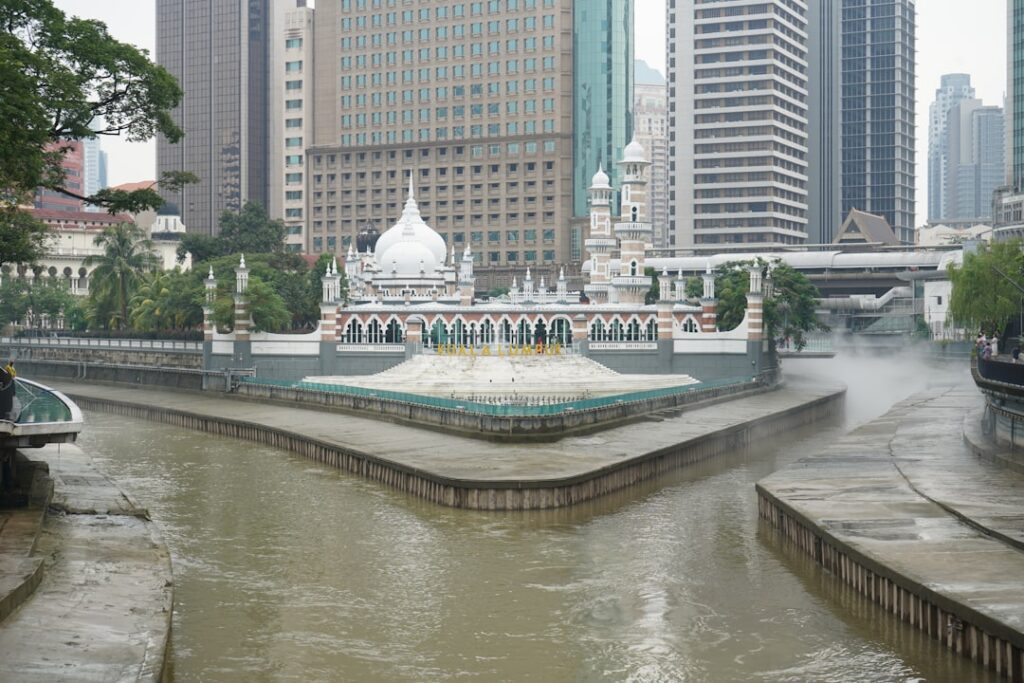
Photo by Yosuke Ota on Unsplash
The expectation of this river is not just a future event but a present reality. Every believer is called to let the living water flow from their hearts, impacting those around them. If the river isn’t flowing, we must examine what is blocking it at the source.
Overcoming Barriers: Bitterness and Fear
One of the primary barriers to this flow is bitterness. In Luke 17:3-5, Jesus instructs us to forgive those who wrong us repeatedly. Holding onto offenses can choke the river of life, causing spiritual stagnation. Similarly, fear and insecurity can hinder our ability to love and be loved. When we focus on our fears, we fail to see the potential for healing and transformation.

Photo by Mikolaj Felinski on Unsplash
It’s essential to remember that our struggles and tribulations can lead us to a place of deeper understanding and connection with God. When we allow these challenges to overwhelm us, we risk losing hope and allowing the river to dry up. Instead, we should aim our faith toward God’s promises, expecting His grace to flow freely in our lives.
The Importance of Expectation
What do you expect when you come to church or pray? The power of expectation is a critical element of our faith. If we approach God with a mindset of defeat, we may miss out on the blessings He has for us. Instead, we should cultivate an attitude of hope and anticipation, believing that God can and will move in our lives.
Photo by Patrick Fore on Unsplash
The expectation of God’s goodness should fill our hearts and minds, propelling us forward in our spiritual journeys. By focusing on His promises rather than our fears, we can unlock the river of life within us.
Releasing Resentment: The Commerce of Resentment
In our society, it’s easy to become caught up in the “commerce of resentment.” We often feel like victims of circumstances, politicians, or societal issues. This mindset can lead to bitterness and resentment, which ultimately stifles our spiritual growth. Instead, we must focus on forgiveness and grace, allowing God’s love to flow through us.

Photo by Dimmis Vart on Unsplash
Engaging in open conversations, seeking reconciliation, and letting go of grudges can help us break free from the cycle of resentment. When we choose to forgive, we not only release ourselves from the burden of bitterness but also open the floodgates for God’s love to flow through us.
Plugging into the Source: Joy and Gratitude
To keep the river flowing, we must plug into the source of joy and gratitude. The joy of the Lord is our strength, and cultivating a heart of gratitude can transform our outlook on life. When we focus on the blessings we have, we create an environment where God’s grace can flourish.

Photo by Ben Wicks on Unsplash
Rejoicing in the goodness of God, even in challenging circumstances, opens the door for His love to overflow in our lives. As we celebrate life and community, we become beacons of hope and light in a world that desperately needs it.
Conclusion: Embrace the Flow
As we continue our journey toward spiritual growth, let us remember the importance of returning to the source—Jesus Christ. Embrace the river of life that He offers, allowing it to flow freely through you. Overcome the barriers of bitterness and fear, cultivate expectations of His goodness, release resentment, and plug into the joy and gratitude that come from a relationship with Him.

Photo by Matthew Henry on Unsplash
May we be vessels of His love, bringing healing and restoration to ourselves and to the world around us. Happy Independence Day, and may we always strive to return to the source of life!
Ad Fontes
(Preaching Notes)
- Independence Day!
- The light of Western Civilization and America
- Ad Fontes!
- The prophecies that have come forth recently justify beginning this week with the same scripture as last week:
- Revelation 22:1–2 (ESV) — 1 Then the angel showed me the river of the water of life, bright as crystal, flowing from the throne of God and of the Lamb 2 through the middle of the street of the city; also, on either side of the river, the tree of life with its twelve kinds of fruit, yielding its fruit each month. The leaves of the tree were for the healing of the nations.
- When in history does this river flow?
- Ezekiel 47:9 (NKJV) — 9 And it shall be that every living thing that moves, wherever the rivers go, will live. There will be a very great multitude of fish, because these waters go there; for they will be healed, and everything will live wherever the river goes.
- There are a lot of passages of scripture that upon careful reading can be interpreted on either side of Christ’s return – how we interpret them significantly impacts expectation.
- EXPECTATION
- The river flows from the hearts of believers
- Revelation 22:1–2 (ESV) — 1 Then the angel showed me the river of the water of life, bright as crystal, flowing from the throne of God and of the Lamb 2 through the middle of the street of the city; also, on either side of the river, the tree of life with its twelve kinds of fruit, yielding its fruit each month. The leaves of the tree were for the healing of the nations.
- Last week: If the river isn’t flowing throughout the world brining life…to the source!
- The root of bitterness, offence and hurt – this week I will add fear and insecurity.
- Lk 17:3-5: Jesus tells us that 70×7 times per day to forgive – the disciples asked for increased faith.
- We looked at Moses who carried wounds and it caused him to demonize the congregation, misrepresent God and kept him out of the promised land.
- Matthew 24:9–12 (ESV) — 9 “Then they will deliver you up to tribulation and put you to death, and you will be hated by all nations for my name’s sake. 10 And then many will fall away and betray one another and hate one another. 11 And many false prophets will arise and lead many astray. 12 And because lawlessness will be increased, the love of many will grow cold.
- John Bevere – First we must ask, “Who are these offended?” Are they Christians or just society in general?[1]
- Being hurt by lawlessness.
- What does love look like? Really, I should hold up the whole bible, but for brevity we will just look at a few passages.
- Leviticus 19:17–18 (ESV) — 17 “You shall not hate your brother in your heart, but you shall reason frankly with your neighbor, lest you incur sin because of him. 18 You shall not take vengeance or bear a grudge against the sons of your own people, but you shall love your neighbor as yourself: I am the Lord. (Will read Rabbi Sacks)
- Vengeance is one of the most profoundly dangerous of human instincts, and Judaism (and Christianity) are a prolonged battle against it.[2]
- Revenge is reactive, forgiveness proactive. One who seeks revenge is allowing himself to be governed by someone else’s behaviour, to be dragged down to his level. That is something we should never do, however natural it may be to want to do so. When someone is rude to us we instinctively feel like being rude in return. But holiness – and the chapter in which the prohibition of revenge appears has the heading “Be holy” – is the ability to stand above instinct and not allow our actions to become reactions. Our task is to act graciously to others even if they act ungraciously to us. This is difficult but necessary. The alternative is revenge, and revenge is forbidden.[3]
- Joseph and his brothers when Israel gave him the coat: “Had they been able to sit together as a group, they would have spoken to one another and remonstrated with each other, and would eventually have made their peace with one another.”5 The tragedy of conflict is that it prevents people from talking together and listening to one another. A failure to communicate is often the prelude to revenge.[4]
- Leviticus 19:33–34 (ESV) — 33 “When a stranger sojourns with you in your land, you shall not do him wrong. 34 You shall treat the stranger who sojourns with you as the native among you, and you shall love him as yourself, for you were strangers in the land of Egypt: I am the Lord your God.
- It is easy to love your neighbour as yourself because throughout most of history, your neighbours were often like yourself, in culture, class, nationality, and ethnicity. The challenge is to love the stranger, the one who is not like you.[5]
- Leviticus 19:17–18 (ESV) — 17 “You shall not hate your brother in your heart, but you shall reason frankly with your neighbor, lest you incur sin because of him. 18 You shall not take vengeance or bear a grudge against the sons of your own people, but you shall love your neighbor as yourself: I am the Lord. (Will read Rabbi Sacks)
- Ad Fontes
- If the river is not flowing, the problem is at the source.
- The river is a river of life and that life is from Christ!
- The source of the river is our hearts!
- The river is the life of Christ flowing out of us – hurts, bitterness, unforgiveness, fears and insecurities cause us to misrepresent the heart of God stops the river at its source.
- When we are hurt, or feel wronged whether we actually were or not causes us to become self-focused and self-centered.
- Two great spiritual battles
- The commerce of resentment
- Aiming faith at fear
- If the river is going to flow, we need to unstop it at the source – we need to know the substance of the river – The Holy Spirit
- NEW COVENANT CHRISTIANITY
- Luke 11:11–13 (ESV) — 11 What father among you, if his son asks for a fish, will instead of a fish give him a serpent; 12 or if he asks for an egg, will give him a scorpion? 13 If you then, who are evil, know how to give good gifts to your children, how much more will the heavenly Father give the Holy Spirit to those who ask him!”
- Acts 1:8 (ESV) — 8 But you will receive power when the Holy Spirit has come upon you, and you will be my witnesses in Jerusalem and in all Judea and Samaria, and to the end of the earth.”
- Ephesians 5:18–20 (ESV) — 18 And do not get drunk with wine, for that is debauchery, but be filled with the Spirit, 19 addressing one another in psalms and hymns and spiritual songs, singing and making melody to the Lord with your heart, 20 giving thanks always and for everything to God the Father in the name of our Lord Jesus Christ,
- Romans 14:17 (ESV) — 17 For the kingdom of God is not a matter of eating and drinking but of righteousness and peace and joy in the Holy Spirit.
- 1 Thessalonians 5:15–22 (ESV) — 15 See that no one repays anyone evil for evil, but always seek to do good to one another and to everyone. 16 Rejoice always, 17 pray without ceasing, 18 give thanks in all circumstances; for this is the will of God in Christ Jesus for you. 19 Do not quench the Spirit. 20 Do not despise prophecies, 21 but test everything; hold fast what is good. 22 Abstain from every form of evil.
- Psalm 37:4 (ESV) — 4 Delight yourself in the Lord, and he will give you the desires of your heart.
- The river will flow once again from the source!!!
[1] Bevere, John. The Bait of Satan, 20th Anniversary Edition: Living Free from the Deadly Trap of Offense (p. 13). Charisma House. Kindle Edition.
[2] Sacks, Jonathan. Leviticus:The Book of Holiness (Covenant & Conversation 3) (p. 274). The Toby Press. Kindle Edition.
[3] Sacks, Jonathan. Leviticus:The Book of Holiness (Covenant & Conversation 3) (pp. 270-271). The Toby Press. Kindle Edition.
[4] Sacks, Jonathan. Leviticus:The Book of Holiness (Covenant & Conversation 3) (p. 267). The Toby Press. Kindle Edition.
[5] Sacks, Jonathan. Leviticus:The Book of Holiness (Covenant & Conversation 3) (p. 265). The Toby Press. Kindle Edition.