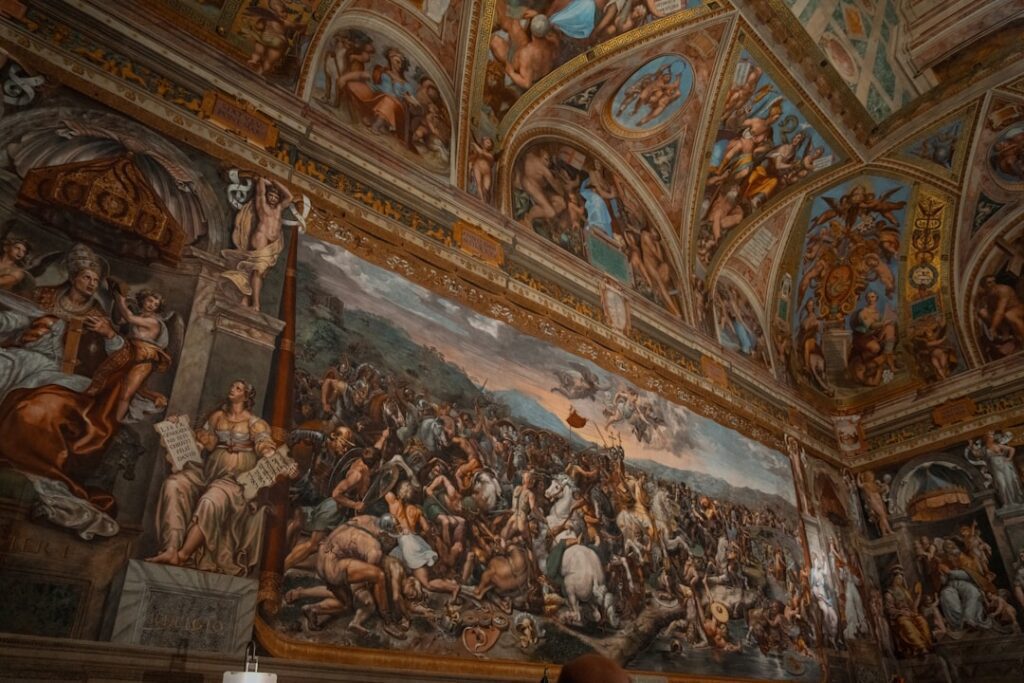
Christianity has played a pivotal role in shaping Western civilization, influencing its cultural, moral, and intellectual foundations. Emerging in the 1st century CE from the teachings of Jesus of Nazareth, Christianity quickly spread throughout the Roman Empire and beyond, becoming a dominant religious force. The early church faced persecution, yet it persisted and adapted, eventually gaining recognition and favor under Emperor Constantine in the early 4th century.
This transition marked a significant turning point, as Christianity began to intertwine with the political and social fabric of Europe, leading to profound transformations in various aspects of life. As Christianity evolved, it absorbed and reinterpreted elements from the diverse cultures it encountered. The integration of Greco-Roman philosophical thought with Christian doctrine laid the groundwork for a unique worldview that emphasized the importance of individual dignity, moral responsibility, and the pursuit of truth.
This synthesis not only shaped religious beliefs but also influenced the development of Western philosophy, law, and ethics. The establishment of the Church as a central institution in medieval Europe further solidified Christianity’s role in governance, education, and community life, making it an indelible part of Western identity.
Key Takeaways
- Christianity played a significant role in shaping Western civilization, influencing various aspects of society including morality, art, politics, education, and science.
- Christian values such as love, compassion, and forgiveness have had a profound impact on shaping Western morality and ethics, influencing laws and societal norms.
- Christianity has been a driving force behind the development of Western art and architecture, with religious themes and motifs dominating much of the artistic expression in the region.
- The influence of Christianity on Western political systems can be seen in the concept of separation of church and state, as well as the idea of individual rights and freedoms.
- Christianity has had a profound impact on Western education and literature, with many of the region’s most influential works being inspired by Christian beliefs and teachings.
Influence of Christian Values on Western Morality and Ethics
The Concept of Agape: Selfless Concern for Others
Christianity has profoundly influenced Western morality and ethics, providing a framework for understanding right and wrong that has permeated various aspects of life. Central to Christian ethics is the concept of love—agape—which emphasizes selfless concern for others. This principle is encapsulated in the teachings of Jesus, particularly in the Sermon on the Mount, where he advocates for compassion, forgiveness, and humility.
Shaping Western Moral Thought and Legal Systems
These values have been instrumental in shaping Western moral thought, promoting ideals such as charity, justice, and the inherent worth of every individual. The impact of Christian values can be seen in the development of legal systems across Western nations. Many laws reflect Christian ethical teachings, particularly those concerning human rights and social justice.
A Lasting Legacy in Modern Debates
For instance, the notion that all individuals are created equal before God has influenced democratic principles and human rights legislation. The abolitionist movements of the 18th and 19th centuries were often driven by Christian activists who argued against slavery on moral grounds, citing biblical principles that emphasize the dignity and freedom of all people. This moral framework continues to resonate today, as contemporary debates on issues such as poverty, inequality, and environmental stewardship often draw upon Christian ethical teachings.
Christianity’s Role in the Development of Western Art and Architecture
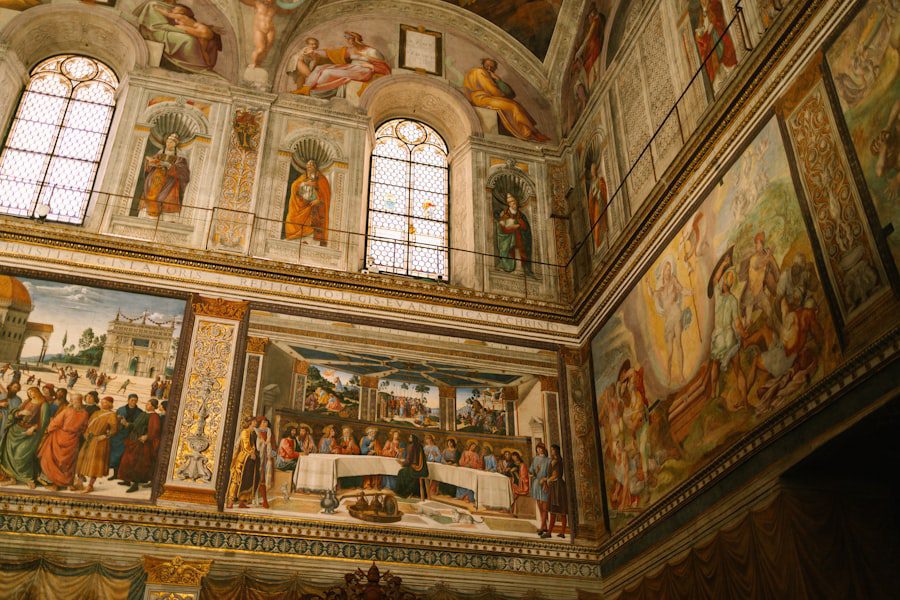
The influence of Christianity on Western art and architecture is both profound and far-reaching. From the early days of the church, religious themes dominated artistic expression, with artists seeking to convey spiritual truths through their work. The catacombs of Rome serve as some of the earliest examples of Christian art, where symbols such as the fish and the Good Shepherd were used to communicate faith in a time of persecution.
As Christianity gained prominence, so too did its artistic expressions evolve, culminating in magnificent works that would define entire epochs. The Middle Ages witnessed the construction of grand cathedrals that not only served as places of worship but also as symbols of civic pride and communal identity. Gothic architecture, characterized by its soaring spires and intricate stained glass windows, aimed to inspire awe and elevate the spirit toward God.
Notable examples include Notre-Dame de Paris and Chartres Cathedral, which showcase the technical prowess and artistic vision of their creators. These structures were not merely functional; they were designed to reflect divine beauty and serve as a testament to the glory of God. The Renaissance further transformed Christian art, with artists like Michelangelo and Raphael infusing their works with humanistic themes while remaining deeply rooted in Christian theology.
The Impact of Christianity on Western Political Systems
Christianity’s influence on Western political systems is evident in its historical role in shaping governance and law. The early church established a model for community organization that emphasized collective responsibility and moral leadership. As Christianity spread throughout Europe, it began to intersect with political authority, leading to a unique relationship between church and state.
The concept of Christendom emerged during the Middle Ages, where political leaders often sought legitimacy through their association with the church. The Magna Carta of 1215 is a prime example of this interplay between Christianity and governance. While primarily a response to the abuses of King John of England, it was heavily influenced by Christian principles regarding justice and accountability.
The document laid the groundwork for constitutional governance by asserting that even monarchs are subject to the law—a notion deeply rooted in Christian teachings about moral order. Over time, this relationship evolved into more complex dynamics during the Reformation and Enlightenment periods when ideas about individual rights began to challenge traditional authority structures.
Christianity’s Influence on Western Education and Literature
Christianity has significantly shaped Western education systems and literary traditions. The establishment of monastic schools during the early Middle Ages marked a crucial development in education, as monks preserved classical texts while also teaching theology and philosophy. These institutions laid the groundwork for universities that emerged in the 12th century, where scholars engaged with both religious and secular subjects.
The curriculum often included studies in grammar, rhetoric, logic, arithmetic, geometry, music, and astronomy—all framed within a Christian worldview. In literature, Christian themes have been central to many foundational texts in Western culture. Works such as Dante Alighieri’s “Divine Comedy” explore profound theological concepts while also reflecting on human experience and morality.
Similarly, John Milton’s “Paradise Lost” delves into themes of free will, redemption, and divine justice. These literary masterpieces not only convey religious ideas but also engage with broader philosophical questions that continue to resonate today. The influence of Christianity on literature extends beyond these canonical works; countless authors have drawn upon biblical narratives and moral dilemmas to explore human nature and societal issues.
The Spread of Christianity and Its Impact on Global Expansion
The Middle Ages: Monastic Missions and Conversion
During the Middle Ages, monastic missions aimed at converting pagan populations played a significant role in spreading Christianity across Europe. This period laid the groundwork for the faith’s expansion beyond European borders.
The Age of Exploration: A Turning Point
The Age of Exploration marked a significant turning point in the spread of Christianity. European powers sought new territories for trade and colonization, and missionaries often accompanied explorers, establishing churches and schools in newly encountered lands. This expansion had profound implications for indigenous cultures around the world.
Complex Interactions and Legacy
The introduction of Christianity alongside European colonialism led to complex interactions between faith and culture. While some indigenous peoples embraced Christianity as a means of resistance or adaptation to colonial pressures, others faced coercion or violence in its name. The legacy of this expansion is multifaceted, including the establishment of vibrant Christian communities worldwide and ongoing debates about cultural imperialism and religious syncretism.
Christianity’s Influence on Western Science and Technology
Christianity’s relationship with science has been complex but ultimately influential in shaping Western scientific thought. During the Middle Ages, many scholars were motivated by their faith to explore the natural world as a reflection of God’s creation. Monasteries became centers for learning where monks studied astronomy, mathematics, and medicine—fields that were often viewed through a theological lens.
Figures such as Thomas Aquinas sought to reconcile faith with reason, arguing that both could coexist harmoniously. The Scientific Revolution of the 16th and 17th centuries saw significant advancements in various fields; many early scientists were devout Christians who viewed their work as a way to understand God’s creation more deeply. For instance, Johannes Kepler believed that studying celestial mechanics revealed divine order in the universe.
Similarly, Isaac Newton’s groundbreaking work in physics was underpinned by his theological beliefs about God’s role in sustaining creation. While tensions arose between emerging scientific paradigms and traditional religious views—most notably during events like Galileo’s trial—the overall trajectory has been one where Christian thought contributed to scientific inquiry rather than stifling it.
The Continuing Legacy of Christianity in Western Civilization
The legacy of Christianity continues to permeate various aspects of Western civilization today. Its moral teachings remain influential in contemporary discussions about ethics, social justice, and human rights. Many social movements draw upon Christian principles to advocate for change—whether addressing issues like poverty alleviation or environmental stewardship—demonstrating how these values remain relevant in modern contexts.
Moreover, Christianity’s impact on culture is evident in literature, art, music, and philosophy. Contemporary authors often engage with biblical themes or explore spiritual questions within their narratives. In visual arts, artists continue to draw inspiration from Christian iconography while reinterpreting it through modern lenses.
The ongoing dialogue between faith and culture reflects a dynamic relationship that adapts to changing societal contexts while remaining rooted in historical traditions. In summary, Christianity’s influence on Western civilization is profound and multifaceted. From shaping moral frameworks to inspiring artistic expression and scientific inquiry, its legacy endures as an integral part of Western identity.
As society continues to evolve, the interplay between Christianity and contemporary issues will likely remain a vital area for exploration and reflection.