
The desert has historically served as a significant metaphor in spiritual traditions. It functions as a space for challenge, change, and divine encounters. Biblical narratives document figures such as Moses, Jesus, and the Israelites traversing desert environments, each experience resulting in enhanced self-understanding and purpose.
Beyond its physical characteristics, the desert symbolizes spiritual emptiness that individuals may experience. These barren settings often become places where people confront their fundamental fears, uncertainties, and vulnerabilities. The expansiveness of desert landscapes parallels the depth of human consciousness, encouraging introspection and self-discovery.
Desert environments remove external comforts and distractions, compelling individuals to face existence in its most fundamental form. While potentially uncomfortable, this process is considered valuable for spiritual development. The forty-year journey of the Israelites before reaching their destination illustrates periods of waiting and uncertainty that many experience.
These intervals serve developmental purposes, teaching self-reliance and dependence on divine guidance. The desert thus becomes a transformative environment where individuals can undergo personal renewal and embrace their perceived purpose.
Key Takeaways
- The desert symbolizes spiritual growth through silence, solitude, and surrender.
- Embracing barrenness fosters inner strength and reliance on God’s provision.
- Trusting God in difficult times reveals His presence in desolate places.
- Letting go of control nurtures faith and hope during dry seasons.
- Trusting God in the desert leads to profound personal and spiritual transformation.
Embracing the Silence and Solitude
In a world filled with noise and constant activity, the desert offers a unique invitation to embrace silence and solitude. It is in these quiet moments that we can truly hear the still, small voice of God speaking to our hearts. Silence can be intimidating; it forces us to confront our thoughts and feelings without the usual distractions.
Yet, it is within this stillness that we can find clarity and peace. The desert teaches us that solitude is not loneliness but rather an opportunity for deep communion with God. When we step away from the busyness of life and enter into solitude, we create space for reflection and prayer.
This intentional withdrawal allows us to listen more intently to God’s guidance and direction. In the silence, we can meditate on His Word, allowing it to penetrate our hearts and transform our minds. Embracing solitude in the desert can lead to profound revelations about who we are and who God is calling us to be.
It is here that we learn to appreciate the beauty of being alone with our Creator, discovering that His presence is more fulfilling than any earthly companionship.
Finding Strength in Times of Barrenness
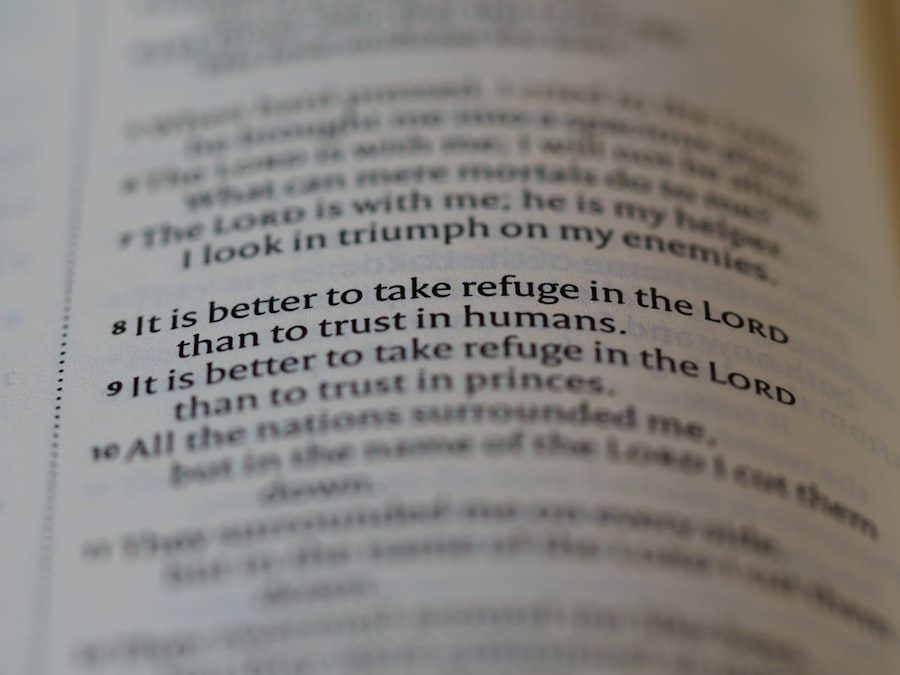
The desert often symbolizes barrenness—a time when we feel spiritually dry or unproductive. In these moments, it can be easy to lose hope and question God’s faithfulness. However, it is precisely in these barren seasons that we can discover a wellspring of strength that comes from relying on God.
Just as a seed must be buried in the ground before it can sprout into new life, we too must endure periods of dormancy before experiencing spiritual growth. During times of barrenness, we are invited to dig deeper into our faith. It is an opportunity to cultivate resilience and perseverance as we lean into God’s promises.
Scripture reminds us that even in our weakness, His strength is made perfect (2 Corinthians 12:9). When we feel like we have nothing left to give, God often reveals His power in ways we never expected. We may find ourselves drawing strength from prayer, Scripture, or the support of fellow believers.
In these moments of vulnerability, we learn that our worth is not tied to our productivity but rather rooted in our identity as beloved children of God.
Trusting God’s Provision in the Wilderness
The wilderness can be a daunting place, filled with uncertainty and fear. Yet, it is also a space where we can learn to trust in God’s provision. Just as He provided manna for the Israelites during their journey through the desert, He promises to meet our needs as well.
Trusting God in the wilderness requires us to let go of our desire for control and security. It challenges us to believe that He will provide for us even when circumstances seem bleak. In moments of doubt, we can look back at God’s faithfulness throughout history and in our own lives.
He has always been a provider for His people, often in unexpected ways. When we find ourselves in a wilderness season, it is essential to remember that God sees us and knows our needs intimately. He invites us to cast our cares upon Him (1 Peter 5:7) and trust that He will sustain us through every trial.
As we learn to rely on His provision, we grow in faith and confidence, knowing that He is with us every step of the way.
Discovering God’s Presence in the Desolate Places
| Metric | Description | Example/Insight |
|---|---|---|
| Spiritual Growth | Measure of personal faith development during dry seasons | Increased patience and reliance on God despite lack of visible blessings |
| Trust Level | Degree of confidence in God’s plan during challenging times | Consistent prayer and meditation on scripture to reinforce trust |
| Emotional Resilience | Ability to maintain hope and peace amid spiritual dryness | Practicing gratitude and community support to sustain morale |
| Scripture Engagement | Frequency of reading and reflecting on biblical passages | Daily devotionals focusing on God’s faithfulness in the desert |
| Community Support | Level of involvement with faith groups during dry seasons | Regular fellowship meetings and shared testimonies |
| Outcome | Result of trusting God through dry seasons | Renewed faith, deeper understanding, and spiritual maturity |
The desolate places of our lives can often feel isolating and lonely; however, they are also where we can encounter God’s presence most profoundly. In the midst of our struggles and pain, God draws near to us, offering comfort and solace. The desert becomes a sacred space where we can experience His love in ways that transform our hearts.
It is often in our lowest moments that we become acutely aware of His nearness. As we seek God’s presence in these desolate places, we may find that He reveals Himself through nature, Scripture, or even through the kindness of others. The beauty of creation can remind us of His majesty and care for us, while His Word provides hope and encouragement during difficult times.
In these moments of connection with God, we discover that even in our desolation, we are never truly alone. His presence brings healing and restoration, reminding us that He walks with us through every valley.
Learning to Let Go and Surrender Control
One of the most challenging aspects of navigating the desert is learning to let go and surrender control to God. Our natural inclination is often to cling tightly to our plans and desires, fearing what might happen if we relinquish control. However, true freedom comes when we release our grip on life’s uncertainties and trust God’s perfect timing and wisdom.
The desert teaches us that surrender is not a sign of weakness but an act of faith. When we let go of our need for control, we open ourselves up to receive God’s guidance and direction. Surrendering allows us to align our hearts with His will rather than forcing our own agenda.
This process can be uncomfortable; it requires vulnerability and humility as we acknowledge that we cannot navigate life on our own. Yet, as we practice surrendering daily—through prayer, meditation, or simply being still before Him—we begin to experience a profound sense of peace that surpasses all understanding (Philippians 4:7).
Nurturing Faith and Hope in the Dry Seasons
In dry seasons when hope seems distant, nurturing our faith becomes essential for survival. The desert may feel like a place devoid of life; however, it is also where faith can take root and flourish if nurtured properly. Just as plants adapt to thrive in arid conditions by developing deep roots, so too must we cultivate a resilient faith that can withstand life’s challenges.
Nurturing faith during dry seasons involves intentional practices such as prayer, worship, and engaging with Scripture. These spiritual disciplines help anchor us in truth when everything around us feels uncertain. Additionally, surrounding ourselves with a community of believers provides encouragement and accountability as we navigate these difficult times together.
Sharing testimonies of God’s faithfulness can reignite hope within us and remind us that He is still at work even when we cannot see it.
The Transformational Power of Trusting God in the Desert
Ultimately, trusting God in the desert has transformational power that shapes who we are as disciples of Christ. The wilderness experiences refine our character and deepen our relationship with Him. As we learn to trust Him more fully—through silence, solitude, barrenness, provision—we emerge from the desert transformed by His grace.
The journey through the desert may be arduous; however, it leads us closer to understanding God’s heart for us and His plans for our lives. Each step taken in faith strengthens our resolve to follow Him wholeheartedly. As disciples of Jesus Christ, embracing the lessons learned in the desert equips us to share His love with others who may be wandering through their own wilderness experiences.
In conclusion, let us not shy away from the deserts in our lives but rather embrace them as sacred spaces for growth and transformation. May we trust God’s provision, seek His presence, surrender control, nurture faith, and ultimately emerge from these experiences as stronger disciples ready to fulfill His calling on our lives.