
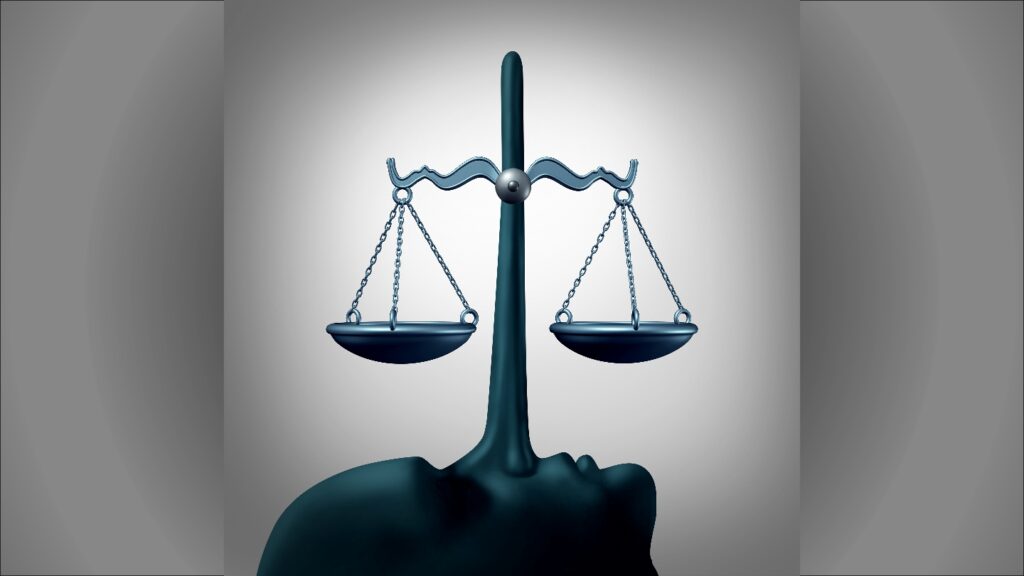
Should loopholes and lies be acceptable in our judicial system? If you were on trial for a crime, you didn’t commit it would be resounding NO! Recently, a man here in our county was released from serving twenty years of a life sentence for falsely murdering his wife. His acquittal was because it was discovered that the DA’s office withheld DNA evidence from the trial twenty years earlier that exonerated him of the crime. Nothing happened to the DA attorney for such an evil scheme. It’s about winning not justice for some District Attorneys. Equity is a branch of law that developed alongside common law to remedy some of its defects in fairness and justice, formerly administered in special courts. A flaw in our judicial process is publicly judging someone before they have a fair trial. All politicians use this illegal scheme, and it should stop as it hinders justice.
The Brady law requires for the prosecutor to release all evidence to the defense team in a case. Unfortunately, there is a loophole District Attorneys can use to their advantage. The DA can condense the evidence into a shorten version leaving out the important exculpatory proof in favor of the defendant. When this loophole happens how can there be a fair trial? Some are convicted of a crime because the law doesn’t clearly define what is wrong. United States Department of Justice charged multiple defendants with offenses that merely weren’t crimes.
The right to do what the law does not prohibit, without fear of harassment or punishment, is one of the hallmarks of a free society.[1] Another trait of a free society is an equitable trial. Virtues or ethical principles when honored by prosecutors in a judicial case, a jury will always make the right decision concerning the indictment. Whenever the prosecutors withhold information, the jury cannot render the correct verdict. Prosecutors have and do withhold exculpatory information that would clear the defendant more often than you might think. I still believe in our judicial system, but it needs maintenance like everything else that has value.
I have empathy and sympathy of concerns that our society is facing today, such as the abuse of women and wrongful verdicts from prosecutors using loopholes and lies. Prosecutors that withhold information that would exonerate a defendant or reduce the sentencing guidelines should lose their license to practice law. The “Brady law” requires prosecutors to release all info favorable for the defendant to the defense team. There lies the problem as prosecutors withhold evidence at an alarming rate in our court system today. Too often it is about winning not justice.
For example, in this hypothetical scenario, suppose you are a juror on a case of a fourteen-year-old boy charged with pedophilia of a five-year-old girl. The prosecution presents their evidence with the mother as the prime witness; she saw this violation of her daughter on Halloween night in their front yard. Other witnesses saw the boy there, but that was all. The teenage boy admitted he was there trick- a- treating along with other kids, but denied doing anything to her. Of course, there were more court maneuvers than this short narrative, but it was the crux of the case. The prosecution rests. What would be your verdict: Guilty or innocence?
I would vote guilty based on the evidence presented. However, what if later you found out that the prosecution withheld evidence that was favorable to the teenage boy. For instance, the boy, at the expense of his parents, had him take three independent lie detectors, which all 100% cleared him at the cost of 15,000 dollars. Also, the prosecutor withheld evidence of the mother of the little girl had spent time in a mental hospital on three different occasions due to outrageous claims she had made about others to be found false. Also, the prosecution held back evidence that the little girl was coached on how to answer the questions on the stand. With this new evidence hidden from you, how would you vote if it was allowed in court? Guilty or innoceny? My vote would be innocent.
This above account happened, the only difference was the secret evidence by the prosecution came out during the trial, and the boy was cleared from this crime. Even the girl’s mother broke down when crossed examined and admitted she made it up. However, because of the inflammatory headlines in the newspaper over weeks, he was put on public trial as well. In his small town, it took decades for this young boy to gain his reputation back, even though he was found not guilty. After his acquittal, the newspaper had a line about it near the produce section. If the news is fair and equitable should not the intensity of their reporting be for the benefit of the innocent as well?
Innocence until proven guilty is another quality of a free society. You see this boy in this scenario was my brother. That’s why innocence until proven guilty is personal to me, and that all exculpatory evidence be given to the defense team. My brother was fortunate as it came out in the hearings. Not everyone is as lucky as my brother. How else can you have a fair trial? My parents spent over $75,000 for my brother’s defense. This money was all of their life savings. All of this would have been avoided if it were not for a zealous prosecutor trying to get a name for himself for political promotion. Little more than a hand slap did the prosecutor receive from the Texas Law Association. Withholding evidence is a despicable characteristic of our judicial system.
Here is a list that these unethical tactics prosecutors use:
- Charging a suspect with more offenses than is warranted *Withholding or delaying the release of exculpatory evidence Deliberately mishandling, mistreating, or destroying evidence Allowing witnesses they know or should know are not truthful to testify
- Pressuring defense witnesses not to testify
- Relying on fraudulent forensic experts
- During plea negotiations, overstating the strength of the evidence Making statements to the media that are designed to arouse public indignation
- Making improper or misleading statements to the jury
- Failing to report prosecutor misconduct when it is discovered.[2]
Moreover, why do prosecutors engage in such loopholes and lies? There are no repercussions for them to stop such unethical maneuvers. According to the National Registry of Exonerations: Three persons per week are being exonerated from everything due to new DNA evidence and false witnesses.
The public trial of Judge Kavanaugh was and is a disgrace to our American way of life. Kavanaugh was judged publicly without any evidence of a crime of thirty-six years ago. Memory is a useful but delicate reality. Memory can be and often is modified for survival. The FBI and the Judiciary Committee cleared him. These two entities interviewed over 40 individuals about the accusation against him without any shred of evidence. Attorney Michael Avenatti’s client, Ms. Leighton, admitted to investigators she made up rape allegations against Kavanaugh to “get attention” and as part of a “ploy” to take down his nomination.[3] The radical left democrats, in this incident, don’t care about the presumption of innocence until proven guilty; they will destroy anyone to gain political points. Evil is not assigned to skin color, nor to a political party or a particular philosophy. Evil resides within the hearts of people.
Jefferson penned these words as he pondered over some of the ancient rights of people for the Constitution of the United States: All men and women are equal in their rights, equal before the bar of justice, and equal in God’s sight. Even though individual attributes and circumstances will be different for everyone, people are by nature equal in their rights.[4] These self-evident truths are inalienable from God not a political party. All of us are vulnerable when law and order is not equitable.
[1] Powell, Sidney. Licensed to Lie: Exposing Corruption in the Department of Justice (Kindle Locations 74-75). Brown Books Publishing Group. Kindle Edition.
[2] Powell, Sidney. Licensed to Lie: Exposing Corruption in the Department of Justice (Kindle Locations 61-66). Brown Books Publishing Group. Kindle Edition.
[3] he Townhall: Posted: Nov 06, 2018 1:00 PM
[4] Skousen, Paul B.. How to Read the Constitution and the Declaration of Independence: A Simple Guide to Understanding the Constitution of the United States (Freedom in America Book 1) (p. 12). Izzard Ink Publishing. Kindle Edition.





