The Divine Purpose of America: A Call to Spiritual Renewal
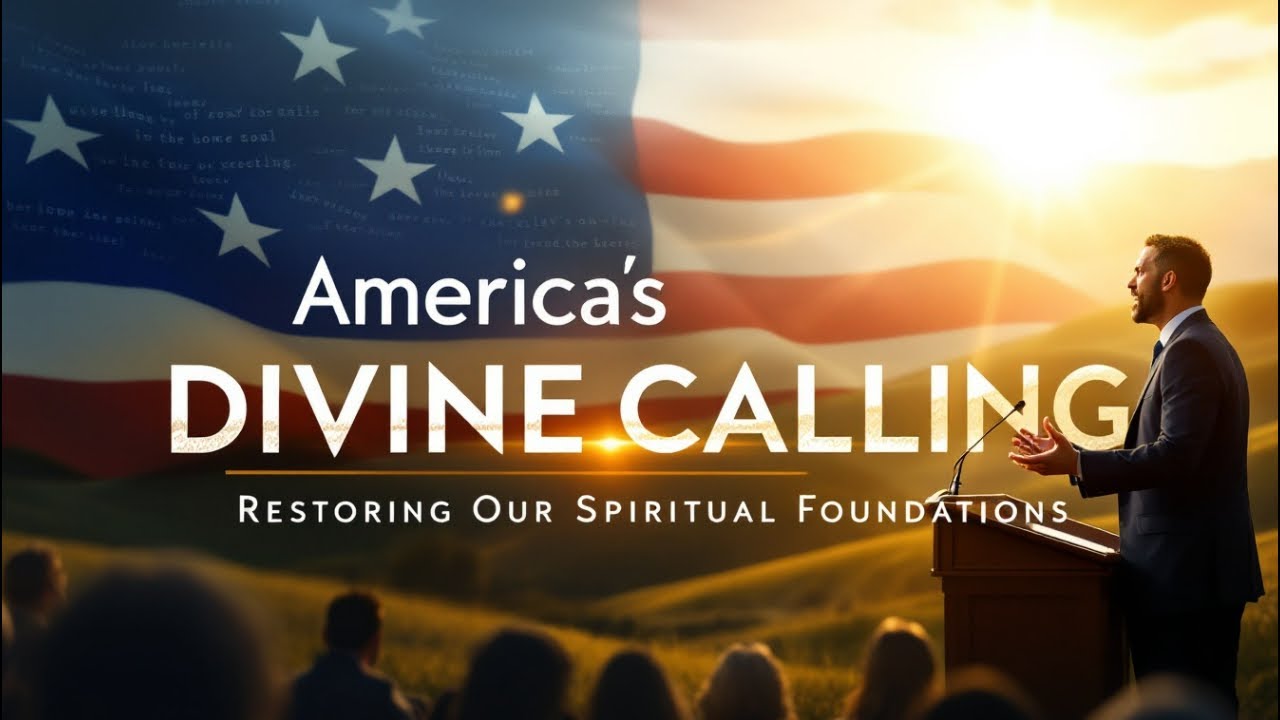
In a powerful sermon, Pastor Bill explores the profound spiritual heritage and divine calling of America, drawing parallels between ancient Israel and modern America. He challenges believers to recognize their role in restoring the nation’s original purpose and calling, emphasizing the importance of returning to biblical foundations.
The Calling and Destiny of America
The calling and destiny of America are deeply intertwined with its spiritual heritage. Just as ancient Israel was chosen for a divine purpose, so too has America been called to fulfill a unique role in the world. This calling is not merely historical; it is a living reality that demands recognition and action from all who inhabit this land. Understanding this destiny involves acknowledging both the blessings and challenges that have shaped the nation.

Photo by Antoine J. on Unsplash
Throughout history, America has been a beacon of hope and freedom. Yet, like Israel, it has faced moments of doubt and moral decline. The call to return to God is as relevant today as it was in the days of the prophets. The nation must grapple with its identity and the divine purpose it holds. This is a call to every believer to rise and reclaim the spiritual heritage that has been entrusted to us.
Elijah Rebuilds the Altar
The story of Elijah rebuilding the altar in 1 Kings 18 serves as a powerful metaphor for America today. Just as Elijah repaired the broken altar of the Lord, we too must repair the brokenness in our society and our hearts. The altar represents a place of sacrifice, worship, and acknowledgment of God’s sovereignty. In a time when many have turned away from God, it is crucial to restore this altar in our lives and communities.

Photo by Patrick Wittke on Unsplash
Elijah took twelve stones, symbolizing the tribes of Israel, to remind the people of their identity and heritage. Similarly, we must remember our roots and the values that have shaped our nation. This act of rebuilding is not just physical but spiritual, calling for a return to faith and commitment to God. It is a reminder that, despite the chaos around us, God is still present and desires to be known among His people.
Elijah Prays for Fire from Heaven
In a moment of desperation, Elijah called upon the Lord to send fire from heaven. This was not just a display of power but a profound act of faith. Elijah’s prayer was grounded in the knowledge of God’s character and His faithfulness. Today, we are called to pray with the same fervor and expectation, believing that God can and will move in our nation.

Photo by Sebastian Kanczok on Unsplash
Elijah’s prayer was a challenge to the people of Israel, urging them to choose whom they would serve. In a similar vein, we must confront the idols of our time and make a choice. Will we rely on our understanding and strength, or will we trust in the power of God to transform our lives and our nation? The call to prayer is a call to action, inviting us to intercede for our communities and the future of America.
Make America Great Again
The phrase “Make America Great Again” has resonated with many, symbolizing a desire to return to the foundational values that once defined the nation. This call is not merely political; it encompasses a spiritual awakening. To make America great again, we must first understand what greatness means in the context of our faith.

Photo by Brandon Mowinkel on Unsplash
Greatness is found in humility, service, and a commitment to God’s principles. It is a call to elevate the values of love, justice, and mercy in our interactions and decisions. As believers, we play a crucial role in this process. Our actions, words, and prayers can contribute to a cultural shift that honors God and reflects His character.
You are the Salt of the Earth
Jesus declared, “You are the salt of the earth” (Matthew 5:13). This statement holds profound significance for believers today. Salt not only preserves but also enhances flavor. In the same way, Christians are called to influence their communities positively, bringing out the best in society. We are not to be passive observers but active participants in the work of God.

Photo by Benjamín Gremler on Unsplash
As the salt of the earth, we must be vigilant about maintaining our distinctiveness. When salt loses its flavor, it becomes useless. Similarly, if believers compromise their faith or conform to the world’s standards, their effectiveness diminishes. It is essential to stand firm in our beliefs and embody the values of the Kingdom of God in every aspect of our lives.
The Power of the Gospel
The Gospel carries the power to transform lives and societies. It is through the Gospel that individuals find hope, healing, and redemption. As we embrace this message, we must also share it boldly with those around us. The power of the Gospel is not limited to personal salvation; it extends to societal transformation.

Photo by Alan Bowman on Unsplash
When the Gospel permeates a culture, it brings about justice, mercy, and compassion. It challenges systems of oppression and sets the captives free. The call to share the Gospel is not just a mandate but an invitation to participate in God’s redemptive work in the world. We must be willing to engage with our communities, sharing the hope that is found in Christ.
Individualism vs. Corporate Faith
In a culture that often emphasizes individualism, it is crucial to recognize the importance of corporate faith. While personal relationships with God are vital, the body of Christ is designed to function together. We are called to encourage, support, and hold one another accountable in our spiritual journeys.

Photo by Priscilla Du Preez ???????? on Unsplash
The early Church exemplified this corporate faith, gathering together for prayer, worship, and fellowship. In today’s context, we must cultivate relationships that foster spiritual growth and accountability. This community aspect is essential for building a strong foundation for faith, allowing believers to navigate challenges together.
Moreover, our corporate faith enables us to impact the world more effectively. When we unite as a body, our collective influence can bring about significant change. It is through this unity that we can demonstrate the love of Christ to a world in need, showing that we are not just individuals but part of a larger mission.
Christianity Past vs. Present
Christianity in the past had a profound influence on society, often acting as a guiding light for moral and ethical standards. In contrast, the present state of Christianity faces numerous challenges, including secularism and cultural relativism. The potency of faith that once shaped laws and social norms seems diminished, replaced by individualism and materialism.

Photo by Debby Hudson on Unsplash
In earlier times, believers were united in their understanding of a national identity rooted in Christian values. This collective mindset fostered a sense of purpose and community. Today, many struggle to reconcile their faith with a rapidly changing world that often dismisses spiritual truths.
The Role of Faith in Society
Despite these challenges, the essence of Christianity remains relevant. The core message of love, justice, and redemption continues to resonate with those seeking meaning. However, the approach to living out this faith must evolve to meet contemporary needs.
- Emphasizing Community: Building strong, supportive communities can help counteract feelings of isolation and despair.
- Engaging Culture: Christians are called to engage with culture, not retreat from it. This means participating in conversations about morality, justice, and human dignity.
- Living Authentically: Authenticity in faith can attract others to the message of Christ, showcasing the transformative power of the Gospel.
The Shining City on a Hill
John Winthrop’s vision of America as a “city on a hill” serves as a powerful metaphor for the nation’s potential. This imagery conjures a place of hope and refuge, where people can find freedom and dignity. It challenges us to live in a way that reflects God’s glory and love.

Photo by Farzad Mohsenvand on Unsplash
Winthrop’s sermon emphasized accountability and the responsibility of the nation to uphold its divine calling. Today, as we consider our role in society, this vision can inspire us to strive for greatness through service and integrity.
Reclaiming Our Identity
To become that shining city, we must reclaim our identity as a nation founded on biblical principles. This involves acknowledging our past mistakes while striving to embody the ideals of justice and mercy. The call to be salt and light is not just for individuals but for the collective body of Christ.
- Restoration of Values: We must advocate for values that promote human dignity and justice.
- Unity in Diversity: Embracing diversity within the body of Christ can strengthen our witness to the world.
- Faith in Action: Our faith should manifest in tangible ways, influencing our communities positively.
Baalism
Baalism, as described in the context of ancient Israel, represents the dangers of turning away from God and placing faith in secular ideologies. In modern times, this can manifest as a reliance on human systems and philosophies that ultimately lead to disillusionment.

Photo by Markus Spiske on Unsplash
This shift from divine dependence to humanistic solutions reflects a broader cultural trend. The challenge for believers today is to recognize these influences and resist them, returning instead to the foundations of faith that provide true hope and direction.
Understanding Baalism Today
Modern Baalism can take various forms, including materialism, hedonism, and the worship of progress. Each of these ideologies offers false promises that can lead to spiritual emptiness.
- Materialism: The pursuit of wealth and possessions often distracts from spiritual growth.
- Hedonism: Seeking pleasure without regard for moral boundaries can lead to destructive behaviors.
- Progressivism: The belief that humanity can perfect itself through knowledge and technology overlooks the need for divine intervention.
Prediction vs Prophecy
The distinction between prediction and prophecy is crucial for understanding God’s sovereignty in history. Predictions are based on human reasoning and often reflect a deterministic view of the world. In contrast, prophecy calls individuals into a covenant relationship with God, emphasizing the need for responsiveness to His will.

Photo by Ian Schneider on Unsplash
This understanding is vital for believers. Recognizing that prophecy is not fatalistic allows us to engage actively with God’s purposes in our lives and society. It invites us to participate in His redemptive work, rather than passively waiting for events to unfold.
The Covenant Relationship
True prophecy invites us into a deeper relationship with God, where our actions and choices matter. It challenges us to respond to His calling and to take part in shaping the future.
- Active Involvement: We must be proactive in our faith, seeking God’s guidance in our decisions.
- Community Engagement: Prophetic voices often emerge from communities that seek justice and righteousness.
- Faithful Witness: Our lives should reflect the hope and truth found in Christ, inspiring others to seek Him.
Where Does Hope for the Nation Begin
Hope for the nation begins in the church, where believers are called to live out their faith authentically. The transformation of society starts with individual hearts being changed by the Gospel.

Photo by Vonecia Carswell on Unsplash
This community aspect is essential. As we gather, support, and encourage one another, we become a powerful force for good in the world. The church must reclaim its role as a moral compass, speaking truth to power and advocating for justice.
The Role of the Church
The church’s influence extends beyond its walls. By engaging in community service, advocating for the marginalized, and promoting biblical values, believers can effect real change.
- Community Service: Acts of service can demonstrate God’s love in practical ways.
- Advocacy: Speaking out against injustice and supporting policies that align with biblical principles can influence societal norms.
- Education: Teaching biblical values to future generations is vital for sustaining a culture of faith.
Pastor Bill’s Closing Remarks
In closing, Pastor Bill emphasizes the urgency of the call to action. The time for complacency has passed; now is the moment for believers to rise and take their place in the world. The responsibility lies with each of us to embody the teachings of Christ and to be vessels of His love and truth.

Photo by Diana Polekhina on Unsplash
As we reflect on our calling, let us remember the importance of unity, purpose, and action. Together, we can rebuild the altars of faith in our communities and restore our nation to its divine purpose.
End of Service
As the service concludes, the invitation remains open for all to engage with God and seek prayer. This is a time for reflection, commitment, and renewal. Each individual is encouraged to take the next step in their faith journey, whether through prayer, community involvement, or personal study.

Photo by Pedro Lima on Unsplash
Let us leave this place inspired, ready to be the salt and light in our world. Together, we can make a difference, embodying the love and truth of Christ in all we do. Amen.
The Calling and Destiny of America
(Preaching Notes)
1) The Calling and Destiny of America
a) Why I talk about this so much and how dear it is to my heart.
i) Discovering the History of Western Civilization and the unique history of America.
ii) Discovering the destiny of the Gospel in Romans 9 – 11: Provoking to Jealousy
iii) The dream God gave me.
b) We have to decide whether we will be Jacob or Esau
2) The time we are facing as a nation reminds of Israel under Ahab and Jezebel: In the midst of hopelessness, light came out of the wilderness.
a) 1 Kings 18:20–22 (NKJV) — 20 So Ahab sent for all the children of Israel, and gathered the prophets together on Mount Carmel. 21 And Elijah came to all the people, and said, “How long will you falter between two opinions? If the Lord is God, follow Him; but if Baal, follow him.” But the people answered him not a word. 22 Then Elijah said to the people, “I alone am left a prophet of the Lord; but Baal’s prophets are four hundred and fifty men.
b) 1 Kings 18:30–31 (NKJV) — 30 Then Elijah said to all the people, “Come near to me.” So all the people came near to him. And he repaired the altar of the Lord that was broken down. 31 And Elijah took twelve stones, according to the number of the tribes of the sons of Jacob, to whom the word of the Lord had come, saying, “Israel shall be your name.”
c) 1 Kings 18:36–37 (NKJV) — 36 And it came to pass, at the time of the offering of the evening sacrifice, that Elijah the prophet came near and said, “Lord God of Abraham, Isaac, and Israel, let it be known this day that You are God in Israel and I am Your servant, and that I have done all these things at Your word. 37 Hear me, O Lord, hear me, that this people may know that You are the Lord God, and that You have turned their hearts back to You again.”
3) Make America Great Again
a) Os Guinness – To ‘make America great again,’ Mr. Trump, and to ‘restore the soul of America,’ Mr. Biden, you must address what made America America in the first place.” In his Second Inaugural Address in 1985, President Reagan spoke of America’s calling to work for the “triumph of human freedom under God.”[1]
b) The importance of a dream or a vision
c) Matthew 5:13–16 (NKJV) — 13 “You are the salt of the earth; but if the salt loses its flavor, how shall it be seasoned? It is then good for nothing but to be thrown out and trampled underfoot by men. 14 “You are the light of the world. A city that is set on a hill cannot be hidden. 15 Nor do they light a lamp and put it under a basket, but on a lampstand, and it gives light to all who are in the house. 16 Let your light so shine before men, that they may see your good works and glorify your Father in heaven.
d) John Winthrop Sermon before reaching New England: “For we must consider that we shall be as a city upon a hill. The eyes of all people are upon us. So that if we shall deal falsely with our God in this work we have undertaken, and so cause Him to withdraw His present help from us, we shall be made a story and a by-word through the world. We shall open the mouths of enemies to speak evil of the ways of God, and all professors for God’s sake. We shall shame the faces of many of God’s worthy servants, and cause their prayers to be turned into curses upon us till we be consumed out of the good land whither we are going.”
e) (Political Dictionary – “Light on a Hill”) Reagan made John Winthrop and the “shining city” the centerpiece of his farewell speech to the nation, at the end of his second term: I’ve spoken of the shining city all my political life, but I don’t know if I ever quite communicated what I saw when I said it. But in my mind, it was a tall proud city built on rocks stronger than oceans, wind swept, God blessed, and teeming with people of all kinds living in harmony and peace – a city with free ports that hummed with commerce and creativity, and if there had to be city walls, the walls had doors, and the doors were open to anyone with the will and the heart to get here…And she’s still a beacon, still a magnet for all who must have freedom, for all the Pilgrims from all the lost places who are hurtling through the darkness, toward home.
4) Like Israel in the time of Elijah, we have turned to Baal
a) (James Jordan – Judges: God’s War on Humanism) Baalism was the secular humanism of the ancient world.. Since the battle in the days of the Judges was against this ancient form of humanism… Ancient pagans worshiped Nature, while modern pagans philosophize about Nature. The belief is the same, however: the belief that Nature is self-creating…. So, what was Baalism? In ‘essence it was the ascription of power to Nature: The universe has within itself the force of life…. The true religion of Israel said that fertility was obtained by submitting to the Creator, while Baalism said that fertility was obtained by stimulating Nature. Thus, in true religion, man is the servant/slave of God, in submission to Him;… Nature religion is a religion of stimulation. Man has to stimulate Nature in order to get results. It is also seen as a way of salvation, so that modern medical scientists believe they will solve the problem of disease by learning how to control nature, and modern philosophers believe that controlling nature will permit man to control evolution and advance humanity, while modern revolutionaries from Marx to Marcuse believe that simply stimulating society through the imposition of social chaos will automatically lead to a better world. For the Christian, however, the problems of disease and social inequities are solved by submission to God and His law.
b) We must rebuild the altar of God and worship Jesus Christ!
i) Transform the church, transform the world.
ii) The pyramid and the garden.
iii) Fatalism
iv) The image of God in Man
5) Authentic and living Christianity
a) A life-giving encounter with the living God.
b) The gospel of the kingdom.
6) Rebuilding the Altar of God in America – Body Life
7) The Calling and Destiny of America
[1] Guinness, Os. Zero Hour America: History’s Ultimatum over Freedom and the Answer We Must Give (p. 160). InterVarsity Press. Kindle Edition.