
The Reformation, a monumental movement that began in the early 16th century, marked a significant turning point in European history, fundamentally altering the religious, political, and cultural landscape of the continent. It was characterized by a series of events that challenged the authority of the Roman Catholic Church and led to the establishment of various Protestant denominations. The movement was ignited by figures such as Martin Luther, John Calvin, and Huldrych Zwingli, who sought to address perceived corruption within the Church and to return to what they viewed as a more authentic form of Christianity.
The Reformation not only reshaped religious beliefs but also had profound implications for governance, individual rights, and societal structures. The Reformation’s roots can be traced back to a growing discontent with the Catholic Church’s practices, including the sale of indulgences and the opulent lifestyles of some clergy. This dissatisfaction was compounded by the rise of humanism and the Renaissance, which encouraged critical thinking and a return to classical texts.
As literacy rates increased and the printing press became widespread, ideas could be disseminated more rapidly than ever before. This environment fostered a spirit of inquiry and debate that would ultimately lead to a schism within Christianity, giving rise to new theological perspectives and challenging the long-held dominance of the Catholic Church.
Key Takeaways
- The Reformation was a 16th-century religious and political movement that led to the creation of Protestantism and significantly impacted the course of European history.
- Protestantism played a crucial role in shaping political thought by promoting the idea of individual conscience and challenging the authority of the Catholic Church and monarchs.
- Martin Luther, a key figure in the Reformation, contributed to the development of modern democracy by advocating for the separation of church and state and the importance of individual rights and freedoms.
- The Reformation had a profound impact on the separation of church and state, leading to the establishment of secular governments and the decline of ecclesiastical authority in political matters.
- The Reformation’s influence on religious tolerance and pluralism paved the way for the recognition of individual rights and liberties, contributing to the development of modern democratic societies.
The Influence of Protestantism on Political Thought
The Rise of Individual Interpretation
One of the most significant impacts was the shift towards individual interpretation of scripture, which encouraged a sense of personal agency and responsibility among believers. This theological shift laid the groundwork for political theories that emphasized individual rights and the importance of conscience in governance.
A Challenge to Authority
The idea that individuals could interpret religious texts without the mediation of clergy resonated with Enlightenment thinkers who championed reason and individualism, leading to a re-evaluation of authority in both religious and secular contexts. Moreover, Protestantism contributed to the development of concepts such as the social contract and popular sovereignty. Thinkers like John Locke drew upon Protestant ideas to argue that governments derive their authority from the consent of the governed.
Towards Democratic Governance
This notion directly challenged the divine right of kings, which had been a cornerstone of monarchical rule in Europe. The Protestant emphasis on personal faith and moral responsibility also encouraged civic engagement, as believers felt compelled to participate in shaping their communities according to their values. This engagement would eventually manifest in movements advocating for democratic governance and civil liberties.
The Role of Martin Luther in Shaping Modern Democracy
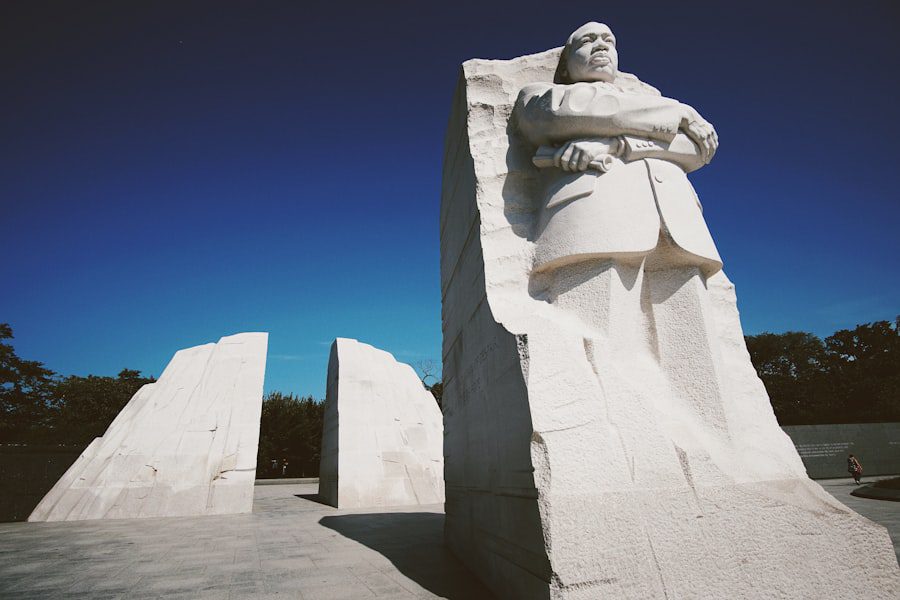
Martin Luther’s role in the Reformation cannot be overstated; his actions and writings laid the foundation for many democratic principles that we recognize today. Luther’s famous Ninety-Five Theses, which he nailed to the door of the Wittenberg Castle Church in 1517, criticized the Catholic Church’s practices and called for reform. His insistence on justification by faith alone challenged the Church’s authority and opened up discussions about individual belief and accountability.
Luther’s translation of the Bible into German made scripture accessible to ordinary people, empowering them to engage with their faith directly rather than relying solely on clerical interpretation. Luther’s ideas also had significant political implications. He argued against the notion that secular authorities were divinely ordained without question.
Instead, he posited that rulers should be held accountable to God and their subjects. This perspective encouraged a sense of civic responsibility among citizens, fostering an environment where questioning authority became more acceptable. Luther’s emphasis on conscience as a guiding principle for both personal faith and public life contributed to a burgeoning sense of individual rights that would later be integral to democratic thought.
The Impact of the Reformation on Separation of Church and State
The Reformation played a crucial role in shaping the concept of separation between church and state, a principle that has become foundational in modern democratic societies. As Protestant denominations emerged, they often found themselves at odds with established authorities, leading to conflicts that highlighted the need for distinct spheres of influence. The Peace of Augsburg in 1555 allowed for some degree of religious autonomy within the Holy Roman Empire, recognizing that rulers could determine their territories’ religious affiliations.
This marked an early acknowledgment that governance could exist independently from ecclesiastical control. The idea of separating church from state gained further traction during subsequent conflicts, such as the Thirty Years’ War, which devastated much of Europe and underscored the dangers of intertwining religious authority with political power. Enlightenment thinkers like Thomas Jefferson and James Madison drew upon these historical lessons when advocating for religious freedom in America.
They recognized that a government free from religious entanglement would better protect individual liberties and promote pluralism. The First Amendment to the United States Constitution enshrined this principle, ensuring that neither Congress nor any state could establish a religion or prohibit its free exercise.
The Reformation’s Influence on Individual Rights and Liberties
The Reformation’s emphasis on personal faith and individual interpretation of scripture significantly influenced the development of individual rights and liberties. By challenging the authority of the Catholic Church, reformers like Luther and Calvin promoted the idea that individuals have inherent rights that must be respected by both religious institutions and secular governments. This shift laid the groundwork for later philosophical developments regarding human rights, particularly during the Enlightenment.
As Protestantism spread across Europe, it fostered an environment where questioning authority became more acceptable. This questioning extended beyond religious matters into political realms, encouraging individuals to advocate for their rights against oppressive regimes. The notion that individuals possess certain unalienable rights—such as freedom of speech, assembly, and religion—can be traced back to these early Reformation ideas.
The writings of reformers inspired later thinkers like John Locke, who articulated theories about natural rights that would become central to democratic ideologies.
The Reformation’s Impact on Religious Tolerance and Pluralism

The Reformation also played a pivotal role in promoting religious tolerance and pluralism, albeit through a complex historical trajectory marked by conflict and negotiation. Initially, the emergence of various Protestant sects led to intense rivalries and persecution among different Christian groups. However, as these conflicts unfolded, they also prompted discussions about coexistence and mutual respect among diverse faiths.
The recognition that no single denomination could claim absolute truth paved the way for more pluralistic societies. In England, for instance, the Act of Toleration in 1689 allowed for greater religious freedom for nonconformists, reflecting a gradual shift towards acceptance of diverse beliefs. Similarly, in places like Switzerland and the Netherlands, debates over religious practices led to frameworks that embraced pluralism as a means to maintain social harmony.
These developments were crucial in shaping modern concepts of religious tolerance, where individuals are free to practice their faith without fear of persecution or discrimination.
The Legacy of the Reformation in Modern Democratic Societies
The legacy of the Reformation is deeply embedded in modern democratic societies around the world. Its influence can be seen in various aspects of governance, civil rights, and social structures that prioritize individual freedoms and pluralism. The principles established during this period laid the groundwork for constitutional democracies that value human rights and promote civic engagement among citizens.
In contemporary discussions about democracy, issues such as freedom of expression, religious liberty, and social justice are often framed within a context influenced by Reformation ideals. Movements advocating for civil rights frequently draw upon historical narratives from this period to highlight struggles against oppression and calls for equality. Furthermore, many democratic nations today continue to grapple with questions surrounding church-state relations, reflecting ongoing debates rooted in Reformation history.
The Continued Relevance of the Reformation in Shaping Democracy
The Reformation remains a vital reference point in understanding contemporary democratic principles and practices. Its emphasis on individual rights, accountability of authority, and religious tolerance continues to resonate in modern political discourse. As societies navigate complex issues related to governance, identity, and belief systems, the lessons learned from this transformative period serve as reminders of the importance of fostering inclusive environments where diverse voices can be heard.
In an era marked by increasing polarization and challenges to democratic norms, revisiting the Reformation’s legacy can provide valuable insights into how societies can cultivate resilience against authoritarianism while promoting respect for individual liberties. The ongoing relevance of these themes underscores not only the historical significance of the Reformation but also its enduring impact on shaping democratic ideals that continue to evolve in response to contemporary challenges.