https://www.youtube.com/watch?v=GCKmMO8bbvc
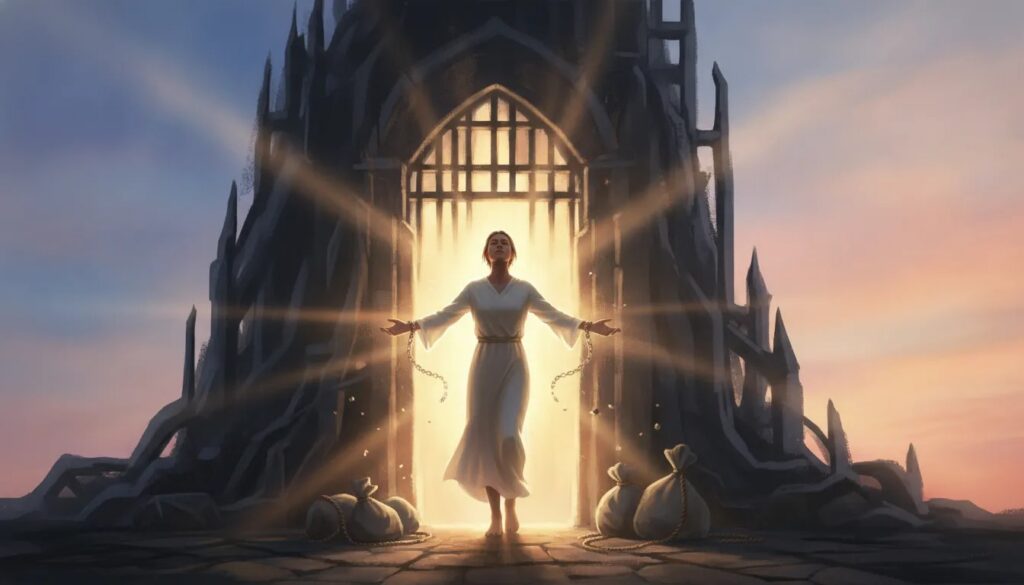
The gospel is good news. That almost sounds redundant, because the word gospel literally means good news. Yet it needs to be said again, because we have often piled so much stuff on top of it that it no longer feels like good news at all.
Too often, people hear a message that is supposed to bring life and come away carrying shame, fear, pressure, and the feeling that they are never going to measure up. Scripture, which was meant to reveal Jesus and set people free, can be used like bondage that keeps people from Him. That is deeply unfortunate.
This is not about pointing fingers at people who genuinely want to serve God, honor Scripture, and do good in the world. Most Christians do. The trouble is that we have inherited traditions, assumptions, and ways of reading the Bible that we often never stop to evaluate. Those traditions can rob us of the fullness of the gospel.
So here is the burden: let us make the gospel good news again.
Key Takeaways
- The gospel brings life and freedom, not shame, fear, or religious bondage.
- Jesus’ difficult sayings call for honest reflection rather than judgment of others.
- The kingdom of God is marked by righteousness, peace, and joy in the Holy Spirit.
- Christ’s resurrection inaugurates new creation life that transforms people and the world.
Table of Contents
- Good News Does Not Shame People Into Transformation
- Eyes to See, Ears to Hear, and the Courage to Ask Questions
- How to Read Difficult Passages Without Weaponizing Them
- False Prophets and Deception Can Look Religious
- There Is Hope in Impossible Situations
- John 10:10 and the Promise of Abundant Life
- The Kingdom Is Righteousness, Peace, and Joy
- Freedom From Fear, Offense, and Unforgiveness
- The Resurrection Is the Beginning of New Creation
- Born of God and Planted as Seed
- Good News for People, Families, Communities, and Nations
Good News Does Not Shame People Into Transformation
One of the easiest ways to bury the gospel is to communicate enormous disapproval toward people who do not meet our expectations of how a Christian ought to act. But trying to make someone feel bad does not heal them. It does not transform them. It does not set them free.
Jesus has given the church a better way, a way that brings life rather than condemnation. That does not mean pretending sin, pain, and brokenness do not exist. It means recognizing that the answer to bondage is not more shame. The answer is the life, truth, and freedom Jesus brings.
Many people live in destructive patterns not because they are simply wicked people who love darkness, but because they have been hurt, are in pain, or are trying to escape pain. Often, they do not know how to get free. If we only add condemnation to that pain, we are not offering the healing way of Christ.
Eyes to See, Ears to Hear, and the Courage to Ask Questions
Jesus asked His disciples in Mark 8:18, “Do you have eyes and fail to see, and do you have ears and fail to hear?” That question is still incredibly important.
The power of the gospel is right in front of us. God is working in history, in communities, and in individual lives. There is hope for the future. But we can become so fixed on other things that we fail to see what God is doing right now.
At some point, many of us stop asking why. We stop being curious. We learn to do religious life on autopilot. We need a restart, not just for the heart but for the mind. We need the courage to use the thing between our ears and ask better questions.
Jesus says profoundly difficult things. Some statements can sound harsh or troubling at face value, but He forces us to work through them in light of who He is and everything else He teaches. Scripture cannot be faithfully understood through shallow, unquestioning reading.
An unquestioning life is trained for bondage. If we do not think, wrestle with ideas, and ask good questions, we can be led into all kinds of tyranny and spiritual slavery.
That is why Life Springs Christian Church preaching messages continue to return to the kingdom of God, freedom, and the transforming life of Jesus. The gospel calls us into maturity, not mindless religious routine.
How to Read Difficult Passages Without Weaponizing Them
Consider Jesus’ warning in Matthew 7:15-20. He warns about false prophets who come in sheep’s clothing and says that trees are known by their fruit. A good tree bears good fruit, a bad tree bears bad fruit, and a bad tree is cut down.
That is a challenging passage. If we are honest, it ought to make us pause. A good tree cannot bear bad fruit? Then what are we to do with the bad fruit we know exists in our own lives?
The wrong answer is to automatically assume, “We are Christians, so we are the good trees. Everybody else is the bad tree.” That response bypasses honest self-examination and turns Scripture into a weapon against other people. It produces a painful, judgmental, and ugly vision of Christianity.
Jesus is not preparing us to make a list of people we think are bad trees. He is preparing us to ask a much more personal and necessary question:
How does the tree become good?
Can we become good trees through willpower, religious effort, image management, or outward compliance? Or do we need something deeper, something only God can give? That question leads us straight into the heart of the gospel.
“Go and Sin No More” Is an Invitation to Follow Jesus
The story of the woman caught in adultery helps us hear Jesus differently. After refusing to condemn her, Jesus tells her to go and sin no more. That statement is often emphasized as though Jesus is merely giving her an impossible command and placing her under pressure.
But put yourself in her place. Her life has been in danger. She has been exposed publicly. She has been released from condemnation. Then Jesus tells her to leave sin behind. Her honest response would likely be, “How am I supposed to do that?”
That is exactly the question the statement awakens.
Jesus does not simply condemn her and send her back to the same bondage. Immediately afterward, He declares that He is the light of the world and that those who follow Him will not walk in darkness but will have the light of life. The command awakens her need. The invitation reveals the answer: Come follow Me.
Jesus understands the inertia of human life. Without a new source of life, we tend to go right back to what we know. He confronts bondage in order to awaken us, then offers Himself as the way into freedom.
False Prophets and Deception Can Look Religious
Jesus warns in Mark 13:22 that false christs and false prophets will arise and seek to deceive, if possible, even the elect. That should sober us. Deception is not always obviously evil, hostile, or secular. Sometimes it comes dressed in religious language.
False prophets may sincerely believe they are serving God. They may quote Scripture, use the name of Jesus, and intend to build God’s kingdom. Yet if they do not see and hear the kingdom clearly, they may build something that is not quite right.
This struggle did not begin in modern Christianity. The New Testament itself shows the apostles confronting teachings that threatened to rob people of the true good news. From the earliest days of the church, forces have worked to exchange the gospel for bondage.
Why? Because the gospel has the power to change everything.
It can bring light into darkness. It can bring freedom where there has been oppression. It can restore people who feel broken, insignificant, unwanted, hopeless, or trapped by their past. The gospel is not a weak religious idea. It is God’s power to bring real life.
There Is Hope in Impossible Situations
The Bible is full of situations that looked impossible in the natural. A city surrounded by an army had no apparent hope, yet Hezekiah prayed and God brought deliverance. Israel stood with the Red Sea in front of them and Pharaoh’s army behind them, yet God made a way.
Again and again, Scripture tells the story of God overturning what people had every reason to call hopeless. Hebrews celebrates those who, through faith, saw remarkable deliverance, righteousness, victory, and even the dead restored to life.
This matters because so many people believe they are too far behind. They believe they ruined their lives years ago, wasted too much time, made too many mistakes, or lost opportunities that can never be restored.
But the God revealed in Scripture is the God of breakthrough, turnaround, and resurrection life.
Read the book of Ruth. Naomi returned home saying her life had become bitter and that no good could come to her anymore. Yet God brought restoration through the very story that seemed to be defined by loss. The gospel speaks to people who think it is too late: nothing is impossible with God.
John 10:10 and the Promise of Abundant Life
Jesus makes one of the clearest gospel statements in John 10:10: the thief comes to steal, kill, and destroy, but Jesus came so that we might have life and have it abundantly.
That is why Jesus came. He came to bring abundant life.
Yet we have often reduced the gospel to a message about going to heaven after death, as if life here is supposed to be miserable and hopeless but heaven will eventually make up for it. Jesus did not speak that way. He announced life, and life in abundance.
This raises an honest question: why is there sometimes such a credibility gap between that promise and the experience of Christians who feel overwhelmed by trials, discouragement, fear, loneliness, or defeat?
Maybe abundant life is not an unrealistic exception. Maybe it is the normal inheritance of the gospel. And perhaps when we are not experiencing it, something has been stealing from us what God wants to give freely in Christ.
The thief steals by making people feel worthless, hopeless, unseen, disconnected, and without purpose. The thief steals by convincing someone that the gospel might work for other people but cannot work for them. The thief steals by turning good news into another reason to feel like a failure.
That is not the voice of Jesus. Jesus came so that we might have life.
The Kingdom Is Righteousness, Peace, and Joy
Paul gives a beautiful picture of the kingdom in Romans 14:17: the kingdom of God is not about eating and drinking, but about righteousness, peace, and joy in the Holy Spirit.
This does not exhaustively define the kingdom, but it gives us a clear and powerful lens. The kingdom is characterized by:
- Righteousness that comes from God rather than self-righteous striving.
- Peace that restores people inwardly and relationally.
- Joy found in the Holy Spirit.
Paul wrote this because sincere believers were trying to make external religious regulations the proof of true faithfulness. In that context, debates over food and religious practice were robbing people of the gift God had given them.
We can do the same thing today. We can use rules, preferences, traditions, and proof-texted arguments to create a religious system that looks faithful but leaves people dying on the vine. The kingdom is not a burden of external performance. It is righteousness, peace, and joy in the Holy Spirit.
When we lose those realities, we need to stop and ask whether something has covered over the good news.
Freedom From Fear, Offense, and Unforgiveness
Freedom is not a small side topic in Scripture. From Israel’s deliverance from Egypt to Paul’s call to stand firm in the liberty Christ has given, the biblical story is filled with God bringing people out of slavery.
The kingdom of God is about liberty. The anti-kingdom is about bondage.
Likewise, the kingdom is governed by love, while the kingdom of darkness is governed by fear. When fear directs our lives, relationships, convictions, or decisions, we are not walking in the freedom Jesus purchased for us.
Fear can look spiritual. It can show up as anxiety about the future, obsessive concern about cultural decline, constant suspicion of others, or a deep belief that darkness is winning everywhere. But the gospel does not call us to live under fear. It calls us to trust the God who is alive, powerful, and at work.
Forgiveness Is the Axe to the Root
Offense and unforgiveness are another major source of bondage. Scripture speaks so much about forgiveness because people cannot live free while remaining imprisoned by pain.
When all we can see are someone else’s faults, we have become an accuser. We do not need the devil to do that work for us. Pain can make us unable to see goodness, beauty, truth, or anything worthy of love in another person.
Sometimes people have been wronged deeply. The pain is real. But the things we do to escape or relieve pain often create more destruction. Forgiveness is not denial. It is not calling evil good. It is the way God begins cutting at the root of bitterness and setting the wounded heart free.
If we cannot see something good, praiseworthy, or worth loving even in broken people, then we are not seeing as God sees. The gospel opens our eyes again.
The Resurrection Is the Beginning of New Creation
Paul says in 1 Corinthians 15 that if Christ has not been raised, preaching and faith are empty, and we remain in our sins. That can seem strange if we only understand the gospel as Jesus dying to forgive sins so people can go to heaven when they die.
Why does the resurrection matter so much if the cross alone has already settled everything?
Because the resurrection is not merely proof that Jesus survived death. It is the beginning, the inauguration, of the new creation. It is the declaration that God is bringing life out of death, turning deserts into gardens, and restoring all things through Jesus Christ.
The hope of the gospel is not escape from earth. It is the invasion of heaven onto earth. It is the reign of God breaking into the world and transforming it.
That does not minimize forgiveness. Forgiveness is glorious. But the gospel is bigger than a legal declaration. It is the new creation life of Christ taking root in people and growing into maturity.
Born of God and Planted as Seed
John 1:12-13 says that those who receive Christ and believe in His name are given the right, or power, to become children of God. They are born not by human will or natural descent, but of God.
Something real begins in us through faith. We receive the seed of new creation life. But a seed does not transform anything while it remains dormant. A seed planted in the ground must grow before it becomes a garden.
That is the goal: the life of Christ being reproduced in us.
The church is meant to be the household of faith where God provides what is necessary for that seed to mature. When the church is built according to the King’s way, when each member does their part, and when love governs the body, the people of God grow into what they were created to become.
Jesus is the firstfruits of resurrection. His bodily resurrection points forward to the final victory over death. Yet that resurrection life has already begun in the new creation God brings forth through His people today.
Good News for People, Families, Communities, and Nations
The gospel is personal, but it is not private. It gives hope, belonging, purpose, significance, worth, righteousness, peace, and joy to individuals. But it also reaches outward to families, communities, nations, and the whole creation.
Scripture gives us the image of a river flowing from the throne of God. Wherever that river goes, what was dead comes to life. Trees along the river bear fruit, and their leaves bring healing to the nations.
If nations still need healing, then the gospel is speaking about what God wants to do in history, before the final consummation of all things. God’s kingdom is not merely a future destination. It is His restoring rule at work now.
All creation groans for the revealing of the sons and daughters of God. The world needs a church that is not trapped in fear, legalism, shame, accusation, and hopelessness. It needs a people who have received the seed of Christ and are growing into mature, life-giving freedom.
The gospel really is good news. Jesus is alive. He is powerful. He is real. He came that we might have life, and have it abundantly.
May our eyes be opened to see it, our ears opened to hear it, and our lives freed to embody it.