Peacemakers Wanted: Transform Lives, Transform Nations
In the hustle and bustle of our everyday lives, we often overlook the transformative power of peace. Yet, this power is at the heart of the teachings of Jesus, particularly as outlined in the Beatitudes. In this discussion, we explore the profound impact that peacemaking can have on our lives and the world around us.
The Kingdom of God: A New Dawn
The Kingdom of God is not a distant promise but a reality dawning in our midst. Despite the darkness that seems to pervade our world, there is hope. This hope is rooted in the faithfulness of God, who is committed to completing the good work He has begun. Redemption is a covenant between the Father and the Son, promising that nations will be given to Jesus as an inheritance.

As believers, we are called to participate in this divine turnaround. The Sermon on the Mount provides a model for this participation. The Beatitudes, in particular, outline the laws that govern the operation of the Holy Spirit’s power in our lives. They teach us how to love well, live in community, and become blessings to those around us.
The Power of the Holy Spirit
The Holy Spirit is the source of the power we need to live as peacemakers. This power is not just about performing miracles or possessing spiritual gifts, though these are important. It’s about the deeper longing to love well and help others live free and full lives. This power, available to us through the Holy Spirit, is the same power that raised Christ from the dead.

Photo by Ashley Batz on Unsplash
To access this power, we must align ourselves with the laws of the Spirit as outlined in the Beatitudes. These include hungering and thirsting for righteousness, being poor in spirit, and being peacemakers. When we live according to these principles, we open ourselves up to the transformative power of the Holy Spirit in our lives and communities.
Repentance and Revival
Repentance is a key precursor to revival and ultimately leads to reformation. It’s not about feeling bad for our shortcomings but about changing our minds and returning to the Father’s house. This change of mind and direction is crucial for personal transformation and the transformation of our communities.

Photo by Filip Strueven on Unsplash
Revival is not an end in itself but a means to bring about reformation. It’s about experiencing God in such a way that we are compelled to bring His love to the world. Without a vision for reformation, revival can become self-centered. Our goal should be to bring the world into the obedience of Christ, transforming lives and nations in the process.
Peacemakers: Sons and Daughters of God
Peacemaking is central to the mission of the sons and daughters of God. The world is groaning, waiting for the revelation of these peacemakers who will love those who hate them, bless those who curse them, and do good to those who do evil. This is the kind of transformative love that can liberate creation from its bondage.

Photo by Dawid Zawiła on Unsplash
To become peacemakers, we must embrace humility and grace. It’s not about self-righteousness or judgment but about love and reconciliation. By shifting our mindset from “can’t” to “shouldn’t” in our interactions with others, we move from being world dividers to peacemakers, fostering unity and understanding.
Martin Luther King Jr.: A Model for Peacemaking
Martin Luther King Jr. serves as an inspiring example of a peacemaker. He recognized that many who supported unjust systems were good people and even good Christians. His approach was not to condemn but to enlighten, advocating for a change of mind and heart. This perspective is crucial for true peacemaking and transformation.
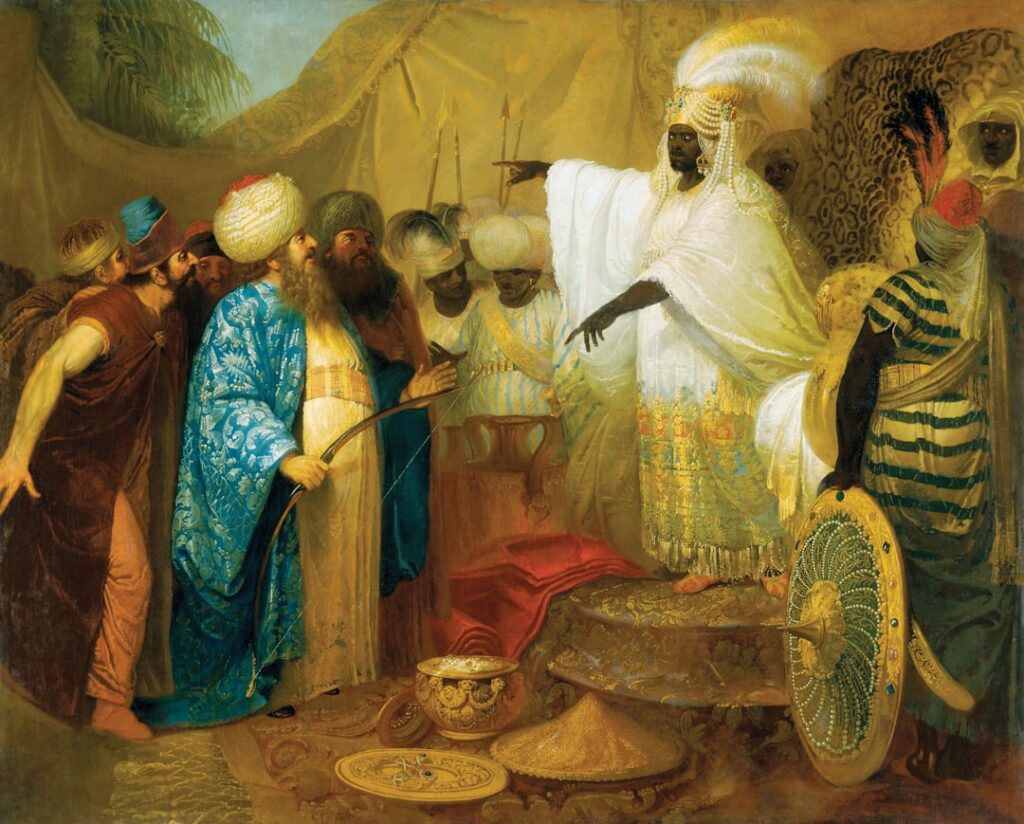
Photo by Europeana on Unsplash
King’s legacy challenges us to engage with those we disagree with in a spirit of love and humility. By doing so, we can foster dialogue and understanding, paving the way for peace and reconciliation. This approach is essential for transforming lives and nations and for fulfilling the historic mission of the church.
Transforming Lives, Transforming Nations
The call to be peacemakers is a call to transform both lives and nations. As we embody the principles of the Beatitudes, we become agents of change in the world. This transformation is not just about individual lives but about the systems and structures that shape our societies.

Photo by Daniel Curran on Unsplash
By engaging with the cultural heartbeat of our time, we can tap into the deep longings of our generation and offer the hope and love of Christ. This is how we can see a great move of God in our world, bringing about lasting change and reconciliation.
Conclusion
As we embrace our role as peacemakers, we align ourselves with the transformative power of the Holy Spirit. This power enables us to love well, live in community, and bring hope to a divided world. By living according to the principles of the Beatitudes, we can transform lives and nations, fulfilling the call to be the sons and daughters of God in our time.

Photo by Dave Hoefler on Unsplash
Let us pursue this call with passion and dedication, knowing that God is faithful to complete the work He has begun in us. Together, we can be the peacemakers that our world so desperately needs.
A Move of the Kingdom of God is Dawning in America, Pt. 4
(Preaching Outline)
1) The model for a move of God.
a) The dawn of the Kingdom of God in the gospels:
i) A world being healed
ii) Beatitudes – The laws governing walking in the Kingdom of God
2) Blessed are the peacemakers – sons of God (9) – Blessed are the pure in heart for they shall see God (8)
a) Forgiveness is about restored relationships – peacemakers
b) Repentance preceded revival and leads to reformation – We see God and become like Him
c) One of the ways King brought me to repentance:
i) One of the benefits of reading good books
ii) A Christian can’t be in support of abortion vs. shouldn’t, repentance, growth, King, Robert E. Lee, Christian friend who would support economics over abortion, – Makes me the judge and judgmental!
iii) A Christian cannot be in support of LGBTQ+ marriage or shouldn’t?
iv) Connected to viewing repentance and forgiveness – Identity & Security in Christ!
v) Bishop Mariann E. Budde at prayer service
vi) Delegitimizing my feelings, vs. Shaprio – facts do not care about your feelings
3) The inspiration of Martin Luther King, Jr. for becoming peacemakers in our generation.
a) We need to find the cultural wave to drive the gospel of Jesus and the Kingdom of God: I’ve been wrestling with where that touching point is in our culture today:
i) Loneliness & Isolation
ii) A loss of hope for the future
iii) Heath issues | Economic issues
iv) Anger, hatred, resentment, bitterness | Fear & Blame
b) Let’s look at some of the ways King called the church to embrace the move of God in his day:
c) But if the church will free itself from the shackles of a deadening status quo, and, recovering its great historic mission, will speak and act fearlessly and insistently in terms of justice and peace, it will enkindle the imagination of mankind and fire the souls of men, imbuing them with a glowing and ardent love for truth, justice, and peace. Men far and near will know the church as a great fellowship of love that provides light and bread for lonely travelers at midnight.[1]
i) Being a part of creating a better world.
ii) Why these types of messages are often hard for people to listen to?
iii) 1 Timothy 6:12 (NKJV) — 12 Fight the good fight of faith, lay hold on eternal life, to which you were also called and have confessed the good confession in the presence of many witnesses.
iv) 1 John 5:4–5 (NKJV) — 4 For whatever is born of God overcomes the world. And this is the victory that has overcome the world—our faith. 5 Who is he who overcomes the world, but he who believes that Jesus is the Son of God?
d) In spite of the noble affirmations of Christianity, the church has often lagged in its concern for social justice and too often has been content to mouth pious irrelevances and sanctimonious trivialities. It has often been so absorbed in a future good “over yonder” that it forgets the present evils “down here.” Yet the church is challenged to make the gospel of Jesus Christ relevant within the social situation. We must come to see that the Christian gospel is a two-way road. On the one side, it seeks to change the souls of men and thereby unite them with God; on the other, it seeks to change the environmental conditions of men so that the soul will have a chance after it is changed. Any religion that professes to be concerned with the souls of men and yet is not concerned with the economic and social conditions that strangle them and the social conditions that cripple them is the kind the Marxist describes as “an opiate of the people.”[2]
i) Exodus 6:9 (NKJV) — 9 So Moses spoke thus to the children of Israel; but they did not heed Moses, because of anguish of spirit and cruel bondage.
ii) They did not listen “because their spirit was broken and because the labour was harsh.” In other words: If you want to improve people’s spiritual situation, first improve their physical situation. That is one of the most humanising aspects of Judaism. Maimonides emphasises this in The Guide for the Perplexed. The Torah, he says, has two aims: the well-being of the soul and the well-being of the body. The well-being of the soul is something inward and spiritual, but the well-being of the body requires a strong society and economy, where there is the rule of law, division of labour, and the promotion of trade. We have bodily well-being when all our physical needs are supplied, but none of us can do this on his own. We specialise and exchange. That is why we need a good, strong, just society.[3]
4) The church must be reminded that it is not the master or the servant of the state, but rather the conscience of the state. It must be the guide and the critic of the state, and never its tool. If the church does not recapture its prophetic zeal, it will become an irrelevant social club without moral or spiritual authority.[4] (Blessed are the peacemakers)
a) What was unique about the society envisaged by the Torah is that every individual mattered. Justice was to be paramount. The rich could not buy special treatment and the poor were not left destitute. When it came to communal celebrations, everyone – especially the orphan, the widow, the stranger – was to be included.[5]
b) THIS WAS THE BIRTH OF AMERICA – A COVENANT COMMUNITY
i) Societal freedom cannot be sustained by market economics and liberal democratic politics alone. It needs a third element: morality, a concern for the welfare of others, an active commitment to justice and compassion, a willingness to ask not just what is good for me but what is good for “all of us together.” It is about “Us,” not “Me”; about “We,” not “I.”[6]
ii) Market economics and liberal politics will fail if they are not undergirded by a moral sense that puts our shared humanity first. Economic inequalities will grow. Politics will continue to disappoint our expectations. There will be a rising tide of anger and resentment, and that, historically, is a danger signal for the future of freedom.[7]
5) Blessed are the merciful for they shall obtain mercy. (7)
a) Ancient Greece, like Japan, was a shame culture. Judaism and the religions influenced by it (most obviously, Calvinism) were guilt cultures. The differences between them are substantial. In shame cultures, what matters is the judgment of others. Acting morally means conforming to public roles, rules, and expectations. You do what other people expect you to do. You follow society’s conventions. If you fail to do so, society punishes you by subjecting you to shame, ridicule, disapproval, humiliation, and ostracism. In guilt cultures what matters is not what other people think but what the voice of conscience tells you. Living morally means acting in accordance with internalised moral imperatives: “You shall” and “You shall not.” What matters is what you know to be right and wrong. People in shame cultures are other-directed. They care about how they appear in the eyes of others, or as we would say today, about their “image.” People in guilt cultures are inner-directed. They care about what they know about themselves in moments of absolute honesty. Even if your public image is undamaged, if you know you have done wrong, it will make you feel uneasy. You will wake up at night, troubled. “O coward conscience, how dost thou afflict me!” says Shakespeare’s Richard III. “My conscience hath a thousand several tongues / And every tongue brings in a several tale /And every tale condemns me for a villain.”4 Shame is public humiliation. Guilt is inner torment.[8]
b) We can be right and still so wrong: Cancel culture, DEI and affirmative action culture.
c) So different than a color blind society that judges people on the content of their character.
6) Do not be conformed to this world
a) Romans 12:1–2 (NKJV) — 1 I beseech you therefore, brethren, by the mercies of God, that you present your bodies a living sacrifice, holy, acceptable to God, which is your reasonable service. 2 And do not be conformed to this world, but be transformed by the renewing of your mind, that you may prove what is that good and acceptable and perfect will of God.
b) This hour in history needs a dedicated circle of transformed nonconformists. Our planet teeters on the brink of atomic annihilation; dangerous passions of pride, hatred, and selfishness are enthroned in our lives; truth lies prostrate on the rugged hills of nameless calvaries; and men do reverence before false gods of nationalism and materialism. The saving of our world from pending doom will come, not through the complacent adjustment of the conforming majority, but through the creative maladjustment of a nonconforming minority.[9]
c) We’ve been looking at some of the traditions of men in the church that are robbing the world of the kingdom of God.
d) A move of God begins with us!
7) Build on the rock
a) Matthew 7:24–27 (NKJV) — 24 “Therefore whoever hears these sayings of Mine, and does them, I will liken him to a wise man who built his house on the rock: 25 and the rain descended, the floods came, and the winds blew and beat on that house; and it did not fall, for it was founded on the rock. 26 “But everyone who hears these sayings of Mine, and does not do them, will be like a foolish man who built his house on the sand: 27 and the rain descended, the floods came, and the winds blew and beat on that house; and it fell. And great was its fall.”
[1] King Jr., Martin Luther . Strength to Love (King Legacy) (pp. 59-60). Beacon Press. Kindle Edition.
[2] King Jr., Martin Luther . Strength to Love (King Legacy) (pp. 104-105). Beacon Press. Kindle Edition.
[3] Sacks, Jonathan. Studies in Spirituality (Covenant & Conversation Book 9) (p. 112). Koren Publishers Imprint: Maggid. Kindle Edition.
[4] King Jr., Martin Luther . Strength to Love (King Legacy) (p. 59). Beacon Press. Kindle Edition.
[5] Sacks, Jonathan. Studies in Spirituality (Covenant & Conversation Book 9) (p. 228). Koren Publishers Imprint: Maggid. Kindle Edition.
[6] Sacks, Jonathan. Morality: Restoring the Common Good in Divided Times (p. 17). Basic Books. Kindle Edition.
[7] Sacks, Jonathan. Morality: Restoring the Common Good in Divided Times (p. 18). Basic Books. Kindle Edition.
[8] Sacks, Jonathan. Studies in Spirituality (Covenant & Conversation Book 9) (pp. 193-194). Koren Publishers Imprint: Maggid. Kindle Edition.
[9] King Jr., Martin Luther . Strength to Love (King Legacy) (p. 18). Beacon Press. Kindle Edition.