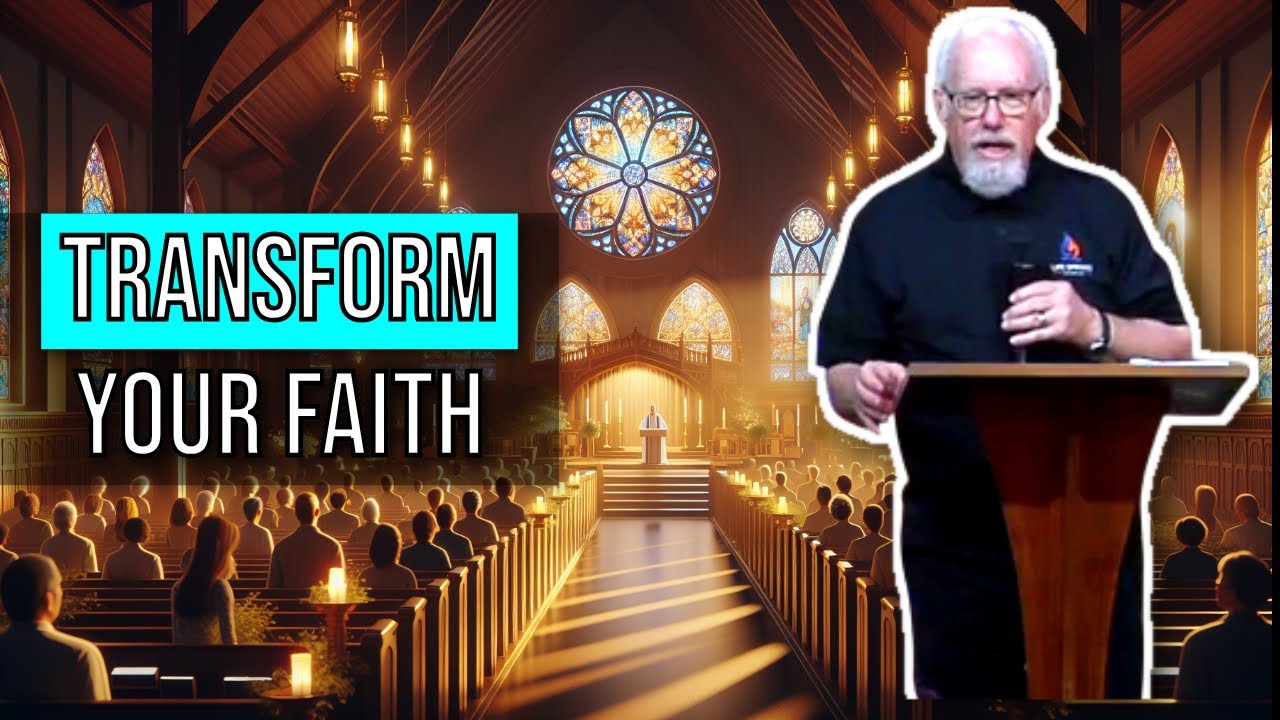
I preached this message at Life Springs Christian Church because I believe spiritual growth is not optional — it’s the heart of what God is doing through his church. In “Spiritual Growth Starts Here: Are You Ready?” I explore how we move from spiritual childhood into maturity, using the prodigal son, Scripture (especially Ephesians 4), and a few awkward personal stories to illustrate what growing up in Christ actually looks like.
Outline of the Message
- Why spiritual growth matters for the church’s mission
- How the Bible’s literary design shapes our understanding
- Patterns in Scripture: the sibling-rivalry motif and the prodigal son
- Stages of growth: child → youth → maturity
- Practical marks of maturity: humility, unity, service, discipleship
- How the Great Commission relates to our growth
Opening: A Little Humor and a Big Vision
We started with a silly idea — a bingo card in the bulletin taken from our church’s mission and vision — and a threat to put $20 bills in bulletins so people would actually read them. Why the joke? Because our mission is serious: “Becoming a community that restores the world by reproducing the life of Christ with imperfect people growing in grace and serving through the gift of the Holy Spirit.”
That mission isn’t a slogan to be recited; it’s a trajectory. The church exists to restore human flourishing through the Gospel. Jesus said he would build his church — not just change individual behavior or start a religion of rules — and that means growth together, as a body.
Growing Up in Faith — The Challenge
When I read Ephesians 4 it hit me: “We are to grow up in all aspects into him who is the head, even Christ” (Eph. 4:15–16). Growth is the expectation. But many of us still act like spiritual children. Maybe we’re trying to impress God with our own righteousness, or maybe we’ve run away from the responsibilities God intended for us — like my own story of sneaking in past curfew only to get yelled at to “grow up.”
Real spiritual growth is not merely moral improvement; it’s maturity that equips us to serve the whole body. Ephesians 4:11–16 shows how leaders are given to the church “for the equipping of the saints for the work of ministry.” The question for each of us is: are we equipping and being equipped?
The Bible as Masterful Literature — Read It Like It Matters
The Bible is not a random collection of sound bites. It’s great literature — a sweeping plot with recurring themes and motifs. Treating it like a grab-bag of proof texts or a rulebook misses the richness God intended. Read passages in context. Ask who is speaking, who is being addressed, and what genre you’re reading (poetry, parable, narrative, prophecy).
Parables and allegory are pictures, not always step‑by‑step blueprints for end-times speculation. Proverbs uses parallelism and tension for teaching, not contradiction. When we read well, the Bible shapes us, makes us wrestle, and brings us into living relationship with God — just like Job’s difficult conversations invite honest questions rather than shallow answers.
How Christians Misuse Scripture
- Making it mythology or just a nice story.
- Turning it into a mechanical list of dos and don’ts.
- Treating it as a motivational quote book without context.
- Using it as a rigid divine dictation where doubt isn’t allowed.
- Using it like the I Ching — a fortune-telling device.
Each of these approaches leaves people immature. We must read Scripture responsibly, with humility and willingness to be shaped.
Patterns in Scripture: The Sibling-Rivalry Motif
One motif I kept seeing: sibling rivalry. Cain and Abel, Esau and Jacob, Joseph and his brothers, Aaron and Moses — these stories repeat certain dynamics:
- The older brother receives a calling or responsibility.
- The younger brother leaves (or is sent away) and faces crisis.
- The younger brother grows through hardship, receives blessing, and eventually becomes a blessing to others.
In many cases the older sibling fails to carry out his task; the younger one, through hardship, matures and brings blessing back to the household. The prodigal son is another expression of this pattern. The point is not to celebrate rebellion, but to show how God uses brokenness to refine, restore, and bless — and how the family (or the church) must receive and restore the repentant.
Stages of Spiritual Growth: Child, Youth, Mature
The Child
Jesus said we must become like children to enter the kingdom — but not childish. A childlike Christian is dependent, hungry, and teachable. They recognize they need God and the Spirit’s power. Nicodemus couldn’t “see the kingdom of God” without being born again (John 3), and Paul reminds us that the natural person cannot accept the things of the Spirit (1 Cor. 2).
Becoming born again is the first essential step. Without spiritual birth, we might be moral, religious, or busy, but we won’t understand or participate in the life God is calling us into.
The Youth
Youth is a time of questions, practice, and mistakes. Many biblical heroes began young: Joseph, David, Samuel, Timothy. Paul tells Timothy not to let anyone despise his youth but to set an example in speech and life. Youth in the church should be engaged, reading publicly, learning to serve — not hidden away.
Growth comes through practice. Faith is exercised, not merely theorized. Youthful mistakes can be formative when they’re met with discipleship, not condemnation.
Maturity
Maturity looks like humility, patience, and unity. Ephesians 4 calls us to “attain to the unity of the faith and of the knowledge of the Son of God, to a mature man” — no longer tossed by every wind of doctrine, but speaking the truth in love and building up the body.
A mature Christian bears with others, keeps the unity of the Spirit in the bond of peace, and uses gifts to equip the whole body. Maturity is not perfection; it’s the pattern of loving service and stability under pressure.
Practical Marks of Mature Christians
- Humility — considering others more important than yourself (Philippians 2:3).
- Patience — bearing one another’s weaknesses with grace.
- Unity — sharing the same mission and vision, intent on one purpose.
- Service — saints doing ministry, not spectators watching leaders alone do the work.
- Joyful discipleship — building one another up in teaching, singing, and thankfulness (Colossians 3:16).
Discipleship should feel like singing to each other — a joyful mutual encouragement — not a legalistic checklist. The early church trained people to minister, read publicly, and even handle difficult moments together. That kind of involvement grows maturity.
Discipleship and the Role of Leaders
Leaders — apostles, prophets, evangelists, pastors, and teachers — are given to equip the saints, not to do all the work themselves. Too often we treat church like a spectator sport: leaders play while the congregation watches. God calls us to be the players.
Equipping looks like practical training, encouragement, and permission to fail while learning. It looks like older members making room for younger ones, helping them find their gifts, and welcoming those who return from wandering.
The Great Commission and the Goal of Growth
All of this growth points to the Great Commission. Jesus told his followers: “Go therefore and disciple the nations, baptizing them…and teaching them to observe all that I commanded you” (Matt. 28). The point of maturity is not self-satisfaction. Mature Christians are sent to restore the world through the Gospel.
Christ promises presence and power: “Behold, I am with you always.” When we grow up together as a healthy body, the world sees the church’s distinctive witness and receives blessing.
So, What Now? Practical Next Steps
- Be honest about your stage. Do you need new birth? Fresh dependence? Practice in serving?
- Read the Bible in context. Wrestle with it. Read whole chapters, ask who is speaking, and lean into the genres.
- Get involved. Stop being a spectator. Find a place to serve and let God equip you through practice.
- Enter discipleship that builds joy and community, not legalism. Teach and encourage one another.
- Bring your growth home. Bless your family, your church body, and the world by living what you learn.
Conclusion: A Call to Grow
We were made to grow — together, as a body. God has given gifts and leaders to equip the saints, and he expects us to respond in humility, service, and unity. Whether you relate to the prodigal who needs restoration, the older brother who needs compassion, the youth who needs opportunity, or the child who needs the milk of the Word — there’s a place for you in this process.
As Paul reminded the Philippians and as I remind you now: work out your salvation with fear and trembling, for it is God who works in you both to will and to work for his good pleasure. Let’s be a community that truly restores the world by reproducing the life of Christ — imperfect people, growing in grace, serving through the gift of the Holy Spirit.
If you’re ready to take the next step, talk with someone in our church leadership or join a discipleship group. Grow up — not alone, but together.
“We are to grow up in all aspects into him who is the head, even Christ.” — Ephesians 4