
Restoring America’s Godly Heritage

Restoring America's godly heritage begins with recovering the kingdom's principles: walking in the Spirit, practicing sacrificial love, and choosing transformation over mere religious observance. When those things guide us, the Bible promises practical outcomes: rebuilding waste places, strengthening foundations, and healing civic and social life. In a time when civility is fading, we must reflect the character of Christ in our relationships. By choosing curiosity and compassion over condemnation, we can disarm dehumanizing ideologies and foster genuine connections. Discover how ordinary people can become repairers of the breach and bring restoration to our communities.

Watch the Video!

YouTube player

The gospel of Jesus Christ is not a private comfort or a checklist of do’s and don’ts. When lived out in love and powered by the Spirit, it brings healing, restores relationships, and rebuilds the foundations of communities and nations. This is not sentimental optimism. Scripture promises that those who walk in the kingdom principles will become “repairers of the breach” and “restorers of streets to dwell in.” That promise is our calling and our legacy.

The river of life and a practical kingdom vision

Scripture paints a vivid picture: a river of life that revives the dead, with trees by its banks bearing mature fruit and leaves that heal the nations. This image captures the heart of kingdom influence. Mature believers—the fruit-bearing trees—are intended to bring restoration wherever they go.

Framing the ‘river of life’ kingdom vision — mature believers bringing restoration to communities.

Restoring America’s godly heritage begins with recovering the kingdom’s principles: walking in the Spirit, practicing sacrificial love, and choosing transformation over mere religious observance. When those things guide us, the Bible promises practical outcomes: rebuilding waste places, strengthening foundations, and healing civic and social life.

Civility is fading—what that means for society

When public conversation turns from reason to vilification, civility suffers—and with it, the health of a civilization. Anger, fear, and dehumanizing rhetoric fracture relationships, polarize families, and make violence more likely. If people stop seeing one another as fellow image-bearers, the door opens to cruelty in the name of righteousness.

“Read any comment section on the web and you will see the replacement of reason by anger, an argument by vilification.
Civility is dying. And when it dies, civilization itself is in danger.”

The remedy is not primarily policy or persuasion. It begins with people who know a different way to live—people who reflect the character of Christ in ordinary relationships.

Humanizing the other: a surprising pathway out of hatred

One of the most arresting examples of cultural healing is the work of a man who chose curiosity and friendship over condemnation. He sat with adversaries, listened, and persistently treated them as human. The result was startling: leaders of extremist groups began to leave those organizations because someone had shown them a different kind of human encounter.
Patient listening modeled from the pulpit opens doors to human connection.

The principle is simple and subversive: you do not defeat dehumanizing ideology by mirroring it. You disarm it by showing dignity, safety, and genuine love. People are often loudest about their fears of identity being erased or their losses. Addressing those fears with compassion and authenticity opens doors that argument alone never will.

Why ideas matter

Weapons win wars, but ideas win peace. If we hope to rebuild civic life, we must match conviction with a winsome, truthful witness that persuades hearts as well as minds. A grassroots movement of everyday faithful people who practice love without a hook can change the culture one relationship at a time.

Look inward first: the Bible’s ethic of self-criticism

Revival begins when people ask, “How am I part of the problem?” The Bible repeatedly calls God’s people to self-examination rather than finger-pointing. Historical examples show the consequences when communities forget this.
A clear, centered shot of the speaker urging the congregation toward humble self-examination.

The early colonial experiment with enforced communal sharing collapsed because human nature varied in effort and motive. When leadership repented of greed and reoriented toward blessing others, provision returned. The lesson is enduring: humility and repentance invite God’s blessing; self-righteousness and blame produce decay.

Fear vs. love: the heart of the struggle

Fear is not simply a private anxiety; scripture describes fear as a form of bondage that enslaves whole societies. When fear is the organizing principle—fear of loss, fear of change, fear of cultural disappearance—it leads to reactive, destructive decisions that often bring about the very ends people most dread.

“Perfect love casts out fear.”

We hear an earnest, compassionate appeal from the pulpit.

That is not a soft platitude. Perfect love is a cleansing power that dissolves the torments that drive violent, divisive behavior. When love—not shame, not domination, not manipulation—shapes our witness, we release people from fear and invite transformation.

Love the sin and refuse to dehumanize the person

Hating injustice, exploitation, and arrogance is right. But when that hatred becomes a weapon against people, it reproduces the very damage it claims to oppose. The alternative is robust discernment plus enduring compassion: condemn wrongdoing, but meet the wrongdoer as a human being in need of grace.
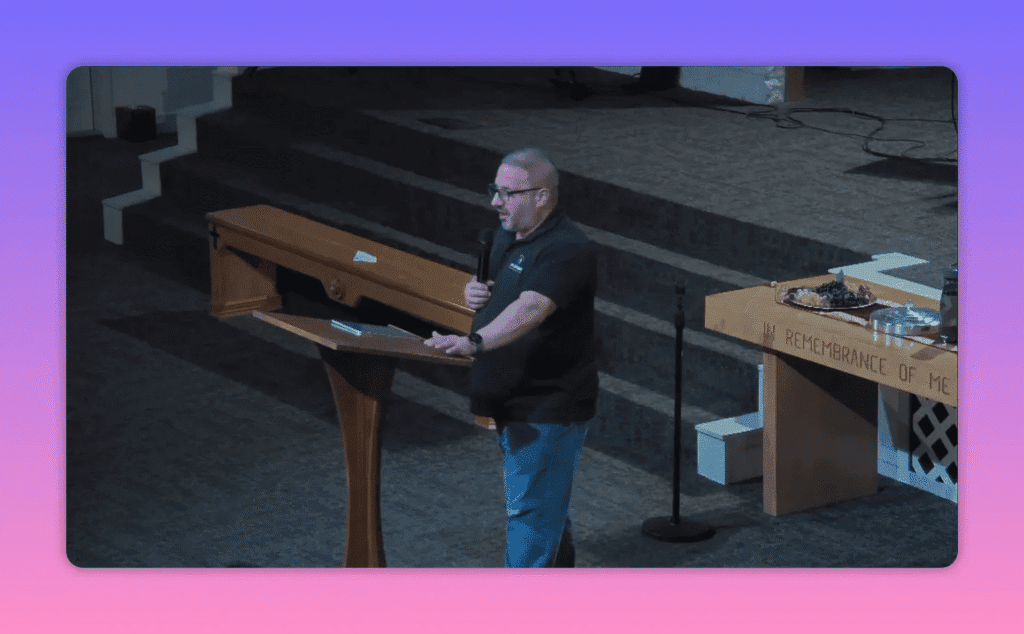
Standing rooted at the lectern — a posture that models loving firmness.

This posture is not sentimental weakness. It requires a deep identity rooted in Christ so that insults, abuses, and rejection do not destabilize who you are. That rootedness lets you be the kind of person who can carry peace and joy into contentious spaces.

How to become a restorative presence

Rebuilding civic life is less about grand strategies and more about daily disciplines. Below are practical steps a person, family, or local community can adopt to be repairers of the breach.

  • Practice hospitality and curiosity: Talk to people outside your echo chamber and ask genuine questions.
  • Choose self-examination over blame: Ask how your attitudes or methods may be driving division.
  • Demonstrate love without a hook: Love people because they are image-bearers, not to get them to agree with you.
  • Root your identity in Christ: Let your security come from being known and loved by God, not from public approval.
  • Seek revelation of Jesus daily: Read Scripture, worship, and cultivate encounters that shape your vision of Christ.
  • Act locally and sacrificially: Repair neighborhood relationships, volunteer, and invest in institutions that promote flourishing.
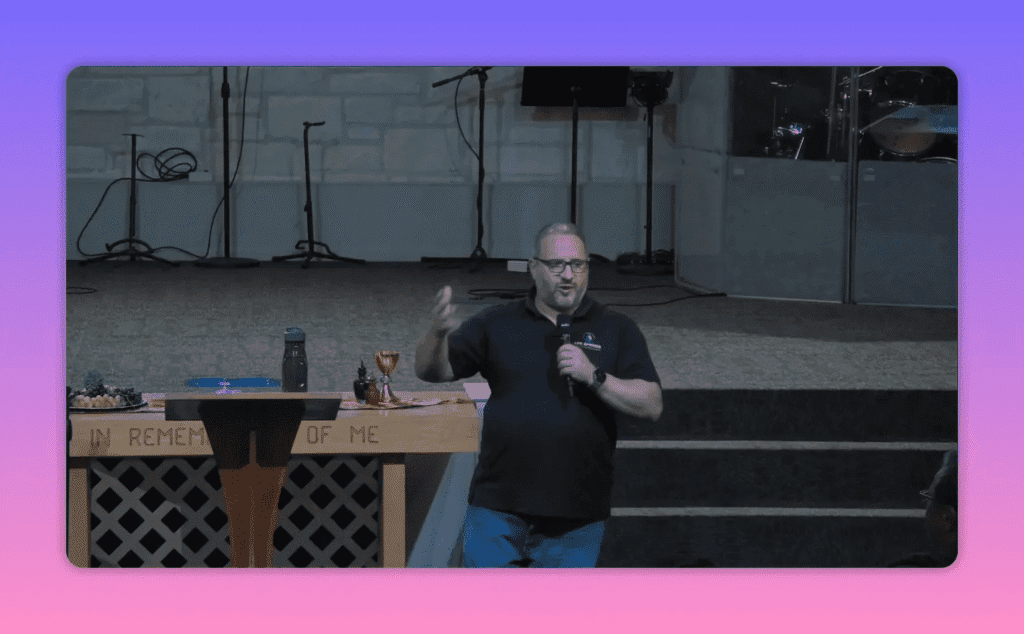
Centered teaching moment — modeling a restorative presence from the pulpit.

Seeing Jesus is the path to becoming like Him

Sanctification is not a checklist. The way we are transformed is by beholding Christ. As we see him more clearly through Scripture, worship, and community, we become progressively more like him—more loving, courageous, and restorative.

That transformation fuels a distinctive public life: people who act with conviction and compassion, who carry hope when civility fails, and who help rebuild the old waste places of society.
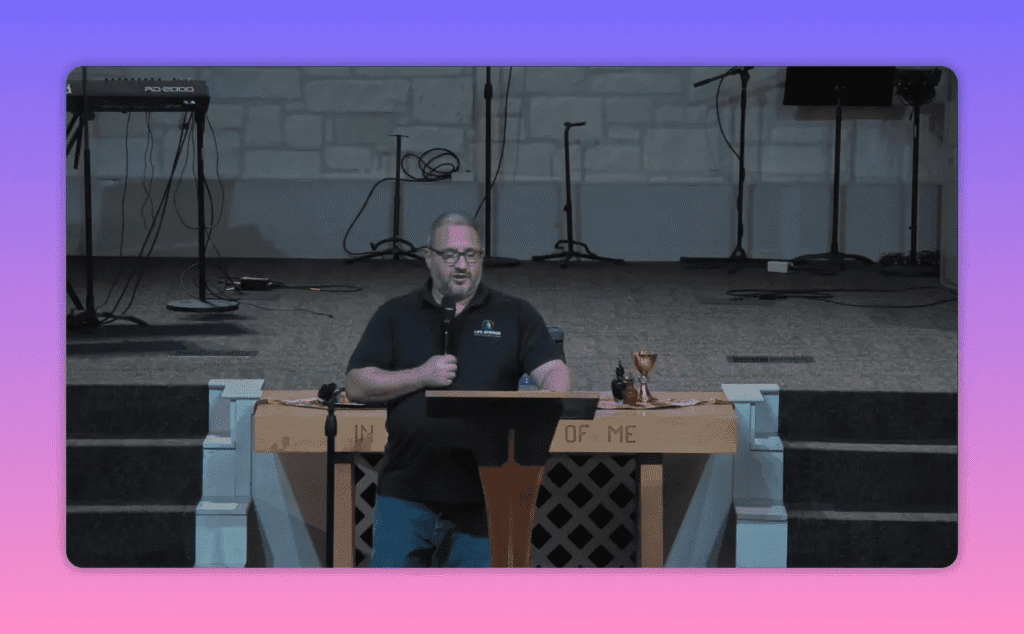
A centered, reflective pulpit moment — seeing Jesus shapes how we live.

Conclusion: opportunity in a season of crisis

These times are not merely a crisis; they are an opportunity. When fear and anger surface publicly, the contrast of patient, Spirit-led love shines all the brighter. The church is called not to retreat but to be salt and light—repairers of the breach, restorers of streets to dwell in. There is no brokenness beyond the scope of the gospel when ordinary people submit to God’s love and let it change how they relate to others.

Choose transformation over reaction. Practice humility, receive God’s love, and be the kind of neighbor who rebuilds rather than destroys. The work is both ancient and urgently contemporary: healing nations by restoring the human, image-bearing dignity of every person.

Facebook
LinkedIn
X
Email

Related Sermons

Church speaker at a podium discussing Easter hope and God’s faithfulness when hopes collapse

Why the Resurrection of Jesus Changes Everything

Every year, when Resurrection Sunday comes around, there is a sense that words are not enough. We instinctively know that what we celebrate is too weighty and beautiful to fully capture. The resurrection of Jesus is not merely a cherished doctrine; it is the turning point of history, the defeat of death, and the beginning of a new way of living. This message carries the weight of hope and victory, demanding our attention and inviting us to explore how it transforms our lives and the world around us. Discover how the resurrection shapes our faith and daily existence.

Read More »
Church speaker gesturing while teaching at lectern in church sanctuary

Why “Go and Make Disciples” Is Actually Mistranslated

What if the Great Commission isn’t a heavy burden of pressure and guilt, but an invitation to live fully in Christ? Instead of merely “going” to make disciples, imagine a life where disciple-making flows naturally from your everyday activities. This shift transforms the command into a joyful expression of faith, where you bear witness to Jesus simply by being who you are. Discover how understanding the heart of this message can liberate you from striving and lead you into a vibrant, grace-filled life that reflects the beauty of God’s kingdom in every sphere of your existence.

Read More »
Speaker raising one arm and holding a microphone during a rainy sermon at a church stage.

The New Creation Begins: The Power of the Resurrection

The resurrection of Jesus is not just a past miracle; it is the powerful beginning of a new creation that is unfolding in our world today. This transformative event declares that death, darkness, and sin do not have the final word. As we embrace the reality of Christ’s resurrection, we are invited to participate in God’s renewal of the world, moving beyond a limited gospel of escape to a vibrant faith that seeks to bring healing and hope. Discover how the resurrection empowers us to grow into mature sons and daughters of God, ready to impact our communities and creation itself.

Read More »
Pastor preaching near a church pulpit with stained glass backdrop

Overcoming Fear: Why Looking to Jesus Changes Everything

In moments when fear and anxiety seem overwhelming, the question we must ask ourselves is not just, “What do I do next?” but rather, “What am I looking at?” Hebrews 12 invites us to look unto Jesus, the author and finisher of our faith. Through the stories of imperfect people like Hezekiah and Paul, we discover that nothing is impossible with God. This journey of faith is not about controlling outcomes but about coming to Him with our burdens. Join us as we explore how looking to Jesus transforms our perspective and empowers us to overcome fear and endure life’s challenges.

Read More »
Pastor speaking from the pulpit on church steps during a sermon

Reaching the Unreached in Nigeria and Breaking Free From the Limitations We Accept

In a world filled with limitations, both external and internal, the call to break free resonates deeply. Imagine living like a powerful elephant, yet tethered by the ropes of past failures and fears. This message challenges us to confront the boundaries we’ve accepted and to embrace the freedom that Christ offers. As we reflect on the mission in Nigeria, we are reminded that the church is called to shine brightly, even in the darkest times. Are you ready to decide to break free and step into your God-given potential? Discover how you can shake off the yoke and rise.

Read More »
Preacher delivering a sermon at a church podium with microphone and open notes

Matthew 7:21-24 Explained: Does God Truly Know You?

How do you answer the question when God asks, “Where are you?” This isn’t about your physical location or church attendance; it’s a deeper inquiry into your relationship with Him. It’s possible to be active in ministry and still feel spiritually dry. Jesus warns us in Matthew 7:21-24 that not everyone who claims to know Him truly does. This message invites you to reflect on your intimacy with God, to assess where you stand in your faith, and to rekindle that genuine connection. Are you ready to take a spiritual inventory and discover where you truly are?

Read More »
Speaker behind a podium holding a microphone during a church sermon

How to Forgive When Your Flesh Demands Justice

When I think of the Garden of Eden, I picture light—a world filled with the presence of God, where heaven and earth were one. But then sin entered the story, plunging humanity into darkness. This movement from light to darkness reveals our deep longing for justice and reconciliation. The haunting cry of Abel’s blood for justice echoes through time, yet the blood of Jesus speaks a better word—mercy. Discover how the gospel breaks the cycle of vengeance and invites us into a new creation, where forgiveness becomes the pathway to healing and true community.

Read More »
Pastor speaking with open hand gestures at a church podium

Why You Feel Alone in a Crowded Church

One of the great tragedies of modern Christianity is that many people can sit in a room full of believers and still feel profoundly alone. They may attend every week, listen to solid teaching, and genuinely love Jesus, yet something still feels missing. The issue is not that church does not matter, but rather that we have often built church on a worldly model instead of the kingdom model Jesus intended. When the church aligns with God’s design, it becomes a place of healing, transformation, belonging, and encounter with the living Christ. Discover how to cultivate this authentic community.

Read More »
clear framed speaker at lectern with communion elements and guitar behind

Organic vs. Institutional: Why Relational Church Changes Everything

The church is meant to be a household, a family that models heaven on earth. When it becomes a lifeless institution driven by hierarchy and performance, it loses the essence of authentic relationship with God and one another. Imagine a community that grows organically from encounters with Jesus, where love, vulnerability, and reconciliation flourish. In a time of division, the church must reflect the beauty of every tongue, tribe, and nation. Discover how embracing relational church life can transform not just our gatherings, but our very witness to the world. Let the walls fall and experience the love that changes everything.

Read More »
Speaker gesturing toward congregation with communion table and steps behind

Authentic Relational Church — The Jerusalem Model

Christianity can appear successful by worldly standards—big buildings and large attendance—yet still miss the transforming power Jesus intended. When the church is organized by systems instead of organic, family-shaped relationships, it often fails to reflect heaven on earth. The heart of the problem is structural. A mechanistic church produces mechanical results, while a church rooted in belonging and the gospel brings life, healing, and renewal. The dream is simple: every person experiences love, welcome, and a personal encounter with Jesus. Discover how the early church’s model can inspire a thriving, relational community today.

Read More »