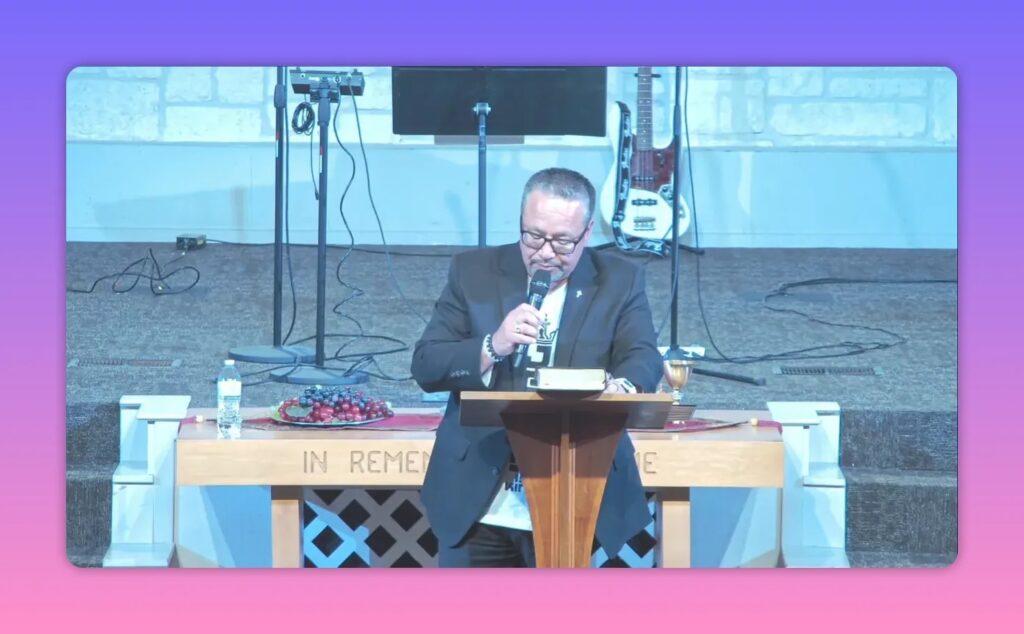
How do you answer that question when God asks, Where are you?
Not where are you physically. Not what church do you attend. Not what ministry are you part of. Not how many Bible verses you can quote, how many worship songs you know, or how many times you have said, “I’m blessed and highly favored.”
I mean where are you really?
That question has been stirring in my heart, and I believe it is one the church needs to hear again. Not as condemnation. Not as accusation. As a loving spiritual checkup.
Because it is possible to be around the things of God and still miss intimacy with God. It is possible to do works in His name and still not truly know Him. And if we are honest, it is possible to read our Bible, pray, come to church, serve faithfully, and still feel spiritually dry.
A sobering warning from Jesus
Jesus gives one of the clearest and strongest warnings in Scripture in Matthew 7:21-24:
Not everyone who says, “Lord, Lord,” will enter the kingdom of heaven, but the one who does the will of the Father. He goes on to describe people who prophesied, cast out demons, and did wonders in His name, yet He says to them, “I never knew you.”
That should stop every one of us in our tracks.
At first glance, a lot of people assume this is talking only about obvious unbelief. But the people in that passage are not strangers to religious activity. They are involved in ministry. They are moving in gifts. From the outside, they appear deeply spiritual.
And still, the issue is not their activity. The issue is relationship.
Jesus is not impressed by public performance if private intimacy is absent.
That is why this matters so much. The question is not only, “What are you doing for God?” The deeper question is, “Do you know Him, and does your life reflect surrender to His will?”
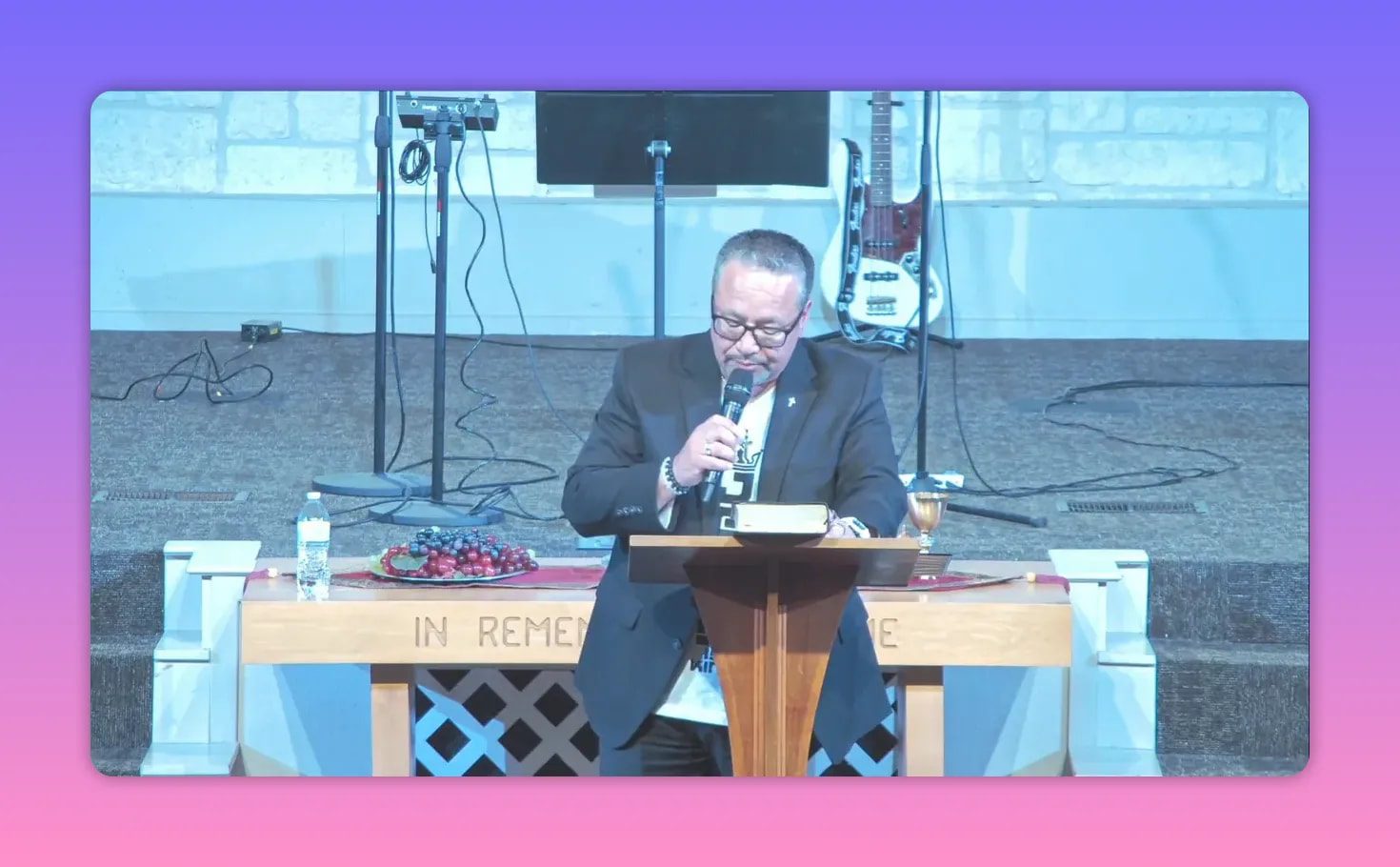
“Where are you?” is a question of love
That question takes me all the way back to the garden. In Genesis 3:9, after Adam and Eve sinned, God asked Adam, “Where are you?”
God was not confused about Adam’s location. He did not lose track of him.
He knew what had happened. He knew the fall had taken place. But I believe that question came wrapped in love. It was an invitation to remember relationship. An invitation to come out of hiding. An invitation to repentance.
And I believe God still asks that same question today.
Where are you, church?
Where are you in your heart? In your hunger? In your dependence? In your reverence? In your obedience?
Sometimes we do not want to answer because we are not sure ourselves. But that is exactly why we need to slow down and let God search us.
God checks on what He paid for
There are seasons in life when it feels like God stirs things up in the spirit. Times when He is calling us to reflect, recalibrate, and take inventory.
That is healthy.
We do this in every other part of life. We check our direction. We assess whether we are still on course. We look at what has drifted and what needs correction. Spiritually, it is no different.
And here is one reason it matters so much: you are an investment of heaven.
Think about that.
You were purchased at the highest price imaginable. The life of Jesus Christ was given for you. The Son of God stepped out of heaven, took on flesh, and gave Himself in exchange for us. There is no greater price, no greater value, no greater demonstration of love.
So yes, God checks on what He purchased. He checks on the estate. He checks on the kingdom. He checks on whether what He planted is present and advancing.
Not because He is controlling. Because He cares deeply about what He paid for.
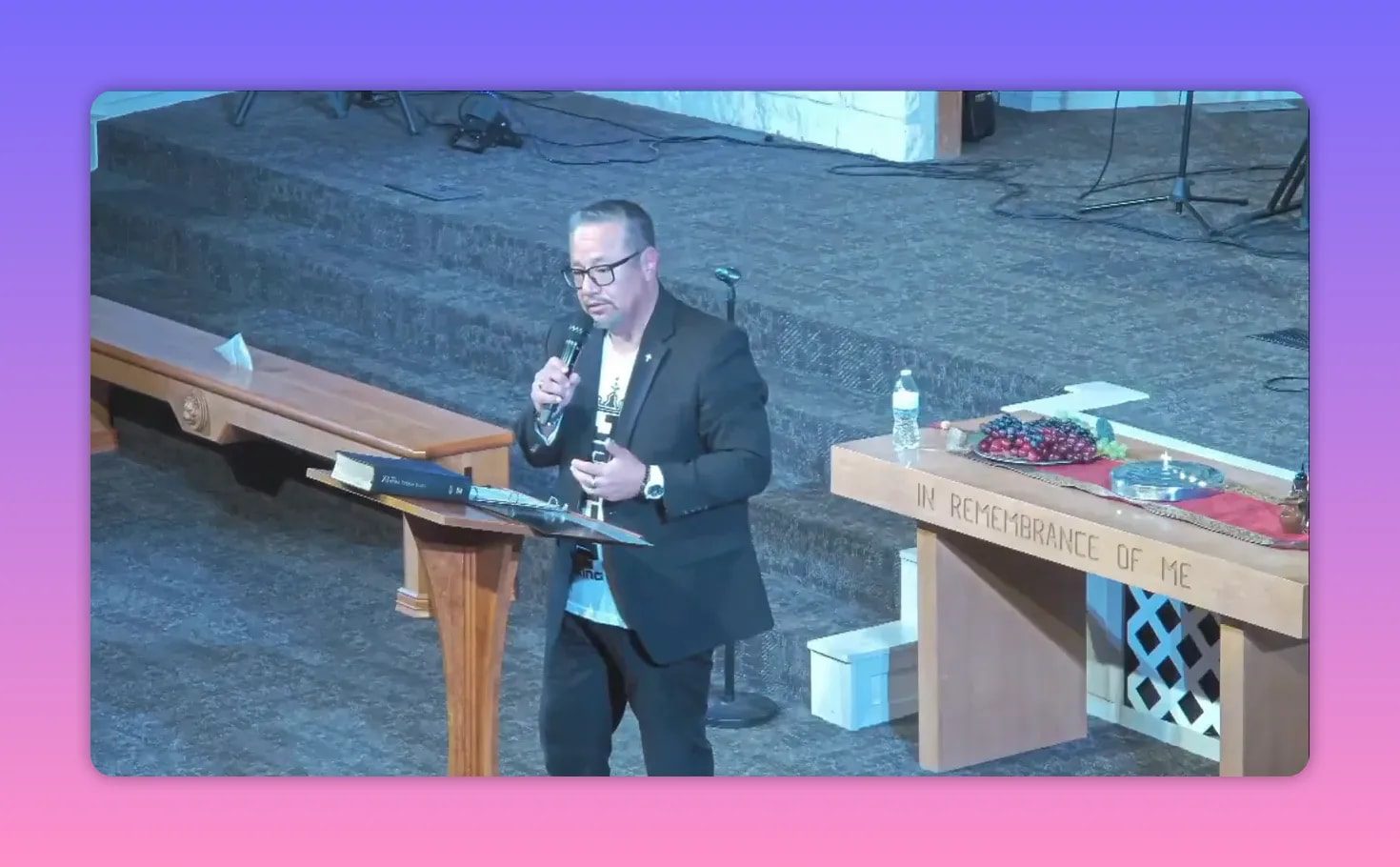
It is possible to serve and still miss the One we claim to serve
One of the great dangers in church life is that we can become more focused on serving than on the Savior.
That is why the story of Mary and Martha matters so much. Martha was busy with good things. She was working, hosting, moving, doing. But Mary chose what Jesus called the better part: sitting at His feet.
Here is the tension a lot of us feel:
- We can become consumed with service and neglect the One who serves.
- We can become passionate about ministry and lose sight of the One who ministers.
- We can become attached to platform and forget the One who sits above every throne and position.
There is nothing wrong with serving. Ministry matters. Work matters. Faithfulness matters.
But if all our Christian activity is not flowing from a genuine relationship with Jesus, eventually the machinery of religion will wear us down.
I heard a story that drove this home. It was about the daughter of a well-known televangelist. She grew up surrounded by ministry, production, church systems, and the pressure of keeping the whole thing running. Everything was about the ministry. Everything was about the platform. Everything was about presentation.
But for her, it had little to do with Jesus.
That is heartbreaking, and it is also revealing. A ministry can touch many lives while someone standing right in the middle of it still remains untouched in their own heart.
Knowing how to present God to others is not the same as personally knowing Him.
Spiritual dryness is not always distance
A lot of believers quietly wrestle with dryness. They pray, read, attend church, and keep doing the right things, but inwardly they feel dull, disconnected, or flat.
If that is where you are, hear this clearly: God is not distant.
If you belong to Christ, the Holy Spirit lives in you. You are the temple of the Holy Spirit. He has taken up residence in you. He will never leave you or forsake you. Nothing can separate you from the love of God.
So if dryness is real, it is not because God moved away.
Often, dryness comes not from distance but from familiarity.
We get used to church. We get used to the language. We get used to the songs, the routines, the messages, the rhythms. And what once filled us with wonder can slowly become normal.
Familiarity dulls awe.
The children of Israel saw miracles regularly and still complained. The religious leaders in Jesus’ day knew Scripture and still missed God standing right in front of them. It is entirely possible to be near the things of God and not truly recognize Him in your midst.
Your routine can replace reverence. Your knowledge can replace dependence.
And that is dangerous.
Jesus said in Matthew 15:8, “These people draw near to Me with their mouth, and honor Me with their lips, but their heart is far from Me.” That verse should not only make us think about “somebody out there.” It should make us ask if our own hearts have drifted into form without fire.
Move from habit back to humility
If familiarity is the problem, then the answer is not fake intensity. It is not emotional hype. It is not trying harder to appear spiritual.
The answer is a return.
We need to move:
- From habit back to humility
- From routine back to reverence
- From knowing about God back to needing Him
That return often looks simple. Slow down. Sit at His feet. Let worship become real again. Let the cross become weighty again. Let prayer stop being a task and become communion again.
Sometimes the Lord awakens hunger in us by letting us notice our dryness. That realization is not rejection. It is invitation.
What worship really is
I was struck by a simple image during worship: someone standing at the altar with shoes off, fully fixed on Jesus, as if they knew they were on holy ground.
That picture says a lot.
Real worship is not performance. It is not showing off talent. It is not trying to create a moment. It is heart connection with the Lord.
If somebody wants to perform, worship is the wrong place for that. But if someone wants to touch the heart of God, then yes, come close. Sing. kneel. Lift your hands. Be still. Pour out your heart.
Worship is bigger than music. Worship is allegiance. Worship is obedience. Worship is loyalty. Worship is submission.
And that is why the world is constantly competing for it.
Money wants your worship. Fame wants your worship. Power, status, entertainment, even sports can all try to take the place that belongs to God alone. The fact that Satan tempted Jesus to worship him shows just how central this issue really is.
At the deepest level, the battle is always about who gets your allegiance.
Build a foundation that lasts for the next generation
One of the most practical and important parts of faith is what we are passing down.
There was a deliberate decision made in our home to give our children a Christian foundation and not leave their worldview entirely in the hands of the culture. That was not about fear. It was about formation.
I know where I started in life. I know the kind of mess God brought me out of. At the very least, I wanted my children to start from a healthier place than I did.
And more than that, I wanted them to have ammo.
I want them anchored in the Word of God because this Book is not just a collection of stories. Scripture is living, active, breathed by God. It carries the words of life. It is real. And when the world comes at them with confusion, lies, and pressure, I want them rooted enough to stand.
But this challenge goes deeper than education choices or church attendance. At some point every parent has to ask a hard question: Why are my children here?
Are they in church because mom and dad brought them? Because it is family routine? Because their parents serve in ministry? Or are they being led toward their own genuine relationship with God?
God has no grandchildren. He has sons and daughters.
That means every generation must personally know Him. We cannot hand down only a church culture. We must help hand down a living faith.
The church is meant to equip, not just gather
Church is not meant to be a religious holding tank where people sit safely until heaven.
The church is called to equip the saints.
That means we gather to be fed, trained, strengthened, corrected, and encouraged so that we can go back out into the world carrying the light of Christ.
The gospel is not meant to stay inside four walls. The power of God is not meant to remain inside a service. It is supposed to move out into workplaces, neighborhoods, schools, businesses, and every dark place where hope is needed.
If you find yourself in darkness, the first thought should not be, “Why am I here?” It may be, “God, You placed me here as light.”
You were not saved to sit on a waiting list for escape. You were saved to bring the kingdom of God where you are.
Take inventory honestly
When I ask, “Where are you?” I am not asking as a judge. I am asking as someone taking inventory of his own heart.
That kind of honesty matters.
Too often, church language becomes a shield. Someone asks how we are doing and we instinctively answer with polished phrases. But the healthier question is, “What is really going on?”
What are you struggling with? What has become routine? Where have you gone numb? Where are you hungry? Where do you need God again in a way that is fresh and real?
None of us has it all together. We know the One who does. That is the whole point.
Some helpful questions for spiritual inventory are:
- When was the last time I paused long enough to honestly assess where I am with God?
- When was the last time His presence deeply affected me?
- Am I living mostly off old testimonies, or is my relationship with Him active today?
- Have I confused church involvement with intimacy?
- Have I become more familiar than reverent?
Testimonies matter, but God wants to do it again
I love testimonies. Scripture is full of them, and they matter because they remind us of the faithfulness and power of God.
But testimonies are not meant to become museum pieces.
They are invitations.
I recently had a conversation with someone from Cameroon while we were trying to work through a problem together. In the middle of the situation, he asked about a trip I had taken to Africa years before. That opened the door to share my faith and talk about the things God had done. What was supposed to be an ordinary interaction turned into hours of conversation about the Lord.
He was on fire. He was stirred by the stories of what God had done. And as we talked, I found myself praying in my heart, God, do it again.
That is what a testimony is for. Not just to relive a past moment, but to awaken expectation for present grace.
When God moves, it lights something up in us. You can hear it in a fresh conversion, in a baptism, in someone telling how Jesus met them. It brings holy energy into the room because it reminds us that God is still acting, still saving, still healing, still drawing people to Himself.
Never lose the weight of Calvary
If there is one place we cannot afford to become casual, it is the cross.
We say it. We preach it. We sing it. But have we really let the weight of Jesus’ sacrifice hit us?
He was beaten beyond recognition. He suffered for our sin. He went to Calvary for us. He rose on the third day. He is alive now, seated at the right hand of the Father.
Those are not just theological facts to recite. They are realities meant to grip the heart.
Sometimes even a visual retelling of the crucifixion can remind us of what was done. Not because a film can capture it fully, but because it can shake us awake to what we have let become too familiar.
I never want to become a person who is no longer moved by Calvary.
I want a heart full of reverence and awe. I want worship that rises from gratitude. I want to remember that there is no one like Jesus.
We are all ex-somethings, and He was always pursuing us
Many of us have powerful stories of how the Lord found us and turned our lives around. Some were kept close from an early age. Others went far off the path. But no matter what our story looks like, the truth is the same:
God was never lost. We were.
People sometimes say, “I found God,” but He was not the missing One. He was always there, always drawing, always pursuing, always making a way back.
That truth matters because it reminds us of His heart. He is not eager to condemn. He is eager to restore. He pursues people in wild places, dark places, rebellious places, broken places.
And if He did it for one, He can do it for another.
That is why the personal stories of salvation in the church are so important. They are reminders that ordinary people can be used powerfully by God to call someone out of darkness and into life.
Revelation, not just motivation
One final passage brings this whole message into focus: Proverbs 29:18.
It is often quoted as, “Where there is no vision, the people perish.” Usually people use that verse to talk about goals, planning, dreams, or ambition. But the deeper meaning is not about personal creativity. It is about divine revelation.
In other translations, the verse points to revelation from God, not merely human vision.
That changes the emphasis.
This is not mainly about lacking ideas. It is about lacking God’s word and God’s instruction. When revelation disappears, restraint disappears with it. People begin doing what is right in their own eyes. Boundaries collapse. Obedience weakens. Disorder grows.
So the real issue is not whether we have enough plans. The issue is whether we are still submitted to what God has said.
Vision in that sense is not self-generated inspiration. It is receiving and obeying what God reveals.
That is why this is a warning and an invitation all at once. The Lord is still speaking. He still wants to download truth, conviction, direction, and life into His people. But we have to be willing to listen and submit.
Where are you, church?
I believe God is stirring His people again.
I believe He is bringing recalibration. I believe He is calling us back from familiarity into awe, from routine into reverence, from performance into presence. I believe He is preparing His church, not just for another gathering, but for another move of His Spirit.
And maybe the move we are waiting for is not somewhere out there in the distance.
Maybe we are the move He is awakening.
Maybe He is waiting for His people to remember who they are, who He is, what the cross means, and why the church exists in the first place.
So the question remains:
Where are you?
If the answer is, “I feel dry,” come back to His feet.
If the answer is, “I have become too familiar,” ask Him to restore awe.
If the answer is, “I have been busy with ministry but thin in intimacy,” slow down and seek His face.
If the answer is, “I have been living off old encounters,” ask Him to breathe on your walk again.
This is not about shame. It is about return.
He is still calling. He is still pursuing. He is still speaking.
And I believe He is still asking, with love in His voice, Where are you, church?