Reclaiming the Soul of America: A Journey Back to Our Roots
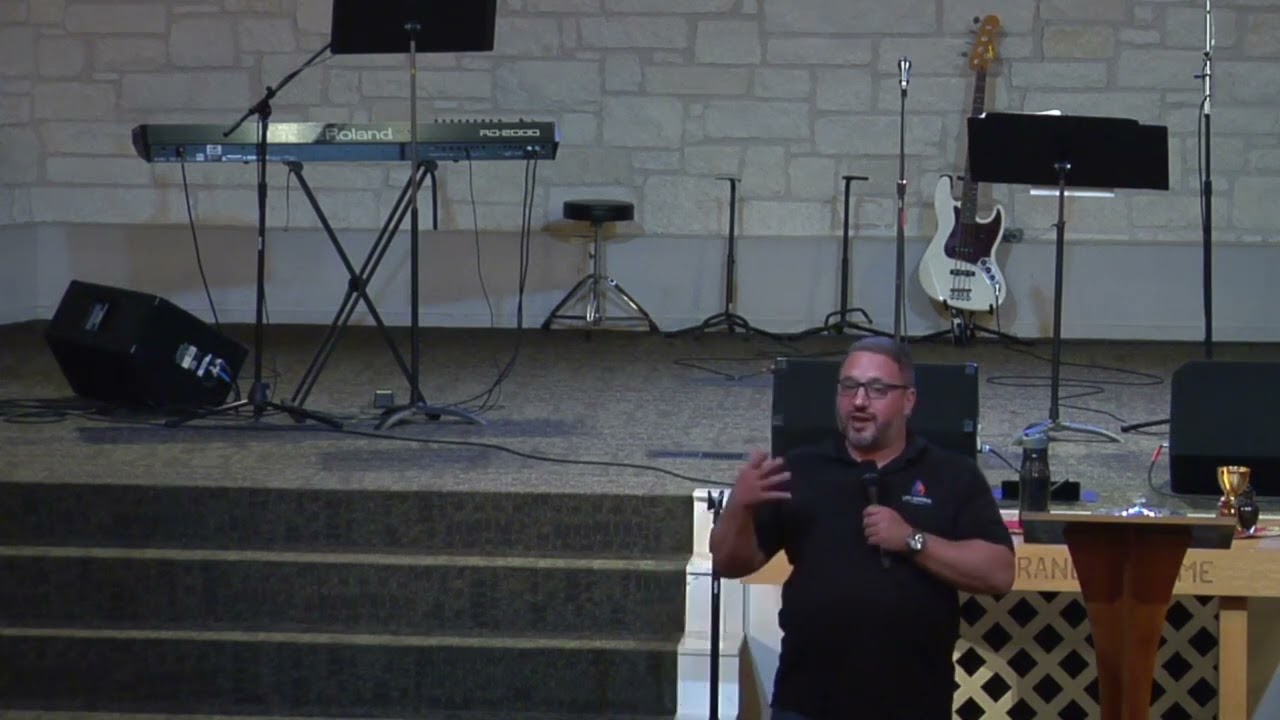
In this thought-provoking message, Pastor Bill delves into the concept of America’s national soul, exploring how the nation’s identity is intertwined with its spiritual and moral foundations. By examining historical figures and biblical principles, he invites us to reflect on the importance of reclaiming our heritage and restoring the values that once defined our great nation.
The Soul of America
The concept of a nation’s soul is profound. Just as individuals possess a soul that embodies their identity, values, and beliefs, a nation also carries a collective spirit that reflects its culture and ethos. The soul of America is rooted in principles of freedom, justice, and the pursuit of happiness. These ideals, drawn from a rich tapestry of history and faith, form the backbone of what it means to be American.

Photo by Robin Jonathan Deutsch on Unsplash
The Value of Your Soul
Understanding the value of one’s soul is essential. In a broader context, the soul of a nation holds equal significance. The collective conscience of a populace shapes societal norms and influences the direction of its future. When individuals recognize their worth, they contribute positively to the national soul, enriching it with compassion and purpose.

Photo by Hannah Busing on Unsplash
Importance of Ideas in Society
Ideas are the lifeblood of any society. They shape beliefs, govern actions, and inspire movements. In America, the founding ideals were revolutionary, advocating for liberty and equality. These concepts continue to inspire debates and drive progress, embodying the dynamic nature of American identity.

Photo by Marcus Dall Col on Unsplash
Key Ideas That Have Shaped America
- Freedom of Speech: A cornerstone of democracy, allowing diverse voices to be heard.
- Equality: The belief that all individuals are created equal, fostering inclusivity.
- Justice: A commitment to fairness and the rule of law, ensuring protection for all.
Discussion on America’s Identity
America’s identity is multifaceted, shaped by a blend of cultures, histories, and experiences. This melting pot creates a unique national narrative that is continually evolving. The struggle for civil rights, social justice, and equality highlights the ongoing quest to align the nation’s practices with its foundational ideals.

Photo by Alexis Brown on Unsplash
Understanding the Substance of a Soul
The essence of a soul is often characterized by its values, beliefs, and desires. For a nation, this translates into the collective aspirations and moral compass of its citizens. When the majority of a population embraces virtues such as integrity, compassion, and justice, the national soul thrives, leading to a society that reflects these ideals.

Photo by Aziz Acharki on Unsplash
God’s Vision for Nation Building
God’s vision for nation building is rooted in the establishment of communities that reflect His character. This involves creating environments where justice, mercy, and love prevail. By aligning national principles with divine values, a country can foster a culture that honors its people and nurtures their potential.

Photo by Annie Spratt on Unsplash
America’s Role in Redemption History
America holds a significant place in the narrative of redemption history. The nation was founded on principles that sought to reflect God’s justice and love on Earth. As a beacon of hope and freedom, America has the potential to lead the way in demonstrating how a society rooted in faith can positively impact the world.

The 5000 Year Leap Concept
The concept of the “5000 Year Leap,” as articulated by Cleon Skousen, highlights a significant transformation in human civilization that coincided with the founding of America. Skousen posits that prior to America’s birth, societal progress was slow and incremental, with advancements taking centuries to materialize. However, the establishment of America as a nation marked a radical shift, propelling humanity forward at an unprecedented pace.

Photo by Suzanne D. Williams on Unsplash
This leap can be attributed to the unique principles embedded in the American Constitution and Declaration of Independence. These documents were not merely political frameworks but reflections of a deeper understanding of human rights and governance. They drew from a rich history of Western thought and biblical law, creating a foundation that encouraged innovation, individual liberty, and the pursuit of happiness.

Photo by vuk burgic on Unsplash
The Impact of American Ideals
Within just a couple of centuries, the world witnessed revolutionary inventions and social changes that improved lives globally. From the automobile to the internet, these advancements are often linked to the freedoms and opportunities fostered by American ideals. Skousen’s assertion that America was pivotal in this transformation challenges us to recognize the profound influence of our founding principles.

Photo by ThisisEngineering on Unsplash
Rediscovering the Foundation
To truly understand the significance of this leap, we must delve into the foundational beliefs that inspired America’s creation. The intertwining of biblical principles with governance was intentional. The founders understood that a society rooted in moral law would flourish, as it aligns with the inherent dignity of humanity.

Photo by Hitesh Dewasi on Unsplash
Insights from Alexis de Tocqueville
Alexis de Tocqueville, a French political thinker, traveled to America in the early 19th century to study its societal structures. His observations provide valuable insights into the essence of American greatness. He sought not only the material wealth of the nation but also the spiritual and moral frameworks that undergirded its success.

Photo by Unseen Histories on Unsplash
Tocqueville famously stated that the greatness of America lay not in its geography or resources but in its moral fabric. He noted that it was in the churches of America, where righteousness was preached from the pulpits, that he found the true source of the nation’s strength. This revelation emphasizes the importance of faith and morality in sustaining a prosperous society.

Photo by Todd Diemer on Unsplash
The Role of Religion in Society
Tocqueville highlighted the critical role of religion in shaping American values. He observed that religious beliefs fostered a sense of responsibility among citizens, encouraging them to act for the common good. This sense of duty and moral obligation is fundamental to a healthy democracy.

Photo by William White on Unsplash
America’s Goodness as a Measure of Greatness
In his reflections, Tocqueville warned that if America were to cease being good, it would lose its greatness. This prophetic insight serves as a reminder that moral decay leads to societal decline. For America to reclaim its soul, a return to goodness is essential.

Photo by Markus Spiske on Unsplash
Ben Franklin’s Beliefs and Values
Benjamin Franklin, often regarded as one of the least religious of the Founding Fathers, articulated beliefs that resonate with the core values of American society. His summary of fundamental religious principles reflects a universal understanding of morality that transcends denominational boundaries.

Photo by Rachel McDermott on Unsplash
Franklin believed in one God, the creator and governor of the universe, and emphasized the importance of doing good to others as a form of worship. His creed underscores that the essence of religion lies in ethical behavior and service to humanity, a principle that remains relevant today.

Photo by Jametlene Reskp on Unsplash
Common Ground in Moral Law
The challenge Franklin faced was to establish a moral framework that could unite diverse beliefs. His approach to natural law as a foundation for governance allowed for a common understanding among citizens, regardless of their religious affiliations. This inclusivity was crucial in building a nation that honored individual rights while promoting collective well-being.

Photo by Thought Catalog on Unsplash
Franklin’s Legacy
Franklin’s emphasis on morality and ethics as the bedrock of society is a call to action for modern Americans. Understanding his values can guide us in restoring the soul of America. By recognizing the importance of ethical behavior and community service, we can work towards a more just and compassionate society.

Photo by Vonecia Carswell on Unsplash
America’s Biblical Social Framework
The foundation of America is deeply intertwined with biblical principles, which shaped its social architecture. The framers of the Constitution intentionally incorporated these values, recognizing that a society built on moral law would ensure justice and freedom for all citizens.

Photo by Lilian Dibbern on Unsplash
This biblical framework is evident in the emphasis on individual rights, the rule of law, and the importance of community. The founders understood that without a moral compass, liberty could easily devolve into chaos. Thus, they sought to establish a government that reflected divine principles while allowing for human flourishing.

Photo by Tingey Injury Law Firm on Unsplash
The Importance of Moral Law
Incorporating moral law into governance is not merely a theoretical exercise; it has practical implications for society. When citizens embrace a biblical worldview, they foster a culture of accountability and ethical behavior. This leads to stronger communities and a healthier democracy.

Photo by Helena Lopes on Unsplash
Restoring the Biblical Framework
To restore America’s soul, we must reaffirm the biblical social framework that guided its founding. This involves acknowledging the importance of moral education, community service, and the active practice of faith. By doing so, we can create a society that honors its roots while addressing contemporary challenges.

Photo by Priscilla Du Preez ???????? on Unsplash
Resurrecting America’s Soul
The journey to resurrect America’s soul requires collective effort and commitment to core values. It begins with recognizing the importance of moral integrity and the need for individuals to embody these principles in their daily lives. Each citizen has a role to play in this revival.

Photo by Nathan Anderson on Unsplash
Engaging in community initiatives, promoting ethical behavior, and supporting institutions that uphold moral values are essential steps. By working together, we can create an environment where goodness prevails and the nation’s soul is restored.

Photo by Maximus Beaumont on Unsplash
The Role of Faith Communities
Faith communities play a vital role in this resurrection. They serve as beacons of hope, providing guidance and support to individuals seeking to align their lives with higher principles. By fostering a spirit of service and compassion, these communities can inspire broader societal change.

Photo by Edward Cisneros on Unsplash
Empowering Future Generations
To ensure the soul of America endures, it is imperative to educate future generations about the nation’s values and heritage. This involves teaching the significance of moral law, civic responsibility, and the importance of faith in public life. By instilling these principles, we empower young people to carry the torch of goodness into the future.

Global Perspective on America’s Influence
America’s influence extends far beyond its borders. As a nation built on principles of freedom and justice, it serves as a model for other countries aspiring to establish democratic governance. The ideals that shaped America have inspired movements for liberty and human rights around the world.

However, with this influence comes responsibility. America must remain true to its foundational values to maintain its position as a beacon of hope. By exemplifying goodness and moral integrity, the nation can inspire others to pursue similar paths.

Photo by Ian Schneider on Unsplash
The Call to Action
It is crucial for Americans to recognize their role in shaping the future. Each individual can contribute to the restoration of the nation’s soul by embodying the principles of faith, morality, and service. Together, we can create a legacy of goodness that transcends generations.

Photo by Laura Fuhrman on Unsplash
Conclusion
The journey to reclaim America’s soul is ongoing and requires a collective commitment to our foundational values. By embracing the principles of freedom, justice, and moral integrity, we can restore the essence of what it means to be American. Let us work together to ensure that future generations inherit a nation that reflects the goodness and greatness we aspire to achieve.

Photo by Jan Tinneberg on Unsplash
Restoring the Soul of America
(Preaching Outline)
1) The idea of a nation having a soul like a person.
a) The value of a soul. | The idea of a soul.
b) What about the idea of repentance?
c) The reason we talk so much about ideas.
d) The reason we talk so much about America.
e) Zechariah 1:3 (NKJV) — 3 Therefore say to them, ‘Thus says the Lord of hosts: “Return to Me,” says the Lord of hosts, “and I will return to you,” says the Lord of hosts.
f) What does this actually look like for us? How we answer that question will determine the world we create.
2) The substance of the soul
a) Matthew 16:24–26 (NKJV) — 24 Then Jesus said to His disciples, “If anyone desires to come after Me, let him deny himself, and take up his cross, and follow Me. 25 For whoever desires to save his life will lose it, but whoever loses his life for My sake will find it. 26 For what profit is it to a man if he gains the whole world, and loses his own soul? Or what will a man give in exchange for his soul? (Luke 12:16-21 – this day you life is asked of you.)
b) The interconnection between the individual and the national.
c) Part of a national dream – Deuteronomy 4:7–9 (NKJV) — 7 “For what great nation is there that has God so near to it, as the Lord our God is to us, for whatever reason we may call upon Him? 8 And what great nation is there that has such statutes and righteous judgments as are in all this law which I set before you this day? 9 Only take heed to yourself, and diligently keep yourself, lest you forget the things your eyes have seen, and lest they depart from your heart all the days of your life. And teach them to your children and your grandchildren,
d) The language in the church is that this is a special dispensation only for Israel.
e) We need to consider whether this an accurate vision of what the Lord wants to do in nations today? If so, how do we get there?
3) Before we answer that question, we need to put some thought into the “law set before us”.
a) There is no Hebrew word that means obedience. The closest equivalent – shema – means not obedience but rather hearing, listening, striving to understand, internalising, and responding in deed. The very tone and texture of Deuteronomy is directed not at blind obedience but at the contrary: it is a sustained attempt to help the people understand why it is that God wants them to behave in the way that He does, not for His sake, but for theirs.[1]
4) How does America fit into the plan of God?
a) Romans 11:11–15 (NKJV) — 11 I say then, have they stumbled that they should fall? Certainly not! But through their fall, to provoke them to jealousy, salvation has come to the Gentiles. 12 Now if their fall is riches for the world, and their failure riches for the Gentiles, how much more their fullness! 13 For I speak to you Gentiles; inasmuch as I am an apostle to the Gentiles, I magnify my ministry, 14 if by any means I may provoke to jealousy those who are my flesh and save some of them. 15 For if their being cast away is the reconciling of the world, what will their acceptance be but life from the dead?
b) Rabbi Sacks understands the Biblical prophetic tradition talks about a day when the gentiles would adopt the fear of the Lord.
c) The seed of the kingdom sown
d) ACTS 15 – Moses has had for many generations those who preach him in every city.
e) Already in the twelfth century, Moses Maimonides could write (in a passage long censored and only recently restored): The whole world is already filled with the words of [the Christian] messiah and the words of the commandments, and these words have spread to the farthest islands and among many unenlightened peoples, and they discuss these words and the commandments of the Torah.[2]
f) The Reformation is the next great development of the fulfillment of prophecy. – This was due to the fact that there was not one form of protest against the Roman Catholic Church in the sixteenth century, but two. One, developed by Luther, focused on Paul and the New Testament. The other, developed by Calvin, drew its inspiration from the Hebrew Bible, especially the book of Deuteronomy. That meant that Calvinist regions – such as Geneva, Holland, Scotland, and England, as well as the Pilgrim Fathers of the United States – developed strong civil societies, whose basic understanding of morality was identical with that of the book of Deuteronomy.[3]
g) The 5000 Yea Leap by Cleon Skousen
h) I sought for the greatness and genius of America in her commodious harbors and in her ample rivers, and it was not there. I sought for the greatness and genius of America in her fertile fields and boundless forests, and it was not there. I sought for the greatness and genius of America in her rich mines and her vast world commerce, and it was not there. I sought for the greatness and genius of America in her public school system and her institutions of learning, and it was not there. I sought for the genius and greatness of America in her democratic congress and her matchless constitution, and it was not there. Not until I went into the churches of America and heard her pulpits flame with righteousness did I understand the secret of her genius and power. America is great because America is good, and if America ever ceases to be good, America will cease to be great. – Alexis de Tocqueville[4]
5) If we are going to restore the soul of America we need to know what is at the heart of it. This idea is going to be challenging for many Christians, but we need to return to the faith that made America great:
a) Several of the Founders have left us with descriptions of their basic religious beliefs, and Benjamin Franklin summarized those which he felt were the “fundamental points in all sound religion.” This is the way he said it in a letter to Ezra Stiles, president of Yale University: “Here is my creed: I believe in one God, the Creator of the universe. That he governs it by his providence. That he ought to be worshipped. That the most acceptable service we render to him is in doing good to his other children. That the soul of man is immortal, and will be treated with justice in another life respecting its conduct in this. These I take to be the fundamental points in all sound religion.”[5]
b) In 1787, the very year the Constitution was written and approved by Congress, that same Congress passed the famous Northwest Ordinance. In it they emphasized the essential need to teach religion and morality in the schools. Here is the way they said it: “Article 3: Religion, morality, and knowledge being necessary to good government and the happiness of mankind, schools and the means of education shall forever be encouraged.”[6]
c) In New England, every citizen receives the elementary notions of human knowledge; he is moreover taught the doctrines and the evidences of his religion, the history of his country, and the leading features of its Constitution. In the States of Connecticut and Massachusetts, it is extremely rare to find a man imperfectly acquainted with all these things, and a person wholly ignorant of them is a sort of phenomenon.[7]
6) How we are restoring the soul of America
a) The challenge of messages like this is how they work on us as individuals.
b) We are providing information and ideas that can help people get a view of God, truth, history.
c) They will hopefully lead to conclusions that result in faith, hope and love.
d) What they do not do is package things neatly for simplicity.
This is part of the process of preparing a people who can walk in the fear of the Lord.
[1] Sacks, Jonathan. Deuteronomy: Renewal of the Sinai Covenant (Covenant & Conversation Book 5) (p. 9). The Toby Press. Kindle Edition.
[2] Sacks, Jonathan. Deuteronomy: Renewal of the Sinai Covenant (Covenant & Conversation Book 5) (p. 50). The Toby Press. Kindle Edition.
[3] Sacks, Jonathan. Deuteronomy: Renewal of the Sinai Covenant (Covenant & Conversation Book 5) (p. 22). The Toby Press. Kindle Edition.
[4] Mark Water, The New Encyclopedia of Christian Quotations (Alresford, Hampshire: John Hunt Publishers Ltd, 2000), 35–36.
[5] Skousen, W. Cleon. The Five Thousand Year Leap (p. 92). Verity Publishing. Kindle Edition.
[6] Skousen, W. Cleon. The Five Thousand Year Leap (p. 90). Verity Publishing. Kindle Edition.
[7] de Tocqueville, Alexis. Democracy in America volume 1 (annotated) . Kindle Edition.