Unlocking the Kingdom: Transforming Your Faith in 5 Minutes
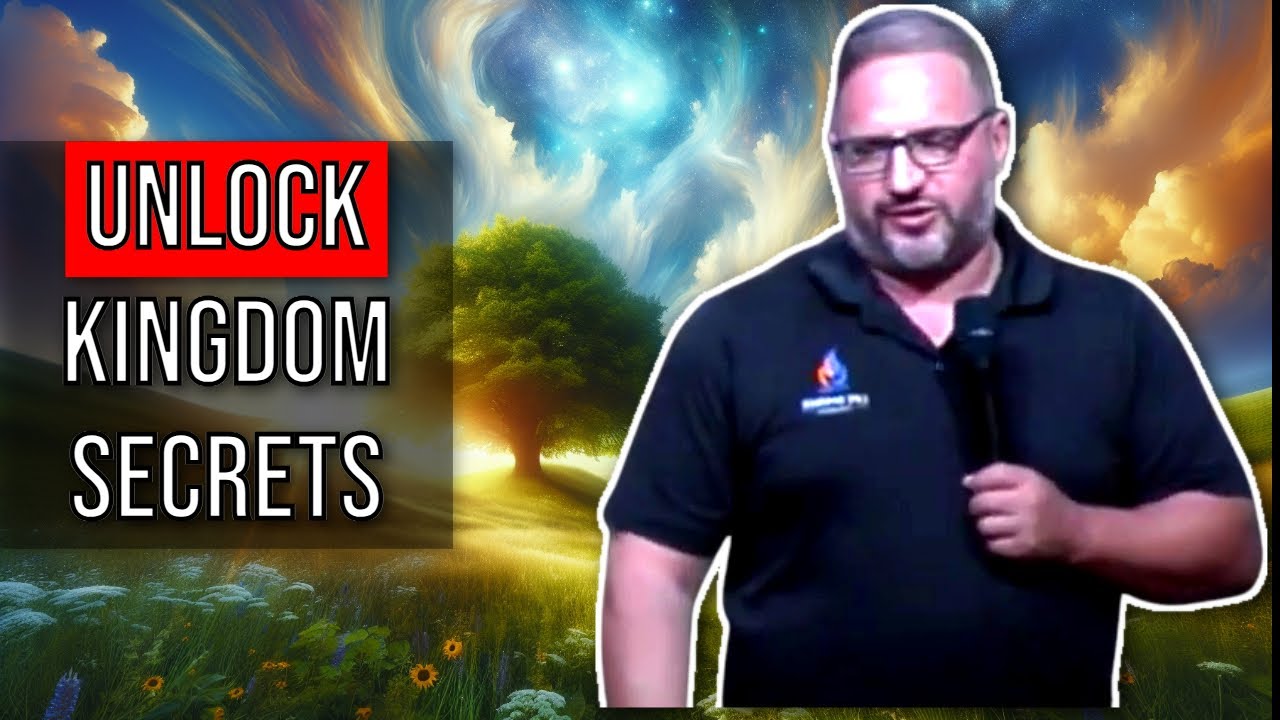
In this enlightening message, Pastor Bill Brannan reveals the transformative secret of God’s Kingdom and its relevance in our daily lives. Discover how pursuing the Kingdom of God can reshape your faith and empower you to experience its life-changing effects right now.
Pursuing the Kingdom of God
Pursuing the Kingdom of God is not merely about seeking a place or a future promise; it is about engaging in a transformative journey that reshapes our lives and communities. This pursuit requires intentionality and a deep understanding of what it means to live under God’s reign. It invites us to align our values, actions, and relationships with the principles of the Kingdom, fostering a lifestyle that reflects God’s love and justice.

Photo by Helena Lopes on Unsplash
As we embark on this journey, we must recognize that pursuing the Kingdom involves both personal transformation and collective responsibility. We are called to be agents of change, actively participating in the work God is doing in the world. This means advocating for justice, extending grace, and embodying the love of Christ in our everyday interactions.

Photo by Swastik Arora on Unsplash
The Gospel of the Kingdom
The Gospel of the Kingdom is a powerful message that transcends cultural and historical boundaries. It is not just about individual salvation; it encompasses the restoration of all creation. The Gospel invites us to experience the fullness of life that comes from being in relationship with God and living according to His purposes.

Photo by Pisit Heng on Unsplash
When Jesus preached the Gospel of the Kingdom, He proclaimed a message of hope and renewal. This is a call to embrace the transformative power of God’s love, which has the ability to heal brokenness and bring forth new life. It challenges us to rethink our understanding of success, happiness, and fulfillment in light of God’s Kingdom.

Photo by Edoardo Bortoli on Unsplash
Divine Escape Theology
Divine Escape Theology often presents the Kingdom as a distant reality, focusing solely on the afterlife and neglecting the present implications of God’s reign. This perspective can lead to a passive faith, where believers wait for a future escape rather than actively engaging with the world around them.

However, the true message of the Gospel is one of active participation in God’s redemptive work. It calls us to bring the values of the Kingdom into our communities today, transforming lives and circumstances through acts of love, justice, and mercy. By rejecting a narrow focus on escape, we can fully embrace our role as co-laborers in God’s mission.

Photo by Lina Trochez on Unsplash
The Kingdom of God as a Good King
Understanding the Kingdom of God through the lens of a good King is essential. A good King governs with justice, mercy, and love, prioritizing the well-being of His subjects. This perspective helps us to grasp the nature of God’s rule, which is characterized by grace and compassion.

Photo by William Krause on Unsplash
In this Kingdom, we experience a radical shift in our understanding of authority. God’s authority is not oppressive but liberating, inviting us into a relationship of trust and obedience. As we submit to His reign, we find freedom and purpose, becoming instruments of His peace and justice in the world.

Photo by JIEUN KWON on Unsplash
The Kingdom of God is at Hand
When Jesus declared that the Kingdom of God is at hand, He emphasized its immediacy and accessibility. This statement invites us to recognize that God’s reign is not just a future hope but a present reality that we can experience now.

Photo by Declan Sun on Unsplash
This perspective challenges us to engage actively with our faith and to seek the manifestations of God’s Kingdom in our lives and communities. It encourages us to look for opportunities to serve, to love, and to bring about positive change in the world around us.

Photo by Timon Studler on Unsplash
The Kingdom of God Here and Now
The Kingdom of God is not only a future promise; it is a current reality that we can experience in our lives today. Living in the Kingdom means inviting God’s presence into our everyday situations, allowing His love and grace to transform us.

This transformation can manifest in various ways—through acts of kindness, reconciliation, and justice. As we live out the values of the Kingdom, we become witnesses to God’s goodness and grace, reflecting His glory in a world that desperately needs hope.

Photo by Vonecia Carswell on Unsplash
Transformation in the Kingdom of God
Transformation is at the heart of the Kingdom of God. When we enter into this Kingdom, we are not merely adopting a new set of beliefs; we are undergoing a profound change that affects every aspect of our lives. This transformation is initiated by the Holy Spirit, who empowers us to live according to God’s will.

Photo by Suzanne D. Williams on Unsplash
As we embrace this change, we begin to see the world through God’s eyes. Our hearts are softened, our priorities shift, and our relationships flourish. We become agents of transformation, influencing those around us and contributing to the Kingdom’s expansion.

Photo by Kenny Eliason on Unsplash
The Power of the Kingdom
The power of the Kingdom is evident in the lives of those who have experienced God’s transformative grace. This power is not merely about miraculous signs and wonders; it is about the profound impact of God’s love in our lives and communities.

Photo by Alireza Gorji on Unsplash
As we share the Gospel of the Kingdom, we witness lives changed, communities healed, and hope restored. This power is available to all who believe, enabling us to overcome challenges and walk in victory. We must not underestimate the influence we can have as we embody the principles of God’s Kingdom.

Photo by Orian Lev Ari on Unsplash
The Kingdom is Within You
Jesus taught that the Kingdom of God is within us, emphasizing the internal nature of His reign. This means that the transformative power of the Kingdom starts in our hearts and minds. As we cultivate a relationship with Christ, we allow His Spirit to lead and guide us.

Photo by Iva Rajović on Unsplash
When we understand that the Kingdom is within us, we recognize that we carry the responsibility to manifest God’s love and grace in our actions. Our lives become a reflection of His Kingdom, influencing those around us and drawing them to the hope found in Christ.

Photo by Keagan Henman on Unsplash
The Kingdom Has Come
The Kingdom of God is not a distant reality; it is here and now. When Jesus declared the Kingdom has come, He invited us to recognize its presence and power in our lives. This Kingdom transforms hearts and lives, offering hope and redemption to all who believe.

Photo by Angel Balashev on Unsplash
Understanding that the Kingdom has arrived shifts our perspective on daily living. It encourages us to seek God’s reign in every situation, embracing His guidance and love. As we acknowledge the Kingdom’s presence, we become active participants in God’s transformative work.

Photo by Ian Schneider on Unsplash
The Kingdom of God Suffers Violence
In Matthew 11:12, we read that “the Kingdom of Heaven suffers violence, and the violent take it by force.” This verse can be perplexing, but it highlights the intensity and urgency of our pursuit of the Kingdom. It suggests that entering the Kingdom requires a proactive and determined effort.

Photo by Mika Baumeister on Unsplash
The Kingdom is not established through passivity. Instead, it calls for boldness and courage. As we press into the Kingdom, we may face challenges and obstacles, but we are empowered to overcome them through faith and perseverance.

Photo by Dima Pechurin on Unsplash
The Kingdom in Biblical Narratives
The Scriptures are rich with narratives that illustrate the Kingdom of God. From the stories of the Old Testament to the teachings of Jesus, we see moments where God’s reign breaks into human history. These accounts serve as reminders of God’s faithfulness and His desire to bring about restoration.

Photo by The New York Public Library on Unsplash
In the Gospels, Jesus’ parables often depict the nature of the Kingdom. He describes it as a treasure hidden in a field or a mustard seed that grows into a mighty tree. These images convey the transformative power and quiet persistence of the Kingdom in our lives.

Photo by Jeremy Bishop on Unsplash
The Kingdom of God Breaking Forth
As we explore the concept of the Kingdom breaking forth, we recognize that it is an active force. God’s Kingdom is not static; it is dynamic and ever-advancing. In our pursuit of the Kingdom, we are called to be agents of change, bringing God’s love and truth into our communities.

Photo by Jakub Żerdzicki on Unsplash
When we allow the Kingdom to flow through us, we become conduits of hope and healing. This flow of God’s Spirit can transform lives, communities, and even nations. It is a powerful reminder that we are part of a greater narrative, one that seeks to bring about God’s justice and mercy.

Photo by Katherine Hanlon on Unsplash
Understanding the Anti-Kingdom
The anti-kingdom represents all that opposes God’s reign. It thrives on manipulation, fear, and control. In contrast, the Kingdom of God invites freedom, love, and grace. Recognizing the anti-kingdom helps us discern the influences that seek to pull us away from the truth of God’s Kingdom.

Photo by Aditya Saxena on Unsplash
As we become aware of these opposing forces, we can actively choose to reject them. This means standing firm in our faith and aligning ourselves with the values of the Kingdom. It is a call to live authentically, reflecting the love and light of Christ in a world that often promotes darkness.

Photo by Valeriia Miller on Unsplash
The Anti-Manipulation World
In a world filled with manipulation and coercion, the Kingdom of God offers a different narrative. It teaches us to value authenticity and transparency in our relationships. Rather than using tactics to control or dominate, we are called to serve and uplift one another.

Photo by Boxed Water Is Better on Unsplash
Living in the anti-manipulation world means rejecting the urge to conform to external pressures. Instead, we embrace our unique identities in Christ, allowing His love to shape us from within. This authenticity creates a culture of trust and support, fostering an environment where the Kingdom can flourish.

Photo by Priscilla Du Preez ???????? on Unsplash
Pursuing the Kingdom for Yourself
Pursuing the Kingdom of God is a personal journey. It requires us to seek a deeper relationship with Christ and to explore the implications of His reign in our lives. This pursuit is not merely about knowledge; it is about transformation and experience.

Photo by Leon Beckert on Unsplash
As we engage with Scripture, prayer, and community, we begin to understand the fullness of the Kingdom. We discover our purpose and calling, and we learn to live out the values of the Kingdom in our daily actions. This pursuit is an invitation to experience God’s love in profound and life-changing ways.

Photo by Mandy von Stahl on Unsplash
Closing Prayer
As we close, let us pray for the continued revelation of God’s Kingdom in our lives. May we be empowered to pursue His reign with passion and purpose. Lord, we thank You for the gift of Your Kingdom. Help us to seek it earnestly and to reflect Your love and grace in all we do.

Photo by Kelsey Chance on Unsplash
May the rivers of living water flow from our innermost being, bringing healing and hope to those around us. Let us be bold in our pursuit, standing firm against the anti-kingdom influences in our lives. In Jesus’ name, we pray. Amen.

Photo by Patrick Fore on Unsplash
Enculturing the Kingdom of God
(Preaching Outline)
1) Discuss the idea of the culture of heaven.
a) Pyramid vs. Garden
b) Tower of Babel and the call of Abraham.
c) In the church we often try to use the systems of this world to create the garden of God.
d) What is at stake: The garden and the wilderness.
e) Matthew 13:52 (NKJV) — 52 Then He said to them, “Therefore every scribe instructed concerning the kingdom of heaven is like a householder who brings out of his treasure things new and old.”
2) The Law works with the gospel.
a) Fundamental questions
i) What kind of person do I want to be and what kind of world do I want to participate in creating?
b) Deuteronomy 6:4–7 (NKJV) — 4 “Hear, O Israel: The Lord our God, the Lord is one! 5 You shall love the Lord your God with all your heart, with all your soul, and with all your strength. 6 “And these words which I command you today shall be in your heart. 7 You shall teach them diligently to your children, and shall talk of them when you sit in your house, when you walk by the way, when you lie down, and when you rise up.
i) Why and how should we do this?
c) Cicero
i) On The Republic – the story
ii) SCIPIO: Very well, Laelius; you can employ an argument based on your own self-awareness. LAELIUS: What awareness? SCIPIO: Whenever—or if ever—you are aware of being angry with someone. LAELIUS: I have had that experience more often that I could wish! SCIPIO: Ah. So, when you are angry, do you allow anger to take control of your mind? LAELIUS: Certainly not. I take my cue from Archytas of Tarentum. Once, on arriving at his country house, he found that all his instructions had been ignored. ‘Why, you worthless wretch!’ he said to his agent, ‘if I weren’t angry I would have beaten you to death on the spot!’ SCIPIO: Very good! So evidently Archytas rightly looked on anger (that is, when it was at variance with his judgement) as a kind of revolt within the mind, and he was anxious to quell it by rational reflection. Bring in greed, bring in lust, bring in the desire for power and glory; then you realize that if there is to be a ruling power in the human mind, it will be the sovereignty of a single element, namely reason (for that is the best part of the mind). As long as reason is supreme there is no room for lust, anger, or irresponsible behaviour.[1]
d) Jewish Tradition
i) Abba Chilkiah was a grandson of Choni the Circle Drawer [Onias], and whenever the world was in need of rain, the Rabbis sent a message to him. He prayed and rain fell. On one occasion, there was an urgent need for rain and the Rabbis sent to him a couple of scholars to ask him to pray for rain. . . . He said to his wife, I know the scholars have come on account of rain, let us go up to the roof and pray, perhaps the Holy One, Blessed be He, will have mercy and rain will fall, without having credit given to us. They went up to the roof. He stood in one corner and she in another. At first the clouds appeared over the corner where his wife stood. When he came down he said to the scholars, Why have you scholars come here? They replied: The Rabbis have sent us to you, Sir, to ask you to pray for rain. Thereupon he exclaimed, “Blessed be God, who has made you no longer dependent on Abba Chilkiah.” . . . Sir, why did the clouds appear first in the corner where your wife stood and then in your corner? He answered, Because a wife stays at home and gives bread to the poor which they can at once enjoy whilst I give them money which they cannot enjoy immediately. Or perhaps it may have to do with certain robbers in our neighborhood. I prayed that they might die, but she prayed that they might repent [and they did]![2]
e) A 15-year-old in a dairy farming community.
f) THE LAW CREATES A SHADOW OF HEAVEN!
g) Hebrews 10:1–4 (NKJV) — 1 For the law, having a shadow of the good things to come, and not the very image of the things, can never with these same sacrifices, which they offer continually year by year, make those who approach perfect. 2 For then would they not have ceased to be offered? For the worshipers, once purified, would have had no more consciousness of sins. 3 But in those sacrifices there is a reminder of sins every year. 4 For it is not possible that the blood of bulls and goats could take away sins.
3) The power of the gospel
a) Romans 7:15–17 (NKJV) — 15 For what I am doing, I do not understand. For what I will to do, that I do not practice; but what I hate, that I do. 16 If, then, I do what I will not to do, I agree with the law that it is good. 17 But now, it is no longer I who do it, but sin that dwells in me.
b) Romans 8:3–4 (NKJV) — 3 For what the law could not do in that it was weak through the flesh, God did by sending His own Son in the likeness of sinful flesh, on account of sin: He condemned sin in the flesh, 4 that the righteous requirement of the law might be fulfilled in us who do not walk according to the flesh but according to the Spirit.
c) Galatians 5:16–17 (NKJV) — 16 I say then: Walk in the Spirit, and you shall not fulfill the lust of the flesh. 17 For the flesh lusts against the Spirit, and the Spirit against the flesh; and these are contrary to one another, so that you do not do the things that you wish.
d) John 7:37–39 (NKJV) — 37 On the last day, that great day of the feast, Jesus stood and cried out, saying, “If anyone thirsts, let him come to Me and drink. 38 He who believes in Me, as the Scripture has said, out of his heart will flow rivers of living water.” 39 But this He spoke concerning the Spirit, whom those believing in Him would receive; for the Holy Spirit was not yet given, because Jesus was not yet glorified.
4) Enculturing the Kingdom of God
a) The Law
b) The Gospel
[1] Cicero. The Republic and The Laws (Oxford World’s Classics) (p. 27). OUP Oxford. Kindle Edition.
[2] Young, Brad H.. Jesus the Jewish Theologian (Kindle Locations 958-967). Baker Publishing Group. Kindle Edition.