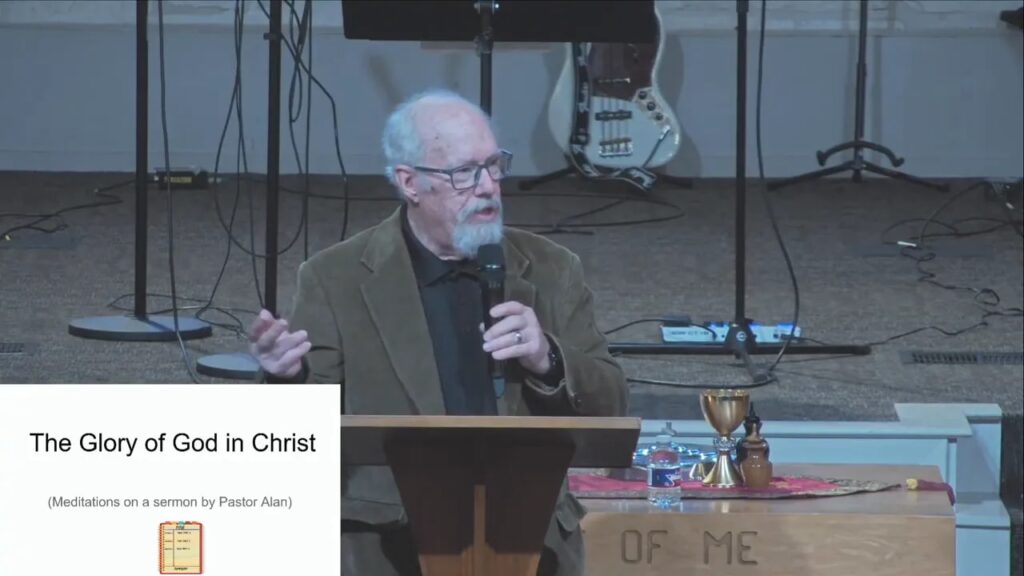
Meditations on the Glory of God — Charles Summers (2026-02-01)

The word "glory" often gets tossed around in worship songs, but its biblical meaning runs deeper than we realize. When God's glory appears, it signals that He is doing something decisive. From Abraham's covenant to Ezekiel's visions, and ultimately in Jesus, the presence of God's glory marks pivotal moments in the story of redemption. Discover how this weighty presence transforms not only our understanding of God but also our lives as believers today. Join us in exploring the profound implications of living as the temple of God's glory in a world that desperately needs His light.

Watch the Video!

YouTube player

The word glory gets tossed around in worship songs and Sunday clichés, but its biblical meaning runs deeper and heavier than most of us realize. When God’s glory appears in Scripture it isn’t just an inspiring moment — it signals that God is doing something decisive. These meditations trace that weighty presence from Abraham to Ezekiel, from the tabernacle to the cross, and into the living, breathing body of believers today.

What do we mean by “glory”?

There are at least three different English senses of the word glory in Scripture, and mixing them up leads to confusion. Briefly:

  • Glory as boasting — a loud, personal exclamation (Paul uses this sense when he says, “let him glory in the cross”).
  • Doxa — the Greek word for God’s magnificence, splendor, and character. It describes who God is, not our shouts about Him.
  • Kabod — the Hebrew idea of glorious weight and stature, an “awesome weight” that communicates presence and authority.

Another helpful term is Shekinah, a rabbinic label meaning “he who dwells.” It captures the idea of God’s abiding, majestic presence — the glory that cannot be mistaken for human action.

When the glory shows up, God is up to something

Across the story of redemption, the arrival of God’s glory marks pivotal moments. Here are key episodes that reveal the pattern.

Abraham: covenant and trust

God called Abraham out of a pagan world and promised to bless him and make his offspring a blessing to all nations. Abraham’s uncertainty led to the covenant-ritual of cut sacrifices laid out as a treaty. The striking image is this: Abraham, unable to act, falls into a deep sleep while God himself passes between the pieces.

“Abraham believed God, and it was counted to him as righteousness.”

The glory’s presence here confirms a covenantal promise made by God, not earned by human effort. It becomes the foundation for the New Testament truth that salvation is by grace through faith.
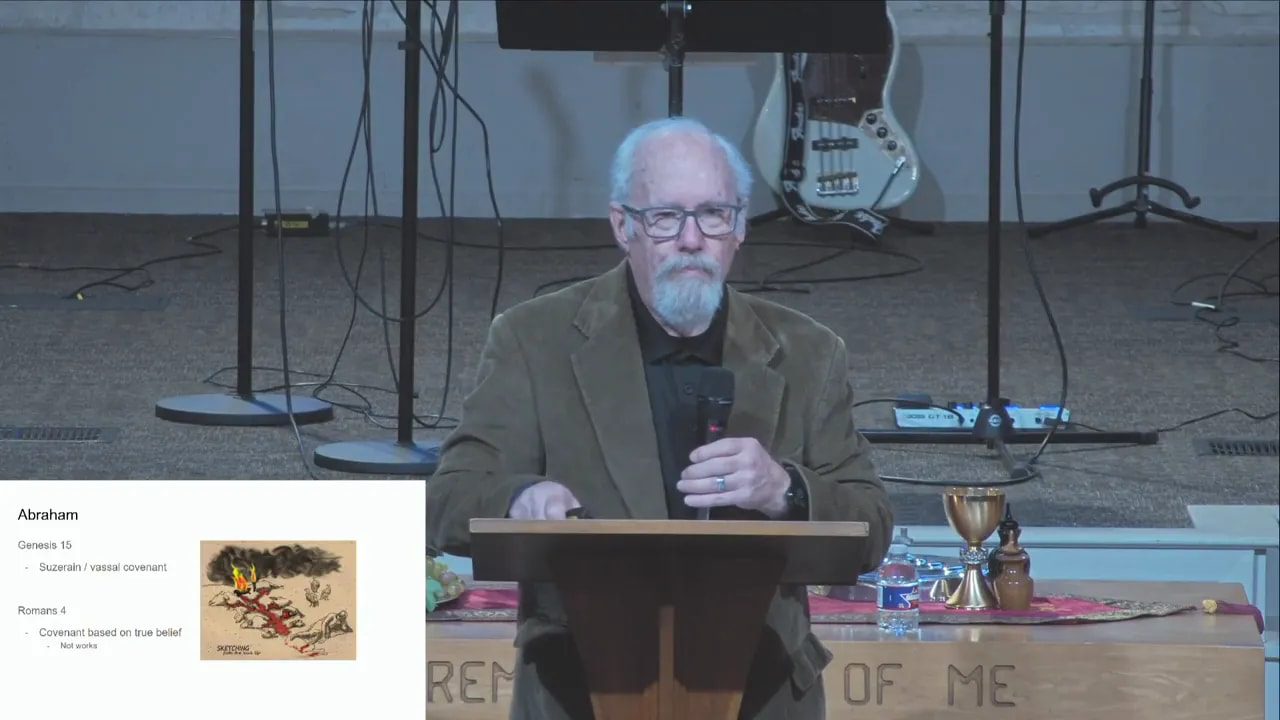
Frontal view of presenter at lectern with Genesis 15 'Abraham' slide visible

Moses: the bush, the pillar, the mountain

God appears to Moses in a burning bush, then as a pillar of cloud by day and fire by night, guiding and protecting Israel through the wilderness. On Sinai the glory arrives with thunder, smoke, and quake — an awesome manifestation that makes people stand back and tremble.

Moses asks to see God’s glory. God answers: you can’t look on my face and live, but I will show you my back — and then He reveals his name and character: merciful, gracious, slow to anger, abounding in steadfast love. Even in judgment, the first declaration is of forgiving grace.
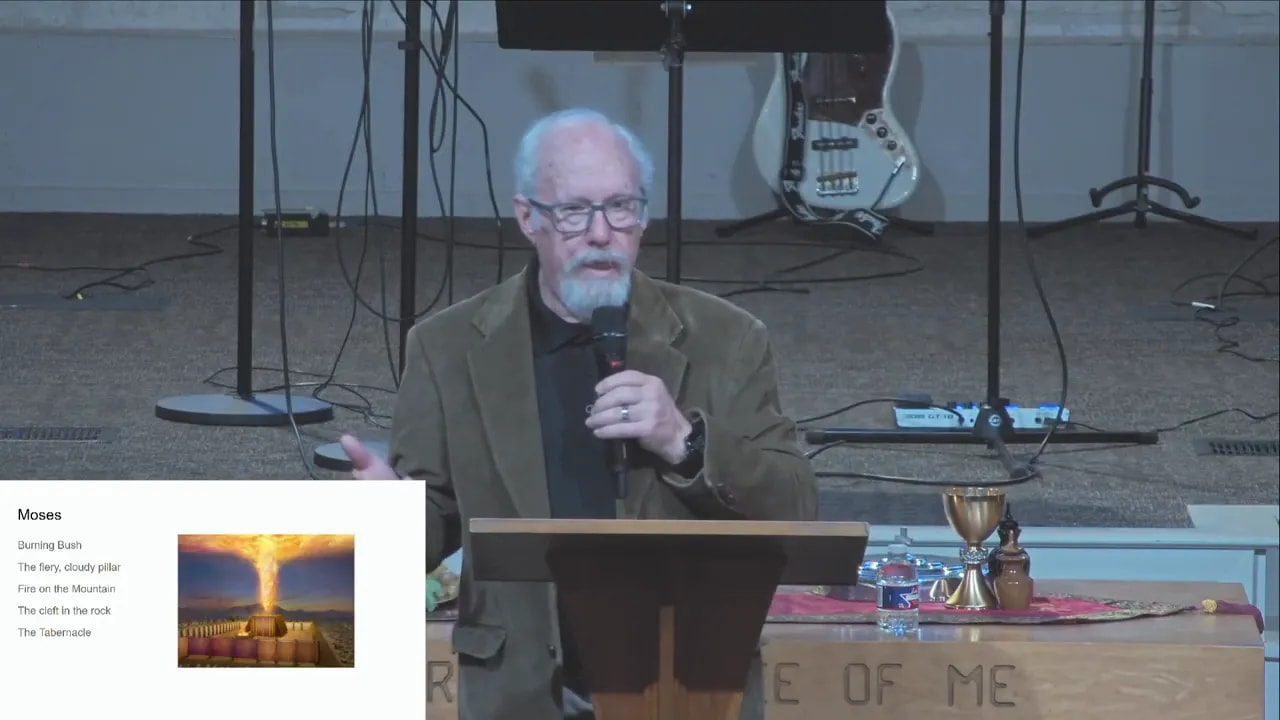
Front view of the presenter at the lectern with a clear Moses slide showing a burning-pillar image and bullet points

Solomon’s temple and the danger of domesticated glory

When Solomon builds a permanent temple, God’s glory fills it so powerfully the priests can barely stand. The temple was intended as a house of prayer for all nations — a public, open place where God’s presence would draw people in.

But Israel’s response drifted toward self-righteousness and exclusion. They added extra rules, polluted the sanctuary, and treated worship like their own private enterprise. The result: judgment, exile, and the departure of the glory.

Ezekiel: glory in exile and a promised return

Ezekiel, taken to Babylon, expects abandonment. Instead he sees the glory in vivid, otherworldly visions: cherubim with four faces, wheels within wheels, a throne and a figure like a “son of man” glowing like burnished bronze. God says, “I am here.”
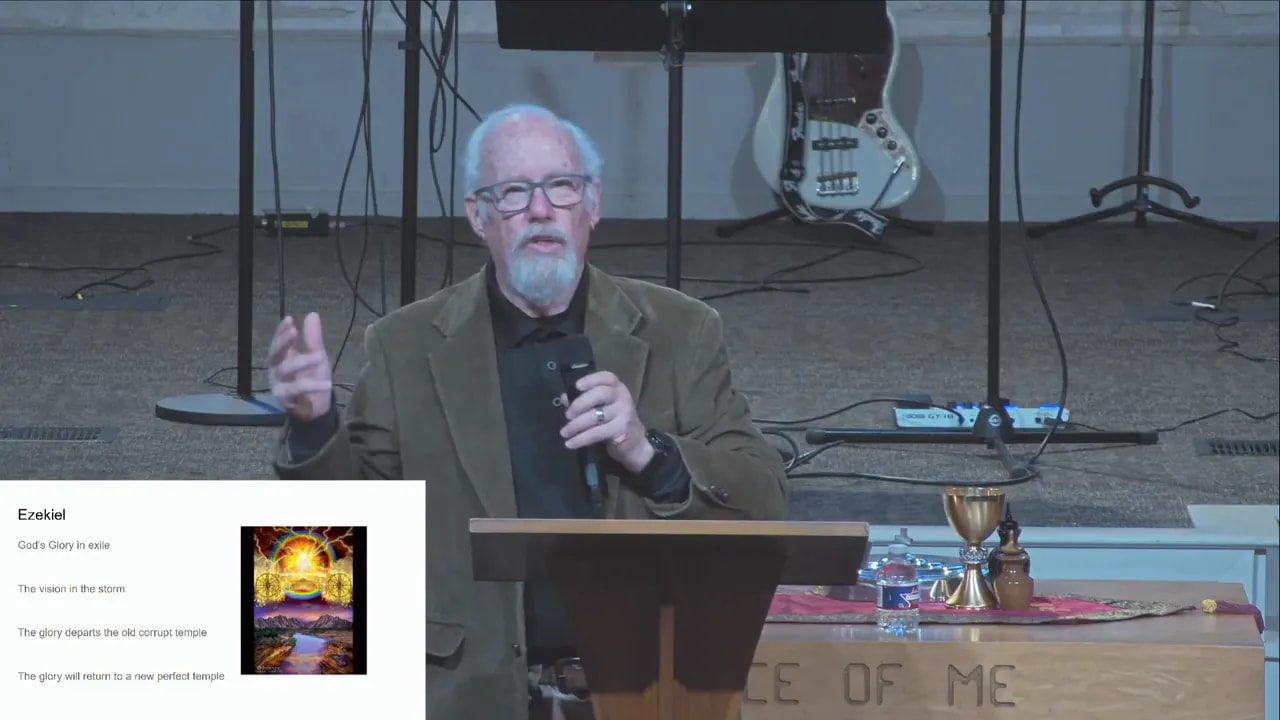
speaker at lectern making a hand gesture with an 'Ezekiel' slide and colorful vision artwork visible in the lower-left

Later Ezekiel watches the glory leave a corrupted temple, then receives precise blueprints and a promise: the glory will return. The future temple vision includes a river of life, trees whose leaves heal the nations, and the assurance that God’s presence will come back to dwell with His people.

Jesus: the true Temple and the fullest glory

Prophets had pointed ahead to a coming glory. John announces it plainly: the Word became flesh, dwelt among us, and we have seen his glory — full of grace and truth. Jesus is the true temple. Where earlier glory rested on rock, tent, or building, now it dwells in a person.
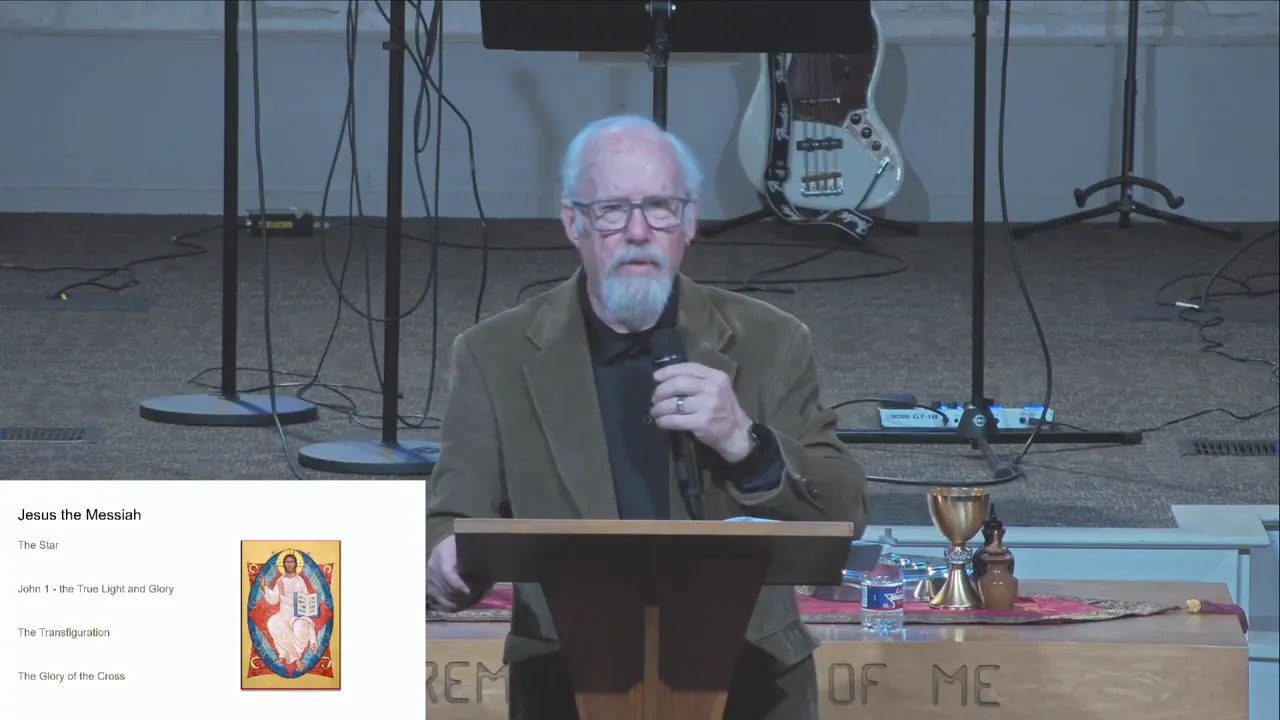
Clear frontal image of the speaker at a podium holding a microphone with a presentation slide titled 'Jesus the Messiah' visible in the lower-left and communion vessels on the table.

The apex of that glory is surprising: it shines most brilliantly on a cross. Jesus prays, “Father, glorify your name,” and the Father affirms His redemptive work. The crucifixion and resurrection are the decisive revelation of God’s character and plan — mercy, justice, judgment, and salvation reconciled.

The church: the ongoing habitation of glory

Jesus promised that after his ascension the Spirit would come and the church would be built. The day of Pentecost is a fresh outbreak of glory — wind, tongues of fire, a worldwide witness.
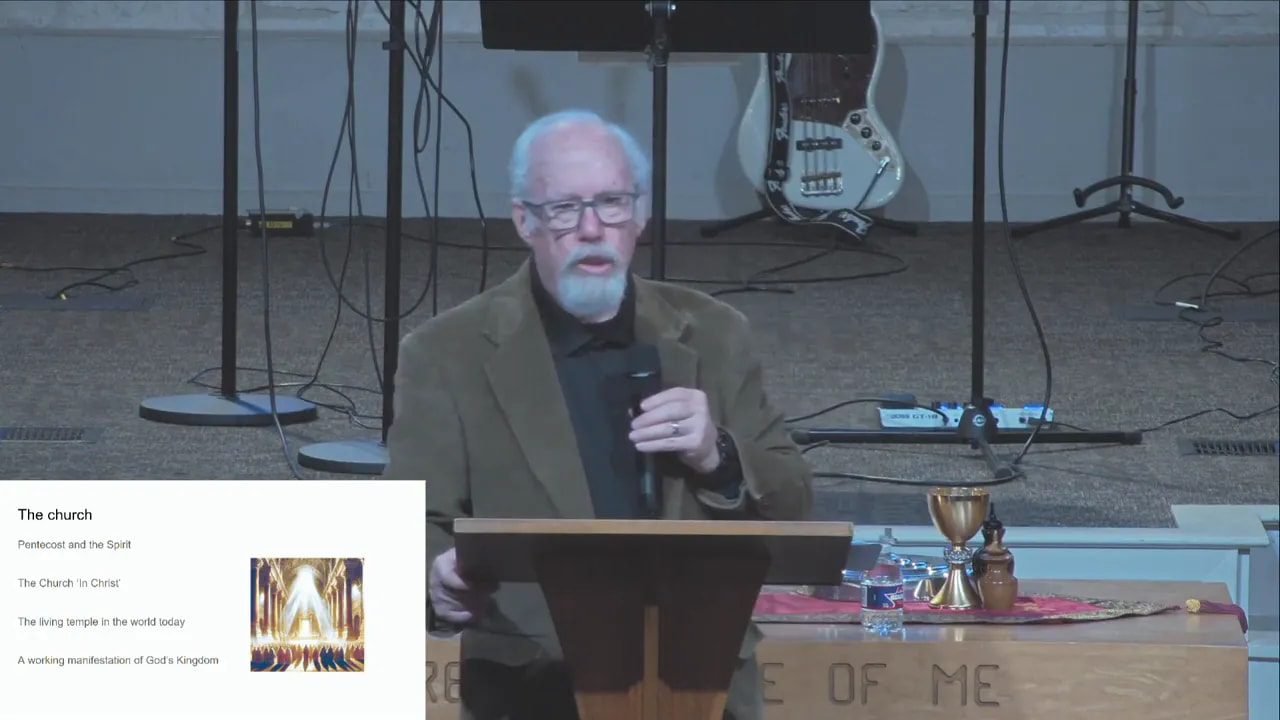
clear, centered shot of speaker at pulpit with 'The church' slide visible and communion elements on the table

But the church is not meant to be a static monument. Paul keeps insisting the ministry of the Spirit brings greater glory than the ministry engraved on stone. Christians are being transformed “from glory to glory” as they behold Christ. The glory now resides in the people of God — a gathered, diverse, missional community.

What that looks like in practice

  • Spirit-led ministry: not a checklist of duties but spiritual ministry empowered by the Holy Spirit.
  • Unity in diversity: the early church included different social classes, ethnicities, and backgrounds yet displayed the manifold wisdom of God.
  • Public witness: the church should function as a present example of the kingdom — salt and light in community life.

Hard lessons from history

The pattern is clear: where God’s glory appears, he is doing a new thing. But whenever people try to domesticate, control, or substitute worldly methods for God’s presence, the glory departs. Relying on political power, manipulation, or mere systems is a temptation the people of God keep repeating.

The remedy is simple and demanding: trust God, embrace the Spirit, and live as the embodied temple he intends. That means holiness mixed with mercy, openness to outsiders, and a readiness to be changed by what we behold in Christ.
Speaker facing the camera at a pulpit holding a microphone, communion elements visible on the table behind

Practical takeaways

  1. Meditate on Scripture: chew on passages repeatedly until they change you. Let line upon line build understanding.
  2. Expect God to act: when the glory appears he is up to something — pay attention and respond in faith.
  3. Choose Spirit over system: pursue spiritual wisdom rather than relying solely on human methods.
  4. Live as the temple: the church is now the dwelling place of God’s glory — embody that reality by loving and serving the community.
  5. Persist in prayer: effective, fervent prayer matters. It moves hearts and opens doors for God to reveal his work.

Final encouragement

God’s glory is not a relic of the past or a show for religious insiders. It is the living weight of his presence — merciful, majestic, and active. The same glory that passed between the sacrifices for Abraham, that filled Sinai, that shone from Calvary, now dwells among his people by the Spirit.

Believe that God is building his church. Practice the spiritual habits that open you to glory: Scripture meditation, prayer, humility, and Spirit-led ministry. As individuals and as a body, we are being transformed and made into a public demonstration of God’s eternal purpose. That is the calling and the hope before us.

Scripture references worth re-reading

  • Genesis 15 — Abraham’s covenant
  • Exodus 3; 13; 19 — Burning bush, pillar of cloud/fire, Sinai
  • Ezekiel 1, 43 — Visions of glory and the promised return
  • John 1 — The Word became flesh; we have seen his glory
  • Acts 2 — Pentecost and the Spirit’s arrival
  • 2 Corinthians 3 — From glory to glory
Facebook
LinkedIn
X
Email

Related Sermons

Church speaker at a podium discussing Easter hope and God’s faithfulness when hopes collapse

Why the Resurrection of Jesus Changes Everything

Every year, when Resurrection Sunday comes around, there is a sense that words are not enough. We instinctively know that what we celebrate is too weighty and beautiful to fully capture. The resurrection of Jesus is not merely a cherished doctrine; it is the turning point of history, the defeat of death, and the beginning of a new way of living. This message carries the weight of hope and victory, demanding our attention and inviting us to explore how it transforms our lives and the world around us. Discover how the resurrection shapes our faith and daily existence.

Read More »
Church speaker gesturing while teaching at lectern in church sanctuary

Why “Go and Make Disciples” Is Actually Mistranslated

What if the Great Commission isn’t a heavy burden of pressure and guilt, but an invitation to live fully in Christ? Instead of merely “going” to make disciples, imagine a life where disciple-making flows naturally from your everyday activities. This shift transforms the command into a joyful expression of faith, where you bear witness to Jesus simply by being who you are. Discover how understanding the heart of this message can liberate you from striving and lead you into a vibrant, grace-filled life that reflects the beauty of God’s kingdom in every sphere of your existence.

Read More »
Speaker raising one arm and holding a microphone during a rainy sermon at a church stage.

The New Creation Begins: The Power of the Resurrection

The resurrection of Jesus is not just a past miracle; it is the powerful beginning of a new creation that is unfolding in our world today. This transformative event declares that death, darkness, and sin do not have the final word. As we embrace the reality of Christ’s resurrection, we are invited to participate in God’s renewal of the world, moving beyond a limited gospel of escape to a vibrant faith that seeks to bring healing and hope. Discover how the resurrection empowers us to grow into mature sons and daughters of God, ready to impact our communities and creation itself.

Read More »
Pastor preaching near a church pulpit with stained glass backdrop

Overcoming Fear: Why Looking to Jesus Changes Everything

In moments when fear and anxiety seem overwhelming, the question we must ask ourselves is not just, “What do I do next?” but rather, “What am I looking at?” Hebrews 12 invites us to look unto Jesus, the author and finisher of our faith. Through the stories of imperfect people like Hezekiah and Paul, we discover that nothing is impossible with God. This journey of faith is not about controlling outcomes but about coming to Him with our burdens. Join us as we explore how looking to Jesus transforms our perspective and empowers us to overcome fear and endure life’s challenges.

Read More »
Pastor speaking from the pulpit on church steps during a sermon

Reaching the Unreached in Nigeria and Breaking Free From the Limitations We Accept

In a world filled with limitations, both external and internal, the call to break free resonates deeply. Imagine living like a powerful elephant, yet tethered by the ropes of past failures and fears. This message challenges us to confront the boundaries we’ve accepted and to embrace the freedom that Christ offers. As we reflect on the mission in Nigeria, we are reminded that the church is called to shine brightly, even in the darkest times. Are you ready to decide to break free and step into your God-given potential? Discover how you can shake off the yoke and rise.

Read More »
Preacher delivering a sermon at a church podium with microphone and open notes

Matthew 7:21-24 Explained: Does God Truly Know You?

How do you answer the question when God asks, “Where are you?” This isn’t about your physical location or church attendance; it’s a deeper inquiry into your relationship with Him. It’s possible to be active in ministry and still feel spiritually dry. Jesus warns us in Matthew 7:21-24 that not everyone who claims to know Him truly does. This message invites you to reflect on your intimacy with God, to assess where you stand in your faith, and to rekindle that genuine connection. Are you ready to take a spiritual inventory and discover where you truly are?

Read More »
Speaker behind a podium holding a microphone during a church sermon

How to Forgive When Your Flesh Demands Justice

When I think of the Garden of Eden, I picture light—a world filled with the presence of God, where heaven and earth were one. But then sin entered the story, plunging humanity into darkness. This movement from light to darkness reveals our deep longing for justice and reconciliation. The haunting cry of Abel’s blood for justice echoes through time, yet the blood of Jesus speaks a better word—mercy. Discover how the gospel breaks the cycle of vengeance and invites us into a new creation, where forgiveness becomes the pathway to healing and true community.

Read More »
Pastor speaking with open hand gestures at a church podium

Why You Feel Alone in a Crowded Church

One of the great tragedies of modern Christianity is that many people can sit in a room full of believers and still feel profoundly alone. They may attend every week, listen to solid teaching, and genuinely love Jesus, yet something still feels missing. The issue is not that church does not matter, but rather that we have often built church on a worldly model instead of the kingdom model Jesus intended. When the church aligns with God’s design, it becomes a place of healing, transformation, belonging, and encounter with the living Christ. Discover how to cultivate this authentic community.

Read More »
clear framed speaker at lectern with communion elements and guitar behind

Organic vs. Institutional: Why Relational Church Changes Everything

The church is meant to be a household, a family that models heaven on earth. When it becomes a lifeless institution driven by hierarchy and performance, it loses the essence of authentic relationship with God and one another. Imagine a community that grows organically from encounters with Jesus, where love, vulnerability, and reconciliation flourish. In a time of division, the church must reflect the beauty of every tongue, tribe, and nation. Discover how embracing relational church life can transform not just our gatherings, but our very witness to the world. Let the walls fall and experience the love that changes everything.

Read More »
Speaker gesturing toward congregation with communion table and steps behind

Authentic Relational Church — The Jerusalem Model

Christianity can appear successful by worldly standards—big buildings and large attendance—yet still miss the transforming power Jesus intended. When the church is organized by systems instead of organic, family-shaped relationships, it often fails to reflect heaven on earth. The heart of the problem is structural. A mechanistic church produces mechanical results, while a church rooted in belonging and the gospel brings life, healing, and renewal. The dream is simple: every person experiences love, welcome, and a personal encounter with Jesus. Discover how the early church’s model can inspire a thriving, relational community today.

Read More »