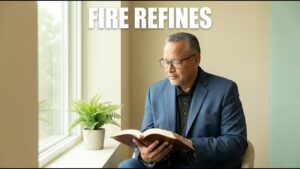

I’m Pastor Bill Brannan with Life Springs Christian Church. In this message I continue the conversation we started last week about identity — who we really are in Christ — and how that identity shapes the way we live, love, and lead the church into the world. Below I summarize the heart of that message, include key Scriptures I used (Hebrews 5:14; 2 Corinthians 3:5–6; Romans 14:17–18; Galatians 5), and offer practical ways to evaluate whether what we do brings life or brings death.
Outline
- Identity: hospital of the broken or warriors of truth?
- New covenant vision: law written on the heart
- What the kingdom looks like: righteousness, peace, and joy
- Context matters: maturity, weakness, and Christian community
- How to evaluate spiritual fruit (Galatians 5)
- Practical next steps for individuals and the church
1. Two images of the church — and one essential question
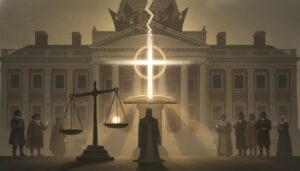
We began by revisiting two ways people often imagine the church: a hospital for broken people who bring healing to the world, or a band of warriors storming the gates of hell. Both images are true in different ways, but the real issue is whether the identity we own brings life or brings death — healing or bondage, liberty or judgment.
That question becomes the litmus test for everything we say and do. It isn’t enough to cite Scripture or adopt a set of rules; we must ask, “Does this action, teaching, or attitude produce life (the kingdom) or does it produce death (something else)?”
2. New Covenant: same law, different power
“Not that we are sufficient of ourselves… our sufficiency is from God, who has made us ministers of the new covenant, not of the letter but of the Spirit; for the letter kills, but the Spirit gives life.” — 2 Corinthians 3:5–6
The law itself reflects God’s character and was meant to create a world of liberty. The problem wasn’t the law; it was that the law written on tablets of stone didn’t give the power to live it out. The promised new covenant says God will write His law on our hearts and empower us to walk in His ways through the Holy Spirit. This is the point of transformation: empowerment, not mere external performance.
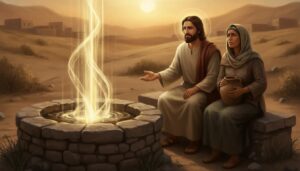
I used the image from Revelation: a river flows from the throne and brings life wherever it goes — trees by that river bear fruit, and the leaves are for the healing of the nations. That picture is not only a future hope; it is a vision for how God intends His people to bring healing to individuals, communities, and nations when we walk in the new covenant.
3. How the kingdom looks — a practical definition
“For the kingdom of God is not eating and drinking, but righteousness, peace, and joy in the Holy Spirit.” — Romans 14:17
Those three words give us a practical evaluation grid: righteousness (walking in love), peace, and joy in the Holy Spirit. When we evaluate beliefs, practices, or cultural choices, ask: is this producing righteousness, peace, and joy in the Spirit? If it is, it’s kingdom fruit; if it isn’t, we need to repent, adjust, or receive new grace.
That evaluation changes how we respond to disagreements in the church. Two sincere believers might arrive at different convictions about food, music, movies, or celebrations. The issue is not who has the strictest rulebook — the issue is whether their convictions produce kingdom fruit or produce division, condemnation, and pride.
4. Context and maturity — Paul’s pastoral approach
Paul’s letter in Romans 14 addresses a real situation: mature believers felt free to eat meat that had once been offered to idols; weaker believers were offended by it. Paul calls the weaker believers “weak in the faith” and also instructs the mature to be ready to lay aside freedom when it causes a brother or sister to stumble.
The point is pastoral, not merely doctrinal. When we evaluate behavior, we must consider context and the maturity level of individuals. Are we building community in a way that helps people grow into maturity, or are we using rules to beat each other up? True spiritual leadership invites people into growth, not into shame.
A word on spiritual seasons
Spiritual longings often lead people to different streams — feasts, mystics, legalistic movements, or radical freedom. The journey is normal. The call, however, is to grow from spiritual infancy into maturity: dependence on God at first, then partnership with Him as we become responsible, discerning witnesses to His kingdom.
5. A practical tool: evaluate fruit using Galatians 5
“Walk in the Spirit, and you will not carry out the desire of the flesh… If you are led by the Spirit, you are not under the law.” — Galatians 5:16–18 (paraphrase)
Paul gives us a simple but powerful diagnostic. Life in Christ shows itself in Spirit-fruit; life apart from Christ shows itself in the works of the flesh. If we want to know whether a path is kingdom-aligned, look at the fruit.
Fruit vs. works — the practical lists
- Fruit of the Spirit (what life in Christ produces): love, joy, peace, patience, kindness, goodness, faithfulness, gentleness, self-control.
- Works of the flesh (what a kingdom-less path produces): sexual immorality, impurity, idolatry, hatred, jealousy, anger, selfish ambition, divisions, envy, drunkenness, and the like.
When a practice or conviction nurtures fruit — it builds love, kindness, joy, peace, unity — it is a path of life. When it produces pride, judgmentalism, division, or enmity, it is a path away from the kingdom, even if its form looks “religious.”
6. Practical takeaways — how to live this out
- Ask the fruit question: Does this bring righteousness, peace, and joy in the Spirit?
- Choose love over winning: If my freedom causes a brother to stumble, I’ll gladly limit that freedom to build unity (Paul’s principle).
- Celebrate diversity of conviction: Different people will follow Jesus with different practices. Honor sincere faith-filled motives, not just identical behaviors.
- Move from condemnation to growth: When you discover you’ve hurt others or missed the mark, receive grace, repent, and rejoice in the chance to grow.
- Train your senses: Hebrews says mature believers have senses exercised to discern good and evil — practice discernment by weighing outcomes, not just forms.
- Tap the Spirit daily: You can’t live the new covenant by effort alone. Our sufficiency is from God; dependence on the Spirit brings the power to walk in love.
7. How this shapes church life
Our aim as a church is to be a place where mature and maturing believers can worship, serve, and become the kind of people who bring healing to individuals and societies. That means creating space for honest growth, pastoral correction without shame, and unity without uniformity. We want rivers of living water to flow from this community, bringing healing to the nations — which begins with healed hearts and transformed people.
Conclusion — a pastoral invitation
We are called to become a new covenant people: the same law of love, now empowered by the Spirit to live in freedom. This is not a call to license or to legalism; it is a call to maturity. Let us evaluate ourselves by the fruit we bear and encourage one another toward righteousness, peace, and joy in the Holy Spirit.
If you’re wrestling with conviction, confusion, or a sense of being stuck — don’t condemn yourself. Come to the community, ask for prayer, and tap into the grace that makes growth possible. Our sufficiency is from God; He is shaping us into a people who manifest His kingdom on earth.
“The letter kills, but the Spirit gives life.” — Let this be the posture that guides how we teach, correct, and love one another.
May God give us grace to walk in the Spirit, to bear kingdom fruit, and to be a church that brings healing to our neighborhoods, our cities, and our nations.
If you’d like prayer or to discuss these ideas further, reach out to Life Springs Christian Church — we’d love to walk with you.