No King But King Jesus: Restoring a Godly Heritage and Building a World That Reflects Heaven

The idea that a nation can be founded on a vision of liberty rooted in a biblical imagination is radical yet transformative. America’s founding documents reflect a covenant of principles and a social contract that preserves human dignity and rights. As we navigate the delicate balance between anarchy and tyranny, the call to love our enemies and practice forgiveness becomes essential. Personal renewal paves the way for national freedom, and the church's role in embodying wisdom is crucial. Discover how reclaiming our godly heritage can lead to a society that truly reflects heaven.

Watch the Video!

YouTube player

The idea that a nation can be founded on an idea rather than ethnicity or geography is radical. America was born as a vision of liberty rooted in a biblical imagination. That vision—what the founders often described as living under the rule of King Jesus—offers a blueprint for building a society that reflects heaven: freedom balanced against anarchy on one side and tyranny on the other. Recovering that blueprint begins with personal transformation and the practical wisdom of Scripture.

America’s Original Blueprint: Covenant, Constitution, and a Biblical Imagination

Our founding documents form a dual structure similar to Scripture: a covenant of principles and a social contract that organizes government. The Declaration of Independence reads like a covenant statement of human dignity and rights, while the Constitution provides the institutional framework to preserve those rights. For many early Americans, those ideas were not merely political theory; they flowed from a lived biblical worldview that shaped law, community, and public life.

“We hold these truths to be self-evident, that all men are created equal, that they are endowed by their creator with certain unalienable rights.”

Because biblical literacy has declined, that connection is often missed today. Yet the principle remains: when a culture is saturated with the wisdom of Scripture, its laws, institutions, and daily practices naturally reflect those values without overtly religious labels. Restoring a godly heritage begins with reclaiming that deep, formative influence.
speaker at pulpit gesturing while delivering a sermon about faith and public life

Liberty between Anarchy and Tyranny

The Bible presents two tragic extremes: the pre-fall anarchy of self-rule and the post-flood attempt at human-made tyranny (the Tower of Babel). Both distort human flourishing. True liberty is neither license nor centralized domination. It is ordered freedom under the wise rule of God—expressed in institutions that protect dignity, promote responsibility, and limit abuse of power.

The founders understood this balance. Their aim was not chaos or domination but a system that allowed people to live responsibly, pursue the common good, and flourish together. To rebuild that society now, we must know the blueprint of liberty—not as a political slogan but as a lived moral imagination drawn from Scripture.
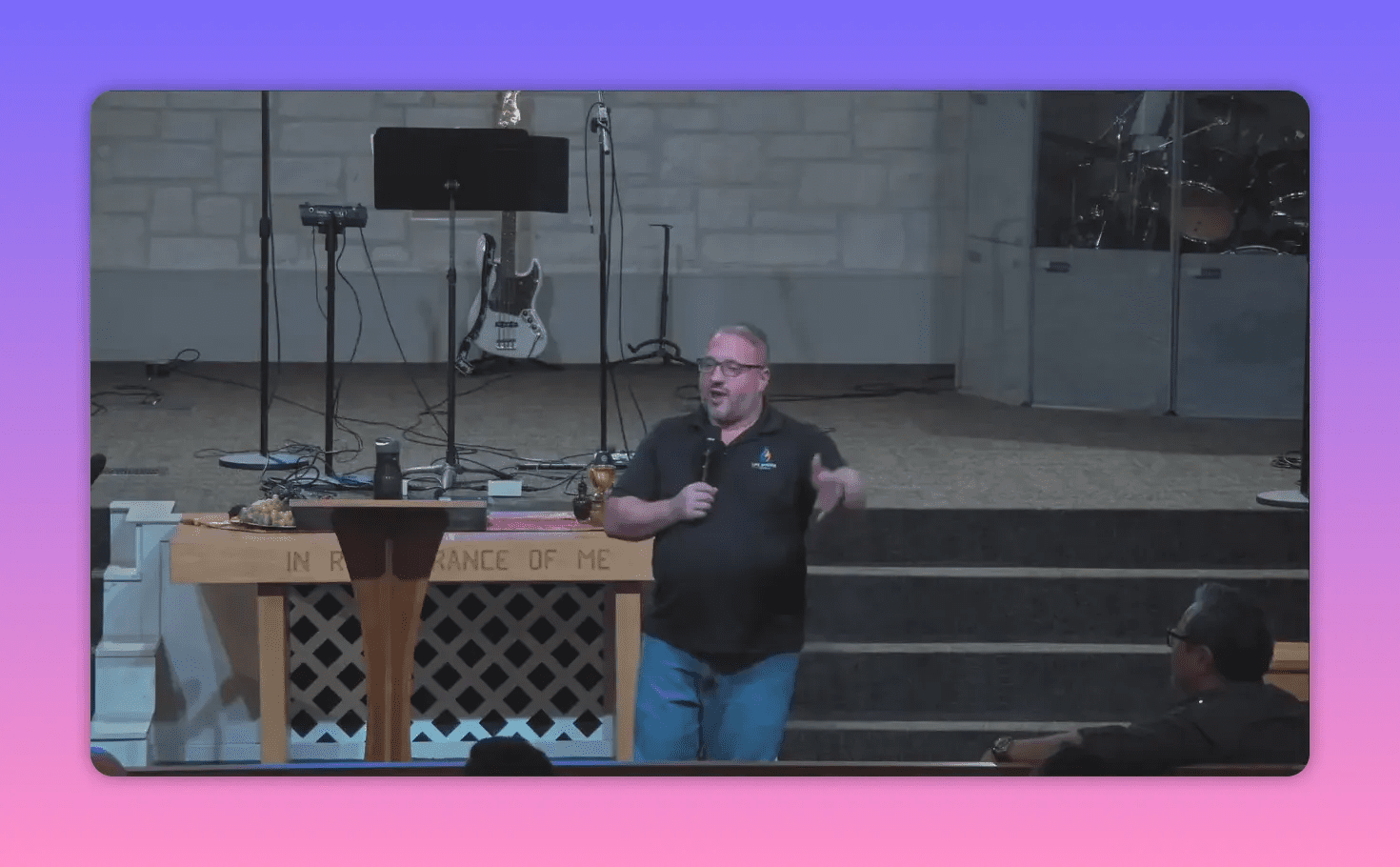
Church speaker at a lectern with an outstretched arm, stage instruments and communion table visible — a wide, clear sermon frame

Love Your Enemies: The Starting Point for a Free Society

The Sermon on the Mount gives a startling blueprint for how personal conduct undergirds a free society. Jesus calls for a radical love that refuses to return evil for evil. That personal liberty from bitterness and vengeance is the seedbed of public liberty.

“But I say to you, love your enemies. Pray for those who persecute you … You therefore must be perfect as your heavenly Father is perfect.”

Practical holiness—loving the unlovely, blessing the persecutor—requires power beyond human effort. It exposes how much we need grace and the Holy Spirit. When personal bitterness, unforgiveness, or anger take root, they build prisons in individual hearts. Those inner prisons spill outward, creating social divisions that erode civility and threaten civilization itself.
Speaker at pulpit gesturing while preaching about forgiveness and small tests

Small Tests, Big Results

Everyday moments—an irritating customer service call, a rude driver, a neighbor who offends—become training grounds. Choosing grace in small things builds the capacity to act rightly in the big things. A culture of forgiving, responsible people is the only soil where a culture of liberty can thrive.
Church speaker using hand gestures at the pulpit beside a communion table and stage instruments

Love the Stranger: Law, Memory, and Reconciliation

Scripture repeatedly frames social instruction through memory. New laws are taught against the backdrop of Israel’s time in Egypt. That memory could have hardened into resentment, or it could cultivate mercy. God commands compassion for strangers precisely because the nation was once a stranger.

“You shall not wrong a sojourner or oppress him, for you were sojourners in the land of Egypt.”

Treating strangers as neighbors, welcoming the outsider, and resisting tribal hatred are not political niceties. They are foundational practices for building a society that reflects heaven. A social order rooted in resentment or revenge will always reproduce bondage; a social order rooted in mercy invites flourishing.
Man speaking at a church pulpit making a hand gesture with communion table and instruments behind

Personal Freedom Precedes National Freedom

National renewal begins with personal renewal. Unforgiveness, bitterness, and blame create inner captivity. Those private prisons multiply into public brokenness. The work of reconciliation—repairing breaches and restoring relationships—was shown to be astonishingly effective in diverse settings.

Frank Buchman, working around the time of World War II, taught practical repentance and forgiveness in workplaces and entire communities. By encouraging people to apologize, take responsibility, and forgive, he helped transform labor disputes, postwar resentments, and cross-cultural animosities. Such practices, though simple, produce deep societal change when adopted at scale.
Church speaker at a lectern with one hand resting on the pulpit and the other holding a microphone, communion items and instruments visible behind

Wisdom from God’s Word: The Church’s Role

Wisdom is the architect of creation. If a community lacks wisdom, it cannot build a world that reflects heaven. The church is called to embody that wisdom so believers can bless every sphere of life—business, government, education, family—bringing them closer to God’s design.

Two common errors weaken this witness:

  • Childish or superstitious faith that expects quick fixes—electing the right person or performing rituals—to solve deep cultural problems.
  • Immature dependency on spiritual celebrities or institutional managers who turn disciples into followers rather than equipping them as responsible adults in Christ.

True maturity means believers who know Scripture, think clearly, take responsibility, and serve faithfully. The church functions best when each member is equipped, contributing unique gifts toward the common good.
Clear front shot of a church speaker at the lectern gesturing while preaching with instruments in the background

Practical Steps Toward a World That Reflects Heaven

  1. Renew hearts first. Forgiveness, humility, and love are the soil where public liberty grows.
  2. Recover biblical wisdom. Ground public life in principles that balance freedom with order.
  3. Practice reconciliation. Encourage apologies, responsibility, and peacemaking in families, neighborhoods, and workplaces.
  4. Train mature disciples. Equip people to think, take responsibility, and serve without unhealthy dependency.
  5. Inculturate values. Let Scripture shape daily habits and institutions so Christian virtues become self-evident in public life.

Conclusion: Repairers of the Breach

Building a world that reflects heaven is not about slogans or quick political wins. It is about a long obedience in the same direction: personal repentance, practical mercy, and wisdom formed by Scripture. When believers grow mature, take responsibility, and act as peacemakers, the river of God’s life flows outward. Where that river goes, the dead come alive, and the leaves are for the healing of the nations.

Be a repairer of the breach. Let personal liberty take root so national liberty can flourish.
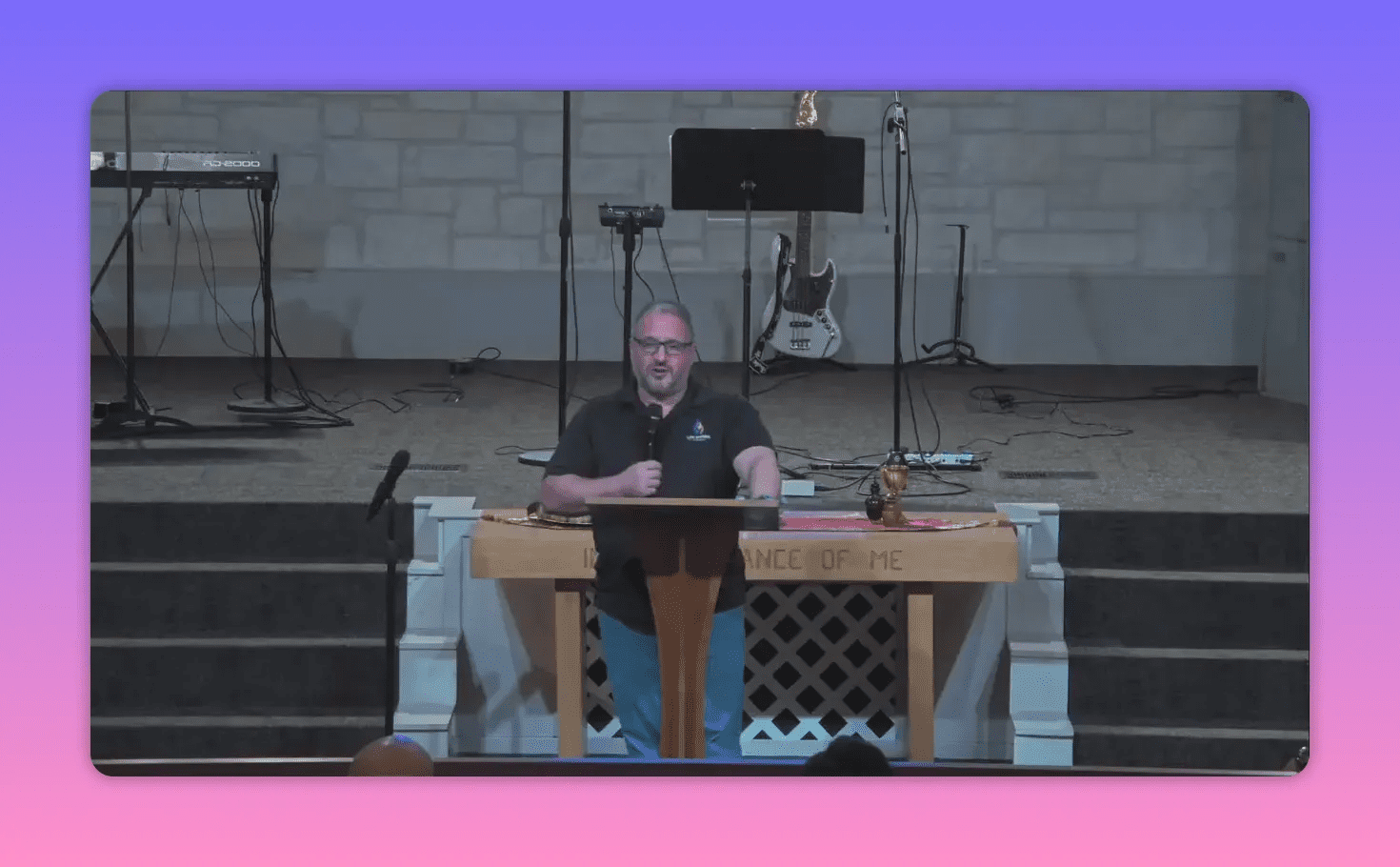
Centered pulpit shot of a speaker addressing the congregation with communion items and instruments behind

Facebook
LinkedIn
X
Email

Related Sermons

Church speaker at a podium discussing Easter hope and God’s faithfulness when hopes collapse

Why the Resurrection of Jesus Changes Everything

Every year, when Resurrection Sunday comes around, there is a sense that words are not enough. We instinctively know that what we celebrate is too weighty and beautiful to fully capture. The resurrection of Jesus is not merely a cherished doctrine; it is the turning point of history, the defeat of death, and the beginning of a new way of living. This message carries the weight of hope and victory, demanding our attention and inviting us to explore how it transforms our lives and the world around us. Discover how the resurrection shapes our faith and daily existence.

Read More »
Church speaker gesturing while teaching at lectern in church sanctuary

Why “Go and Make Disciples” Is Actually Mistranslated

What if the Great Commission isn’t a heavy burden of pressure and guilt, but an invitation to live fully in Christ? Instead of merely “going” to make disciples, imagine a life where disciple-making flows naturally from your everyday activities. This shift transforms the command into a joyful expression of faith, where you bear witness to Jesus simply by being who you are. Discover how understanding the heart of this message can liberate you from striving and lead you into a vibrant, grace-filled life that reflects the beauty of God’s kingdom in every sphere of your existence.

Read More »
Speaker raising one arm and holding a microphone during a rainy sermon at a church stage.

The New Creation Begins: The Power of the Resurrection

The resurrection of Jesus is not just a past miracle; it is the powerful beginning of a new creation that is unfolding in our world today. This transformative event declares that death, darkness, and sin do not have the final word. As we embrace the reality of Christ’s resurrection, we are invited to participate in God’s renewal of the world, moving beyond a limited gospel of escape to a vibrant faith that seeks to bring healing and hope. Discover how the resurrection empowers us to grow into mature sons and daughters of God, ready to impact our communities and creation itself.

Read More »
Pastor preaching near a church pulpit with stained glass backdrop

Overcoming Fear: Why Looking to Jesus Changes Everything

In moments when fear and anxiety seem overwhelming, the question we must ask ourselves is not just, “What do I do next?” but rather, “What am I looking at?” Hebrews 12 invites us to look unto Jesus, the author and finisher of our faith. Through the stories of imperfect people like Hezekiah and Paul, we discover that nothing is impossible with God. This journey of faith is not about controlling outcomes but about coming to Him with our burdens. Join us as we explore how looking to Jesus transforms our perspective and empowers us to overcome fear and endure life’s challenges.

Read More »
Pastor speaking from the pulpit on church steps during a sermon

Reaching the Unreached in Nigeria and Breaking Free From the Limitations We Accept

In a world filled with limitations, both external and internal, the call to break free resonates deeply. Imagine living like a powerful elephant, yet tethered by the ropes of past failures and fears. This message challenges us to confront the boundaries we’ve accepted and to embrace the freedom that Christ offers. As we reflect on the mission in Nigeria, we are reminded that the church is called to shine brightly, even in the darkest times. Are you ready to decide to break free and step into your God-given potential? Discover how you can shake off the yoke and rise.

Read More »
Preacher delivering a sermon at a church podium with microphone and open notes

Matthew 7:21-24 Explained: Does God Truly Know You?

How do you answer the question when God asks, “Where are you?” This isn’t about your physical location or church attendance; it’s a deeper inquiry into your relationship with Him. It’s possible to be active in ministry and still feel spiritually dry. Jesus warns us in Matthew 7:21-24 that not everyone who claims to know Him truly does. This message invites you to reflect on your intimacy with God, to assess where you stand in your faith, and to rekindle that genuine connection. Are you ready to take a spiritual inventory and discover where you truly are?

Read More »
Speaker behind a podium holding a microphone during a church sermon

How to Forgive When Your Flesh Demands Justice

When I think of the Garden of Eden, I picture light—a world filled with the presence of God, where heaven and earth were one. But then sin entered the story, plunging humanity into darkness. This movement from light to darkness reveals our deep longing for justice and reconciliation. The haunting cry of Abel’s blood for justice echoes through time, yet the blood of Jesus speaks a better word—mercy. Discover how the gospel breaks the cycle of vengeance and invites us into a new creation, where forgiveness becomes the pathway to healing and true community.

Read More »
Pastor speaking with open hand gestures at a church podium

Why You Feel Alone in a Crowded Church

One of the great tragedies of modern Christianity is that many people can sit in a room full of believers and still feel profoundly alone. They may attend every week, listen to solid teaching, and genuinely love Jesus, yet something still feels missing. The issue is not that church does not matter, but rather that we have often built church on a worldly model instead of the kingdom model Jesus intended. When the church aligns with God’s design, it becomes a place of healing, transformation, belonging, and encounter with the living Christ. Discover how to cultivate this authentic community.

Read More »
clear framed speaker at lectern with communion elements and guitar behind

Organic vs. Institutional: Why Relational Church Changes Everything

The church is meant to be a household, a family that models heaven on earth. When it becomes a lifeless institution driven by hierarchy and performance, it loses the essence of authentic relationship with God and one another. Imagine a community that grows organically from encounters with Jesus, where love, vulnerability, and reconciliation flourish. In a time of division, the church must reflect the beauty of every tongue, tribe, and nation. Discover how embracing relational church life can transform not just our gatherings, but our very witness to the world. Let the walls fall and experience the love that changes everything.

Read More »
Speaker gesturing toward congregation with communion table and steps behind

Authentic Relational Church — The Jerusalem Model

Christianity can appear successful by worldly standards—big buildings and large attendance—yet still miss the transforming power Jesus intended. When the church is organized by systems instead of organic, family-shaped relationships, it often fails to reflect heaven on earth. The heart of the problem is structural. A mechanistic church produces mechanical results, while a church rooted in belonging and the gospel brings life, healing, and renewal. The dream is simple: every person experiences love, welcome, and a personal encounter with Jesus. Discover how the early church’s model can inspire a thriving, relational community today.

Read More »