Are You a Warrior for Christ or Seeking Healing?
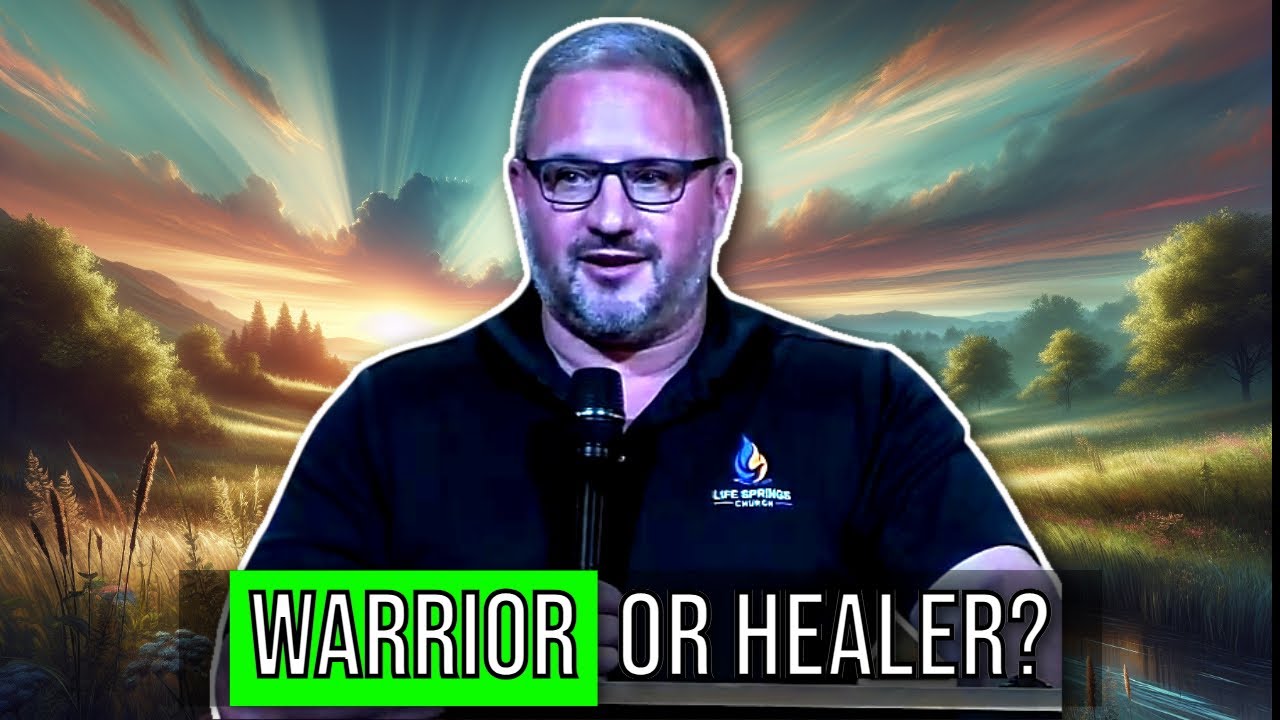
I’m Pastor [Speaker’s Name] from Life Springs Christian Church, and in this message I want to wrestle with a question that keeps coming up in our conversations and in the life of the church: who are you in Christ? Are you primarily a warrior storming the gates of hell, or are you someone the church exists to heal—a patient in a hospital for the broken? The honest answer is both, and how we hold those identities matters for our souls and for the world.
Why this question matters
Our culture is full of people who are hurt, searching for hope, acceptance, dignity, and purpose. Those longings are exactly the fruit of walking with Jesus. But when the church organizes itself only as a hospital for the hurting, people can get stuck in a perpetual identity of need. Conversely, if the church only promotes an identity of a conquering warrior, we risk pride, self-righteousness, and a cold hardness that chokes out grace.
“I want to build a church that’s not just a hospital for the hurt and broken, but is a mighty force of life and light, storming the gates of hell, setting at liberty the captives.”
Two identities: wounds and warfare
Think about the two pictures: on one hand, people who come to church because they’re wounded and need healing. On the other hand, people who see themselves as agents of cultural transformation—warriors for Christ bringing light into darkness. Both are biblical and both are necessary. The danger comes when either identity becomes absolute or is lived out in an unhealthy way.
- When the wounded identity becomes the only story: people define themselves by pain and remain inward-focused.
- When the warrior identity becomes the only story: people can become arrogant, judgmental, or oppressive in the name of righteousness.
We need to be honest: Christians live in a fallen world and experience real suffering. But we are also empowered to act—seeking to prevent suffering, transform culture, and bring liberty to the captives. The goal is to hold both realities and let the Spirit shape us into people who are healed and who heal others.
Paul’s example: Acts 14 and the life of the early church
Look at Acts 14:21–23. Paul and Barnabas preached, made many disciples, and then went back to strengthen believers—exhorting them to continue in the faith. Their counsel? “We must through many tribulations enter the kingdom of God.”
“We must through many tribulations enter the kingdom of God.”
That statement wasn’t abstract. Right before that, the text tells us Paul was stoned and left for dead. The churches there were birthed amid persecution, spiritual opposition, and cultural powers that profited from the status quo. So Paul’s encouragement prepared new believers for the reality that following Jesus often brings trouble—but that trouble does not negate the kingdom; it is the soil in which discipleship grows.
Why Paul didn’t sugarcoat the call
We live in a culture that wants to pacify and pamper. If someone comes to faith today we often say, “Your life will get better.” That can be true in some ways, but Paul knew the full picture. He strengthened people for the fight—not to make suffering an idol, but to prevent disillusionment when hardship came. That kind of honest exhortation keeps the life and the mission of the church alive.
The kingdom: present reality and future hope
One of Jesus’ central claims was that “the kingdom of God is at hand.” That means the kingdom is not just a distant future reward; it is a present reality we can enter today. Yet Paul’s words remind us that we often enter that reality “through many tribulations.” What chokes the kingdom life out of us? Grief, bitterness, anxiety, fear of loss, and persecution can all stop the rivers of living water God wants to flow through us.
- The kingdom is a present experience of God’s rule and restoration.
- It grows as people yield to Christ, even in suffering.
- We must evaluate everything by a simple question: does this bring life or death? Light or darkness?
Cultural transformation, not complacent comfort
When Paul preached the gospel in Asia Minor, whole industries were threatened—the idol trade, the systems that profited from oppression. When people begin to think differently, act differently, and stop buying the idols of a broken society, the economic and social consequences are real. That’s not something to celebrate in a selfish way; it’s evidence that the kingdom of God breaks the power of exploitative systems.
History shows the tension between empire and the gospel. The Roman Empire knew the gospel threatened its control. Early persecutions were often reactions to a world being liberated from fear and false religion. Our calling today includes preparing communities to live differently in ways that will unsettle the unjust and set captives free.
Stories that teach—Naomi, Ruth, and the beauty of a redeemed life
Consider the story of Naomi and Ruth. Naomi returns to Israel as Mara—bitter and hopeless. Ruth follows her and sees a light she did not expect. Even in the darkest place, the witness of a family’s faith and God’s social provisions (like gleaning for the poor) created a pattern by which lives could turn. Ruth’s eventual place in the genealogy of Jesus is a reminder that God redeems despair into participation in his kingdom purposes.
Practical steps: holding both identities well
How do we live this out without falling into the traps of self-pity or pride? Here are practical ways we can steward both the healer and the warrior callings:
- Value honest pastoral care. Meet people’s needs with compassion—healing is essential.
- Equip believers for cultural engagement. Teach how to stand with integrity in workplaces, institutions, and public life.
- Encourage resilience. Prepare people for trials without making suffering into a badge of honor or a theology of defeat.
- Measure fruit by life. Constantly ask: does this promote human flourishing, liberty, and the character of Christ?
- Model humility. Fight for justice without elevating ourselves or despising those still wounded.
Encouragement for those on the front lines
To the teacher, the soldier in a principled position, the leader who refuses to compromise, the parent standing for truth in a confusing culture: your faithfulness matters. Holding the line—doing what’s right “unto the Lord”—is not insignificant. It may feel small, but it is part of the advance of the kingdom.
And to the one walking through grief, trauma, or the slow work of healing: your wounds do not disqualify you from being a part of God’s work. Your story of restoration becomes one of the most powerful testimonies of Christ’s grace.
Conclusion: the church that both heals and conquers
I long for a church that is both a hospital for the hurting and a mighty force of life and light. We should minister with the tenderness that heals and with the courage that transforms culture. The kingdom of God is beautiful, and it is both present and promised. We will enter it through many tribulations—but those tribulations are not the end of the story. They are the context in which God’s power is displayed and where Jesus’ life is lived out through us.
So ask yourself: how are you living your identity in Christ today? Are you sinking into an identity of need, or rising into a life that gives away what you’ve been given? Both may be true—and both are redeemed by grace. Let’s press forward together to bring healing, freedom, and light to a world that desperately needs Jesus.
Next steps
- Reflect on the areas where you feel wounded—and bring them to God and to community for healing.
- Identify one place in your life or work where you can stand for truth with integrity this week.
- Gather with others to pray for the kingdom to advance in your neighborhood, workplace, and city.
Final blessing
May the rivers of living water flow through you—healing, restoring, and empowering you to be both a healed child of God and a fearless ambassador of his kingdom.
1) I have been thinking about some of the things that we heard on conference calls with visitor reach.
a) Primarily about many people are hurt, broken and weighed down with life and are looking for hope, love and acceptance, significance, purpose, meaning, connection and a better life.
b) THAT IS ALL A NATURAL BYPRODUCT OF WALKING WITH JESUS.
c) That is something we need to be committed to helping people with.
d) One of the challenges I have always had is being able to meet those needs while helping people to grow up so that the church can meet the needs of the world in a greater way.
e) For example, people who have been abused and terribly hurt and wronged in the world need to experience God’s love, find the power to forgive to set themselves free from bondage and need emotional and spiritual healing.
f) At the same time, I would like to build a church that is not just a hospital for the hurt and broken, but is a mighty force of life and light storming the gates of hell, setting at liberty the captives, and creating a world that reflects heaven rather than hell.
g) Let me ask you identity? Are you part of a hurt and broken world that needs the church as a hospital or are you a warrior for Christ ready to storm the gates of hell?
h) How would owning those different identities impact your life?
i) My personal experience has been that I have found much healing and transformation when I embrace that latter, but the fact is, the more we do, the greater the challenges we face as well and the more we need grace.
j) I can imagine how both of those identities can be owned in a healthy manner bringing light to the world or an unhealthy manner bring darkness into the world.
k) I can also see how can hold both simultaneously, and how we could go through transitions. (Also, these identities are for thinking purposes and comprehensive) The point is that people are complex and lives are complex.
l) With all that in mind, I want to look at some scriptures that will hopefully help us with both ministering grace to meet the needs of a hurt and broken world and at the same time empower us to storm the gates of hell in a healthy way.
m) Acts 14:21–23 (NKJV) — (Paul’s First Missionary Journey with Barnabas) 21 And when they had preached the gospel to that city and made many disciples, they returned to Lystra, Iconium, and Antioch, 22 strengthening the souls of the disciples, exhorting them to continue in the faith, and saying, “We must through many tribulations enter the kingdom of God.” 23 So when they had appointed elders in every church, and prayed with fasting, they commended them to the Lord in whom they had believed.
i) Let’s think about this passage in light of the modern church.
(1) The first verse looks very successful doesn’t it? Plus, it is a whole list of cities where there were believers which previously had no believers.
(2) If we just got a bunch of people to become believers, what advice would we give them?
(3) Why did Paul give the advice that he gave?
n) CONTEXT – Acts 14:19–20 (NKJV) — 19 Then Jews from Antioch and Iconium came there; and having persuaded the multitudes, they stoned Paul and dragged him out of the city, supposing him to be dead. 20 However, when the disciples gathered around him, he rose up and went into the city. And the next day he departed with Barnabas to Derbe.
o) Apparently people left their homes and the jobs and followed Paul to persecute him, and the people who believed in Jesus from his ministry.
p) Why were people responding to the gospel in the face of persecution, was it just hope for heaven? (Ruth)
q) Also, look what Paul does, he establishes churches in each city.
r) It is a clash of two worlds, and the church is the seed in the world that will grow a better world.
s) Paul dealt a massive blow to the idol industry in Asia Minor.
t) Paul sought to exhort believers in a manner that promotes the Kingdom of God in the world – maybe because he had a clear vision of what it looks like.
u) He said – Through many trials we enter the kingdom of God – (Internal and external) – in light of the message that the Kingdom of God is at hand and we are called to enter in.
2) What is the kingdom?
a) Romans 14:17–18 (NKJV) — 17 for the kingdom of God is not eating and drinking, but righteousness and peace and joy in the Holy Spirit. 18 For he who serves Christ in these things is acceptable to God and approved by men.
b) The more we can learn what is the kingdom and not the kingdom, the greater impact we can have in the world!
c) Not in Eating and Drinking – CONTEXT –
i) Harry Potter or not Harry Potter – looking to the external rather than the fruit that it bears in our life.
d) Galatians 5:16–18 (NKJV) — 16 I say then: Walk in the Spirit, and you shall not fulfill the lust of the flesh. 17 For the flesh lusts against the Spirit, and the Spirit against the flesh; and these are contrary to one another, so that you do not do the things that you wish. 18 But if you are led by the Spirit, you are not under the law.
e) Galatians 5:19–21 (NKJV) — 19 Now the works of the flesh are evident, which are: adultery, fornication, uncleanness, lewdness, 20 idolatry, sorcery, hatred, contentions, jealousies, outbursts of wrath, selfish ambitions, dissensions, heresies, 21 envy, murders, drunkenness, revelries, and the like; of which I tell you beforehand, just as I also told you in time past, that those who practice such things will not inherit the kingdom of God.
f) Galatians 5:22–26 (NKJV) — 22 But the fruit of the Spirit is love, joy, peace, longsuffering, kindness, goodness, faithfulness, 23 gentleness, self-control. Against such there is no law. 24 And those who are Christ’s have crucified the flesh with its passions and desires. 25 If we live in the Spirit, let us also walk in the Spirit. 26 Let us not become conceited, provoking one another, envying one another.
i) Notice what Paul does here: He started with a macro-vision of the flesh, and then brings it home to a more nuanced understanding of how it operates even in the church.
3) Practical Directions to walk in the Sprit
a) Philippians 4:4–7 (NKJV) — 4 Rejoice in the Lord always. Again I will say, rejoice! 5 Let your gentleness be known to all men. The Lord is at hand. 6 Be anxious for nothing, but in everything by prayer and supplication, with thanksgiving, let your requests be made known to God; 7 and the peace of God, which surpasses all understanding, will guard your hearts and minds through Christ Jesus.
b) 1 Thessalonians 5:16–19 (NKJV) — 16 Rejoice always, 17 pray without ceasing, 18 in everything give thanks; for this is the will of God in Christ Jesus for you. 19 Do not quench the Spirit.
c) Paul said the kingdom is not in eating and drinking – the principle is looking for authenticity and real life!
d) Romans 12:1–2 (NKJV) — 1 I beseech you therefore, brethren, by the mercies of God, that you present your bodies a living sacrifice, holy, acceptable to God, which is your reasonable service. 2 And do not be conformed to this world, but be transformed by the renewing of your mind, that you may prove what is that good and acceptable and perfect will of God.
4) Authenticity – Renewing our minds for Liberty
a) The real you.
b) Music and the arts
c) How do we conduct ourselves in trials?
d) How do we respond when our emotions, thoughts or attitudes will sow to death rather than life?
e) Could that be “crucifying the flesh with its passions and desires?
f) Could that be part of “Putting to death the deeds of the flesh?”
g) Colossians 3:9–10 (NKJV) — 9 Do not lie to one another, since you have put off the old man with his deeds, 10 and have put on the new man who is renewed in knowledge according to the image of Him who created him,
i) Do not lie? Be false with one another?
ii) Which is the real you in Christ?