
The cross, a simple geometric figure, has transcended its basic form to become one of the most potent symbols in human history. It is a representation that evokes a myriad of emotions and interpretations, deeply embedded in the fabric of various cultures and religions. For many, the cross is synonymous with Christianity, serving as a reminder of the crucifixion of Jesus Christ and the promise of salvation that followed.
However, its significance extends beyond religious boundaries, resonating with themes of sacrifice, hope, and love across different contexts. The cross stands as a universal emblem, inviting reflection on the complexities of human existence and the enduring quest for meaning. Throughout history, the cross has been a focal point for both devotion and controversy.
It has inspired countless works of art, literature, and philosophy, each interpreting its meaning through unique lenses. From ancient civilizations to contemporary society, the cross has been a source of inspiration and a subject of debate. Its presence in public spaces, religious institutions, and personal lives underscores its multifaceted nature.
As we delve into the historical and religious significance of the cross, we uncover layers of meaning that reveal its role as a symbol of hope, redemption, sacrifice, and love.
Key Takeaways
- The cross is a powerful symbol with deep historical and religious significance.
- It represents hope, redemption, sacrifice, and love in various cultures and religions.
- The cross is a source of inspiration in art, literature, and culture, and continues to be relevant in modern society.
- It serves as a reminder of forgiveness and healing, and is a beacon of hope for many people.
- Overall, the cross holds a significant place in human history and continues to be a symbol of hope and faith.
The Historical and Religious Significance of the Cross
The historical roots of the cross can be traced back to ancient civilizations long before it became associated with Christianity. In various cultures, the cross symbolized different concepts, such as the intersection of earthly and divine realms or the balance between opposing forces. For instance, in ancient Egypt, the ankh—a cross with a loop at the top—represented life and immortality.
Similarly, in pre-Christian Europe, the cross was often used in pagan rituals and was associated with fertility and protection. With the advent of Christianity, the cross took on a new dimension of meaning. It became a powerful symbol of faith, representing not only the crucifixion of Jesus but also his resurrection and the promise of eternal life for believers.
The early Christians adopted the cross as a secret sign during times of persecution, using it to identify themselves to one another. Over time, it evolved into a central emblem of Christian identity, appearing in churches, on altars, and in personal adornments. The transformation of the cross from an instrument of execution to a symbol of hope illustrates its profound impact on religious thought and practice.
The Cross as a Source of Hope and Redemption

For millions around the world, the cross embodies hope and redemption. It serves as a reminder that even in the darkest moments, there is potential for renewal and transformation. The narrative of Jesus’ crucifixion is one of suffering followed by resurrection—a powerful testament to the belief that despair can give way to hope.
The Cross as a Symbol of Sacrifice and Love
The cross is intrinsically linked to themes of sacrifice and love, encapsulating the essence of selflessness that defines many spiritual teachings. In Christianity, Jesus’ willingness to endure suffering for humanity’s sake is viewed as the ultimate act of love. This profound sacrifice is commemorated during significant liturgical events such as Good Friday and Easter Sunday, where believers reflect on the depth of this love and its implications for their own lives.
Beyond Christianity, the notion of sacrifice resonates across various cultures and belief systems. Many traditions honor figures who have made significant sacrifices for others—be it through martyrdom, humanitarian efforts, or acts of bravery. The cross serves as a reminder that love often requires sacrifice; it challenges individuals to consider how they can embody this principle in their own lives.
Whether through acts of kindness or standing up for justice, the call to love selflessly echoes through time and space, with the cross as its enduring symbol.
The Cross in Art, Literature, and Culture
The influence of the cross extends into art, literature, and culture, where it has inspired countless masterpieces that explore its themes and meanings. In visual arts, artists from different eras have depicted the crucifixion in various styles—ranging from somber realism to vibrant expressionism—each interpretation reflecting contemporary societal values and beliefs. Renowned works such as Salvador Dalí’s “Christ of Saint John of the Cross” challenge viewers to engage with the spiritual dimensions of suffering and redemption.
Literature also offers rich explorations of the cross’s symbolism. Authors like Fyodor Dostoevsky grapple with themes of faith, doubt, and redemption in their works. In “The Brothers Karamazov,” for instance, characters wrestle with their understanding of suffering in relation to divine love—a struggle that echoes the message conveyed by the cross.
Poetry often captures the emotional weight associated with this symbol; poets articulate feelings of longing for connection or grappling with existential questions through imagery related to the cross. Culturally, the cross has permeated various aspects of life beyond religious observance. It appears in fashion trends, music lyrics, and even popular media—often serving as a motif that evokes deeper conversations about faith and identity.
Its presence in diverse contexts illustrates how symbols can evolve while retaining their core meanings.
The Cross in Modern Day Society
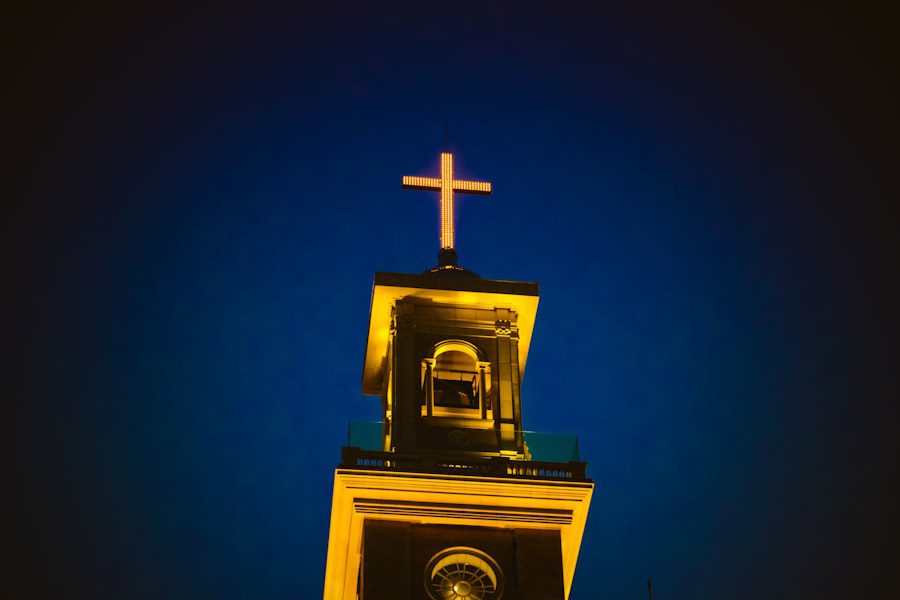
In contemporary society, the cross continues to evoke strong reactions—both positive and negative—reflecting its complex role in public discourse. For many believers, it remains a source of comfort and strength amidst life’s challenges. Churches around the world prominently display crosses as symbols of faith and community cohesion.
They serve as gathering points for worshippers seeking solace in shared beliefs. Conversely, debates surrounding the display of crosses in public spaces often highlight tensions between secularism and religious expression. Legal battles over whether crosses should be allowed on government property or in schools illustrate broader societal discussions about freedom of religion versus separation of church and state.
These debates underscore how deeply ingrained symbols can provoke passionate responses from diverse perspectives. Moreover, social movements have adopted the cross as a symbol for justice and equality. Activists advocating for human rights often invoke its imagery to emphasize themes of sacrifice and love in their struggles against oppression.
In this way, the cross transcends its traditional religious connotations to become a rallying point for broader social change.
The Cross as a Reminder of Forgiveness and Healing
The concept of forgiveness is intricately woven into the narrative surrounding the cross. In Christian theology, Jesus’ crucifixion is viewed as an act that opens pathways for forgiveness—not only from God but also among individuals. This idea encourages believers to extend grace to others as they themselves have received grace through Christ’s sacrifice.
The act of forgiving can be profoundly healing; it allows individuals to release burdens that weigh heavily on their hearts. In therapeutic contexts, discussions about forgiveness often reference spiritual symbols like the cross to illustrate concepts related to healing emotional wounds. Many psychological frameworks emphasize that holding onto resentment can hinder personal growth; thus, embracing forgiveness becomes essential for mental well-being.
The cross serves as a poignant reminder that healing often requires letting go—of pain, anger, or past grievances—and embracing a future filled with hope. Furthermore, interfaith dialogues frequently explore themes related to forgiveness through various cultural lenses. Different traditions emphasize similar principles: that healing begins when individuals choose compassion over bitterness.
The cross stands at this intersection—a symbol that invites people from diverse backgrounds to engage in conversations about reconciliation and understanding.
The Cross as a Beacon of Hope
The enduring significance of the cross lies in its ability to encapsulate profound truths about human existence—suffering intertwined with hope, sacrifice intertwined with love. As we navigate an increasingly complex world marked by division and uncertainty, this symbol continues to resonate deeply within individual hearts and collective consciousness alike. Whether viewed through religious lenses or secular perspectives, the cross remains a powerful emblem that invites reflection on our shared humanity.
In moments of despair or confusion, many find solace in looking toward this symbol—a beacon illuminating paths toward healing, forgiveness, and renewal. Its presence serves as a reminder that even amidst darkness, light can emerge; that love can triumph over hate; that hope can flourish even when circumstances seem bleak. As we engage with this timeless symbol across various contexts—historical, artistic, cultural—we are reminded not only of its rich legacy but also its potential to inspire future generations toward compassion and understanding.
In a related article titled Revival We Need, the importance of spiritual revival in restoring hope and faith in a fallen world is discussed. Just as The Power of the Cross emphasizes the transformative power of Christ’s sacrifice, this article highlights the need for a renewed sense of purpose and passion in the church to bring about positive change in society. Both articles emphasize the importance of turning to God for guidance and strength in times of struggle and uncertainty.