3 Lessons Every Man Needs for a Stronger Faith Today

Anger, bitterness, and fear are reshaping our culture, threatening the very fabric of a free and flourishing society. Yet, there is a different path rooted in humility, compassion, and steady action. This journey begins with becoming ministers of reconciliation, where self-examination and sincere apologies pave the way for healing. By sowing seeds of patience and kindness, we can cultivate relationships that thrive. Join us as we explore three essential lessons every man needs for a stronger faith today, and discover how to foster a culture of freedom, persuasion, and dignity in our communities.

Watch the Video!

YouTube player

Anger, bitterness, and fear are reshaping our culture. When human life is devalued and neighbors start to look like enemies, everything that makes a free and flourishing society possible begins to unravel. The challenge before us is not simply political or technological. It is spiritual and moral. We must learn to walk the road that leads to life, not the road that leads to death.

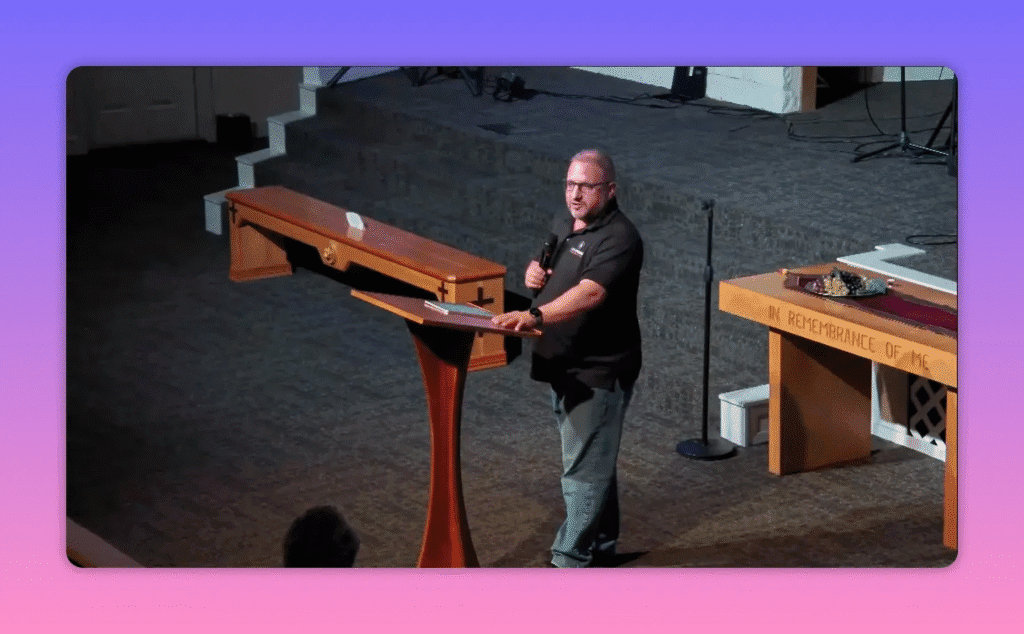
The opening call to walk the road that leads to life, delivered from the pulpit.

Why this matters now

Too often the loudest responses to cultural wounds are reactive. People respond with accusation, with chants, with coercion, or with a scorched earth kind of criticism that only hardens hearts. That pattern turns brothers into enemies and sets entire communities on a path of ruin.

The good news is that there is a different path available. It is rooted in humility, compassion, and steady, faithful action. Scripture calls followers to be ministers of reconciliation. That calling is not sentimental. It is practical. It changes how we speak, how we organize our communities, and how we steward influence.

Lesson 1 — Become Ministers of Reconciliation

Reconciliation begins with honest self examination. Too often our first instinct is to point the finger at someone else. The very first human response after the fall was blame. The biblical call is the opposite. We ask, what part did I play? We remove the log from our own eye before trying to remove the speck from another’s.

For it pleased the Father that in him the fullness should dwell and by him to reconcile all things to himself by him whether things on earth or things in heaven having made peace through the blood of his cross. Colossians 1:19-20
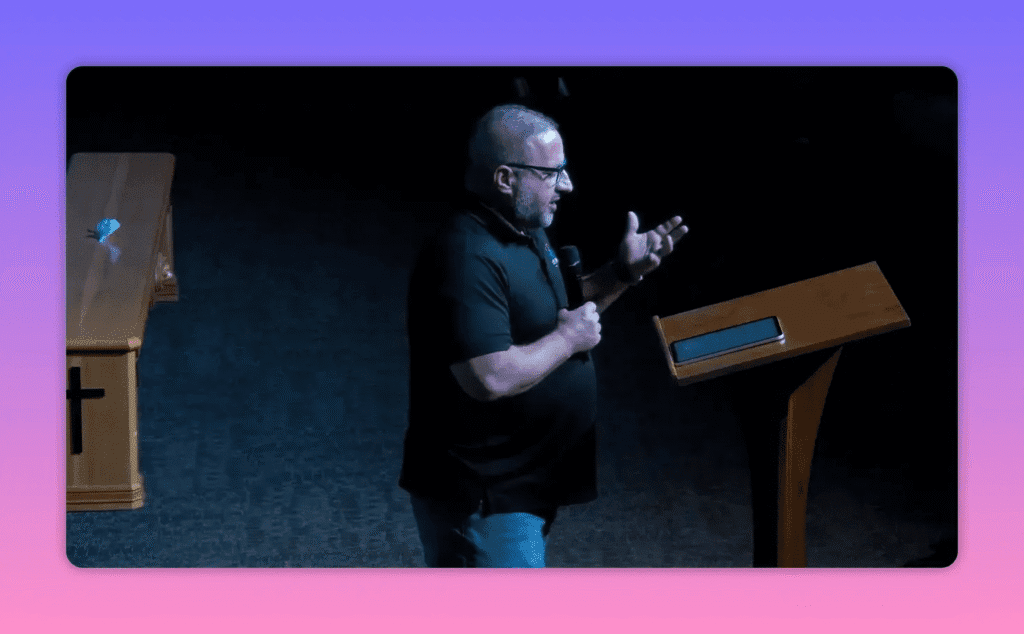
Speaker explaining reconciliation while gesturing at the lectern.

Reconciliation restores dignity. It softens hardened hearts. A sincere apology, a humble correction, and an offer of forgiveness are not weaknesses. They are instruments of healing. The church exists to practice that ministry in the public square so that a society learns to resolve conflict without turning to violence or vengeance.

Practical steps to practice reconciliation

  • Self-check regularly: Ask, “What part did I play?” before assigning blame.
  • Apologize plainly: When you are wrong, say it and mean it without qualification.
  • Forgive repeatedly: Forgiveness is a habit more than a single act.

Lesson 2 — Sow the Way of Life and Expect a Harvest in Time

There are two roads: one that reaps destruction and one that produces life. When people sow anger, divisiveness, and coercion they plant seeds that sprout ruin. When they sow patience, kindness, and consistent justice they prepare a harvest of restored relationships and flourishing communities.
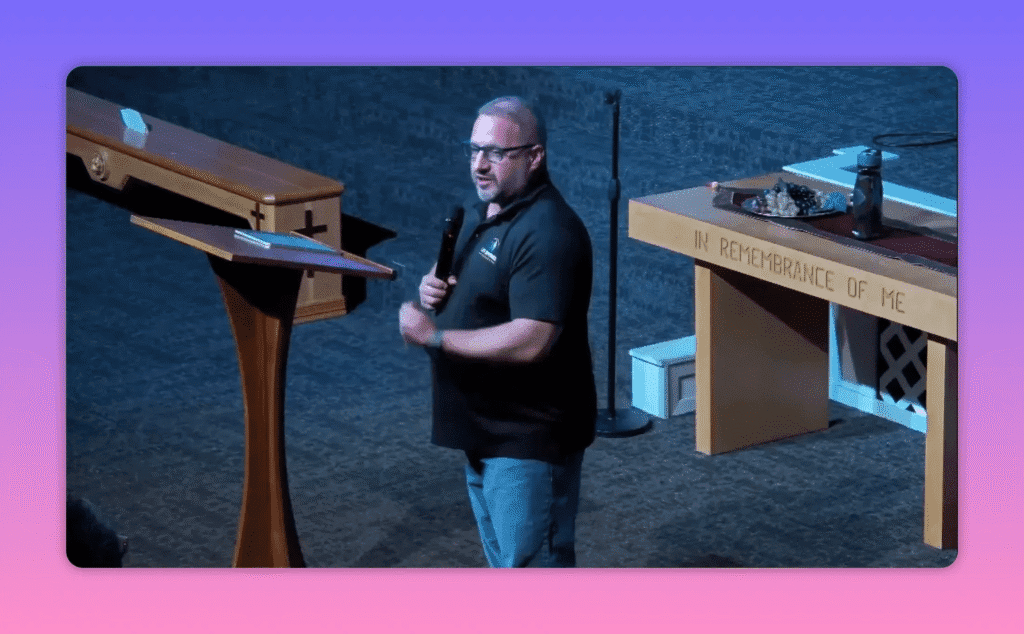
A clear frame of the speaker as he urges patient, faithful sowing — a visual anchor for the lesson.

History and personal encounters around the world show this in concrete ways. Jealousy and ownership mindsets often cause violence and sabotage. But patient service, education, and economic cooperation soften suspicion and open doors. Sowing to the spirit is slow work. It is like cultivating gold and jewels that are dug out slowly. Patience matters.

Do not be deceived. God is not mocked. For whatever a man sows, he will also reap. Galatians 6:7-9
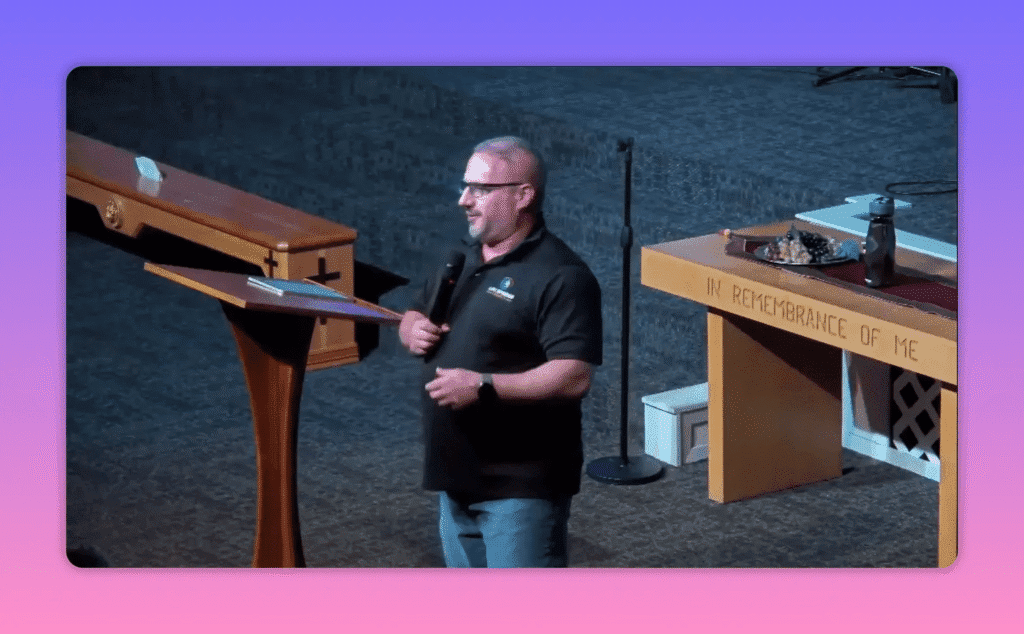
Speaker mid-exhortation, emphasizing steady faithfulness and persistence.

Do not grow weary in doing good. The results of kingdom work are sometimes invisible at first. Returning good for evil, loving those who hate you, and blessing those who curse you all look foolish in the moment. Persist anyway. A harvest comes in due season when faithfulness continues.

Concrete ways to sow life

  • Invest in education and local enterprises that serve the common good.
  • Provide healthcare, shelter, and honest employment opportunities.
  • Model humility and servant leadership in neighborhoods, churches, and workplaces.

Lesson 3 — Build a Culture of Freedom, Persuasion, and Rule of Law

Preserving human dignity requires both moral formation and practical institutions. Liberal democracy at its best rests on the idea that each person is created in the image of God and has freedom of conscience. That freedom must be defended not by coercion but by persuasion and trust.
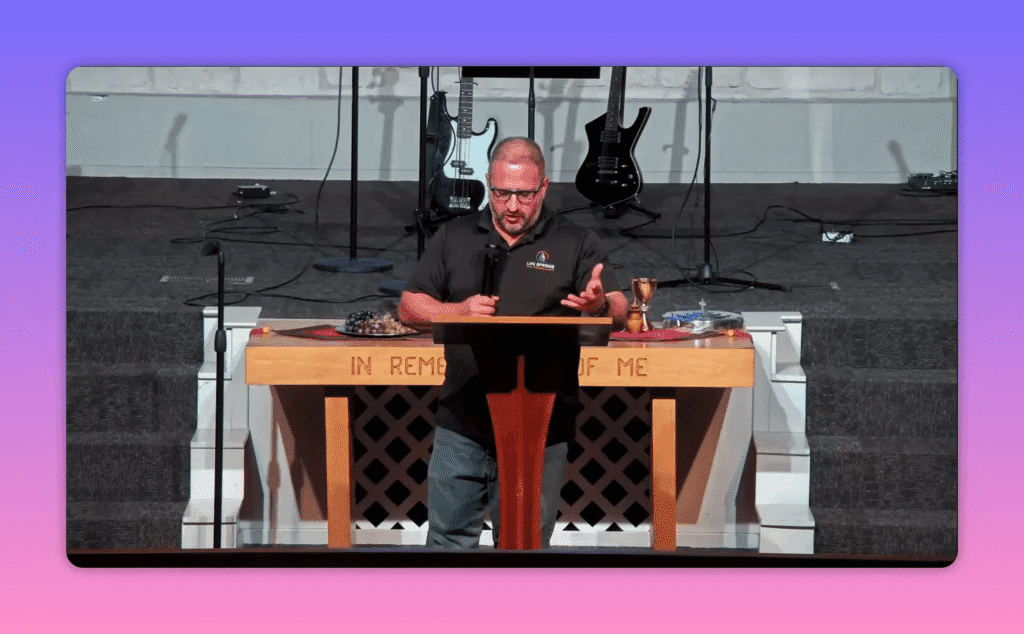
Teaching on persuasion and the rule of law from the pulpit.

Rules such as “do not murder” and “do not steal” are not merely legal constraints. They protect the conditions for human flourishing. Likewise, religious communities must resist the temptation to use state power to impose faith. Historically, flourishing comes when faith is lived out in voluntary, communal formation—not enforced by government.

How to foster persuasion over coercion

  1. Teach well: Encourage moral formation that leads to virtue and wisdom.
  2. Engage winsomely: Use reason and love to persuade rather than shame to coerce.
  3. Support rule of law: Advocate for simple, just laws that protect life and liberty.

Questions to guide your daily practice

Ask these often and let them shape action:

  • What part did I play in this conflict?
  • Am I sowing to the flesh or to the spirit?
  • Am I acting out of fear or out of love?
  • How can I be salt and light where I live, work, and worship?
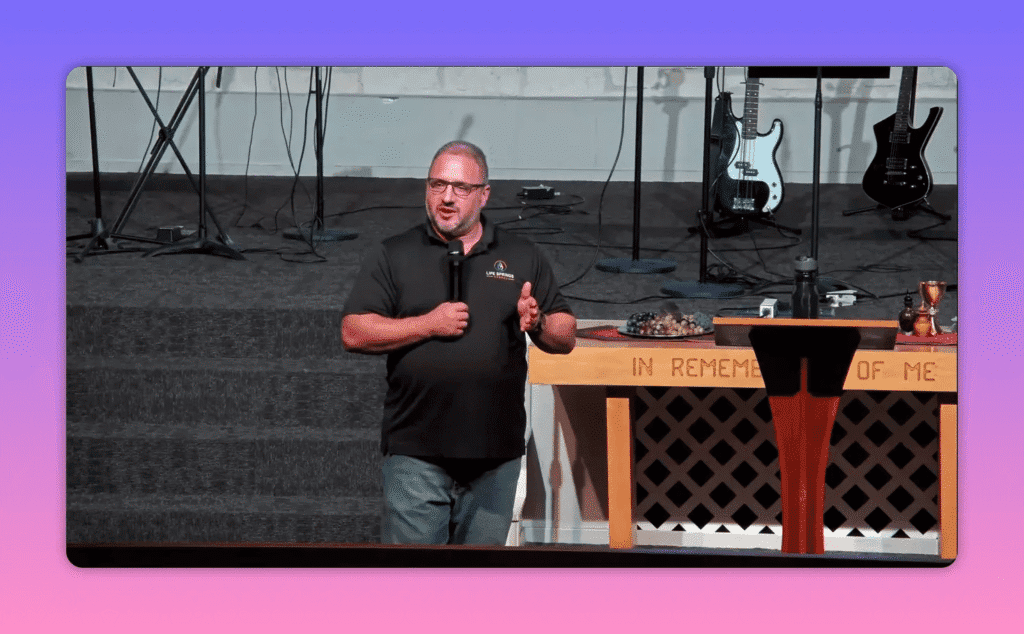
A clear, well-lit frame of the speaker urging reflection and steady faith.

Final encouragement

There is a divine promise of restoration. The work of healing nations is not ultimately dependent on human cleverness. It is carried forward by persistent acts of reconciliation, faithful sowing of righteousness, and patient cultivation of institutions that protect dignity. The church has been entrusted with this ministry. When compassion and love motivate us more than fear, the road to life gains traction.

Keep sowing. Keep forgiving. Keep persuading with humility and truth. The harvest is coming in due season for those who do not lose heart.


Facebook
LinkedIn
X
Email

Related Sermons

Church speaker at a podium discussing Easter hope and God’s faithfulness when hopes collapse

Why the Resurrection of Jesus Changes Everything

Every year, when Resurrection Sunday comes around, there is a sense that words are not enough. We instinctively know that what we celebrate is too weighty and beautiful to fully capture. The resurrection of Jesus is not merely a cherished doctrine; it is the turning point of history, the defeat of death, and the beginning of a new way of living. This message carries the weight of hope and victory, demanding our attention and inviting us to explore how it transforms our lives and the world around us. Discover how the resurrection shapes our faith and daily existence.

Read More »
Church speaker gesturing while teaching at lectern in church sanctuary

Why “Go and Make Disciples” Is Actually Mistranslated

What if the Great Commission isn’t a heavy burden of pressure and guilt, but an invitation to live fully in Christ? Instead of merely “going” to make disciples, imagine a life where disciple-making flows naturally from your everyday activities. This shift transforms the command into a joyful expression of faith, where you bear witness to Jesus simply by being who you are. Discover how understanding the heart of this message can liberate you from striving and lead you into a vibrant, grace-filled life that reflects the beauty of God’s kingdom in every sphere of your existence.

Read More »
Speaker raising one arm and holding a microphone during a rainy sermon at a church stage.

The New Creation Begins: The Power of the Resurrection

The resurrection of Jesus is not just a past miracle; it is the powerful beginning of a new creation that is unfolding in our world today. This transformative event declares that death, darkness, and sin do not have the final word. As we embrace the reality of Christ’s resurrection, we are invited to participate in God’s renewal of the world, moving beyond a limited gospel of escape to a vibrant faith that seeks to bring healing and hope. Discover how the resurrection empowers us to grow into mature sons and daughters of God, ready to impact our communities and creation itself.

Read More »
Pastor preaching near a church pulpit with stained glass backdrop

Overcoming Fear: Why Looking to Jesus Changes Everything

In moments when fear and anxiety seem overwhelming, the question we must ask ourselves is not just, “What do I do next?” but rather, “What am I looking at?” Hebrews 12 invites us to look unto Jesus, the author and finisher of our faith. Through the stories of imperfect people like Hezekiah and Paul, we discover that nothing is impossible with God. This journey of faith is not about controlling outcomes but about coming to Him with our burdens. Join us as we explore how looking to Jesus transforms our perspective and empowers us to overcome fear and endure life’s challenges.

Read More »
Pastor speaking from the pulpit on church steps during a sermon

Reaching the Unreached in Nigeria and Breaking Free From the Limitations We Accept

In a world filled with limitations, both external and internal, the call to break free resonates deeply. Imagine living like a powerful elephant, yet tethered by the ropes of past failures and fears. This message challenges us to confront the boundaries we’ve accepted and to embrace the freedom that Christ offers. As we reflect on the mission in Nigeria, we are reminded that the church is called to shine brightly, even in the darkest times. Are you ready to decide to break free and step into your God-given potential? Discover how you can shake off the yoke and rise.

Read More »
Preacher delivering a sermon at a church podium with microphone and open notes

Matthew 7:21-24 Explained: Does God Truly Know You?

How do you answer the question when God asks, “Where are you?” This isn’t about your physical location or church attendance; it’s a deeper inquiry into your relationship with Him. It’s possible to be active in ministry and still feel spiritually dry. Jesus warns us in Matthew 7:21-24 that not everyone who claims to know Him truly does. This message invites you to reflect on your intimacy with God, to assess where you stand in your faith, and to rekindle that genuine connection. Are you ready to take a spiritual inventory and discover where you truly are?

Read More »
Speaker behind a podium holding a microphone during a church sermon

How to Forgive When Your Flesh Demands Justice

When I think of the Garden of Eden, I picture light—a world filled with the presence of God, where heaven and earth were one. But then sin entered the story, plunging humanity into darkness. This movement from light to darkness reveals our deep longing for justice and reconciliation. The haunting cry of Abel’s blood for justice echoes through time, yet the blood of Jesus speaks a better word—mercy. Discover how the gospel breaks the cycle of vengeance and invites us into a new creation, where forgiveness becomes the pathway to healing and true community.

Read More »
Pastor speaking with open hand gestures at a church podium

Why You Feel Alone in a Crowded Church

One of the great tragedies of modern Christianity is that many people can sit in a room full of believers and still feel profoundly alone. They may attend every week, listen to solid teaching, and genuinely love Jesus, yet something still feels missing. The issue is not that church does not matter, but rather that we have often built church on a worldly model instead of the kingdom model Jesus intended. When the church aligns with God’s design, it becomes a place of healing, transformation, belonging, and encounter with the living Christ. Discover how to cultivate this authentic community.

Read More »
clear framed speaker at lectern with communion elements and guitar behind

Organic vs. Institutional: Why Relational Church Changes Everything

The church is meant to be a household, a family that models heaven on earth. When it becomes a lifeless institution driven by hierarchy and performance, it loses the essence of authentic relationship with God and one another. Imagine a community that grows organically from encounters with Jesus, where love, vulnerability, and reconciliation flourish. In a time of division, the church must reflect the beauty of every tongue, tribe, and nation. Discover how embracing relational church life can transform not just our gatherings, but our very witness to the world. Let the walls fall and experience the love that changes everything.

Read More »
Speaker gesturing toward congregation with communion table and steps behind

Authentic Relational Church — The Jerusalem Model

Christianity can appear successful by worldly standards—big buildings and large attendance—yet still miss the transforming power Jesus intended. When the church is organized by systems instead of organic, family-shaped relationships, it often fails to reflect heaven on earth. The heart of the problem is structural. A mechanistic church produces mechanical results, while a church rooted in belonging and the gospel brings life, healing, and renewal. The dream is simple: every person experiences love, welcome, and a personal encounter with Jesus. Discover how the early church’s model can inspire a thriving, relational community today.

Read More »